Auto dealerships face unique security challenges that go far beyond typical commercial properties. With millions of dollars in inventory exposed on open lots, multiple access points, and high-value parts in service departments, the stakes are exceptionally high. Yet many property managers and dealership operators make fundamental errors in their approach to auto dealership video monitoring that leave them vulnerable to theft, vandalism, and liability issues.
The FBI reported that motor vehicle theft increased by 12.6% in recent years, with organized crime rings specifically targeting dealership lots for high-end vehicles and catalytic converters. Despite these alarming statistics, many dealerships continue to rely on outdated security approaches that provide a false sense of protection while criminals exploit easily preventable vulnerabilities.
Mistake #1: Treating Video Monitoring as a Recording System Rather Than a Prevention Tool
The most costly mistake property managers make is viewing car dealership security monitoring solely as a way to record incidents after they occur. Traditional surveillance systems capture footage that might help police investigations, but by then, vehicles worth tens or hundreds of thousands of dollars have already disappeared, glass has been smashed, and business operations have been disrupted.
This reactive approach fundamentally misunderstands the purpose of modern vehicle lot monitoring. Effective dealership security cameras should actively prevent crime, not simply document it. When suspects realize they’re being watched in real-time by trained security professionals who can dispatch law enforcement immediately, they typically abandon their criminal activity and move to easier targets.
Remote monitoring with live security personnel transforms your surveillance infrastructure from passive recording to active deterrence. Trained guards watching your feeds can spot suspicious behavior patterns—like vehicles circling the lot multiple times, individuals testing door handles, or people approaching the property during closed hours—and intervene before theft occurs. They can issue audio warnings through on-site speakers, activate lighting systems, and contact police with suspect descriptions while crimes are in progress rather than hours later when reviewing footage.
The financial impact is substantial. A single stolen vehicle can cost a dealership $50,000 or more, not including insurance premium increases, deductibles, and business interruption. Preventing just one major theft incident per year typically covers the entire cost of professional remote monitoring services.
Mistake #2: Insufficient Coverage of Critical Vulnerability Points
Many dealerships install cameras with significant blind spots in their coverage, leaving critical areas unprotected. Property managers often focus camera placement on showroom entrances and sales offices while neglecting the areas where the most valuable inventory actually resides.
Comprehensive automotive dealership surveillance requires strategic coverage of multiple zones:
- Perimeter fencing and access points: Criminals often breach properties at the furthest points from buildings where detection is least likely
- High-value vehicle sections: Luxury models, sports cars, and newly arrived inventory require dedicated monitoring
- Service department and parts storage: Catalytic converters, wheels, and sophisticated equipment represent major theft targets
- Key storage areas: Many thefts occur because criminals gain access to vehicle keys
- Employee parking and customer waiting areas: Liability protection requires monitoring these spaces for slip-and-fall incidents and disputes
- Trade-in and auction vehicle sections: Lower-value vehicles still represent significant assets requiring protection
Professional security assessments identify these vulnerability points through detailed site analysis. Remote monitoring providers evaluate traffic patterns, lighting conditions, and historical incident data to design coverage that eliminates blind spots. The goal is creating overlapping fields of vision where anyone moving through the property during closed hours will be detected and tracked continuously.
Mistake #3: Poor Integration Between Security Systems
Dealerships often implement security technologies as isolated systems that don’t communicate with each other. Video cameras operate independently from alarm systems, which have no connection to access control or lighting systems. This fragmentation creates delays in response and reduces overall effectiveness.
When a motion sensor triggers an alarm, security personnel should immediately access corresponding camera views to assess the threat. If suspicious activity is confirmed, integrated systems allow operators to activate additional cameras, turn on lights in specific zones, and communicate through speakers—all from a single interface.
Modern vehicle lot monitoring platforms integrate multiple security components into unified systems. Access control logs show who entered specific areas and when, correlating with video footage for complete accountability. Environmental sensors detect unusual activity like vehicles running in service bays after hours. Glass break detectors trigger immediate camera focus on affected areas.
This integration extends to inventory management systems as well. When high-value vehicles arrive, security personnel can receive automated notifications to pay special attention to those units. If a vehicle is moved without proper authorization codes, alerts trigger immediate investigation.
The efficiency gains are substantial. Instead of reviewing multiple disconnected systems when investigating incidents, integrated platforms provide complete timelines showing exactly what happened, when, and who was involved. This documentation proves invaluable for insurance claims, liability disputes, and law enforcement cooperation.
Mistake #4: Underestimating the Value of Human Analysis
Some property managers invest in sophisticated camera systems with motion detection and analytics, then assume the technology alone will keep their dealerships secure. While AI-powered analytics have improved significantly, they cannot replace trained human observation and judgment.
Automated systems generate numerous false alarms from weather conditions, animals, and legitimate activity. Without human verification, these alerts become background noise that staff learn to ignore. When a real threat occurs, the response is delayed or non-existent because no one trusts the system anymore.
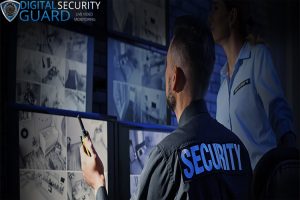
Professional remote monitoring services employ trained security personnel who understand dealership operations and can distinguish between normal activity and genuine threats. These guards recognize behavior patterns that indicate criminal intent—suspects surveying the lot from across the street, vehicles arriving without headlights, or individuals concealing their faces from cameras.
Human monitors provide context that automated systems miss. They understand that a service technician arriving at 6:00 AM is routine, while someone in a different area at that hour requires investigation. They notice when the same unfamiliar vehicle appears multiple nights in succession, building a pattern that might indicate planning for a future crime.
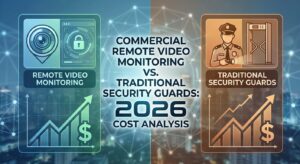
The cost comparison between remote monitoring and on-site guards strongly favors remote solutions. A single security guard for 24/7 coverage requires four or five full-time employees when accounting for shifts, time off, and benefits—typically costing $200,000 to $300,000 annually. Professional remote monitoring services provide equivalent or superior coverage for a fraction of that expense, often 60-70% less.
Mistake #5: Neglecting Ongoing System Maintenance and Updates
Security systems require regular maintenance to remain effective, yet many property managers adopt a “set it and forget it” approach. Cameras accumulate dirt and debris that obscures views. Connections loosen, causing intermittent outages. Software becomes outdated, creating security vulnerabilities. Foliage grows and blocks carefully planned sight lines.
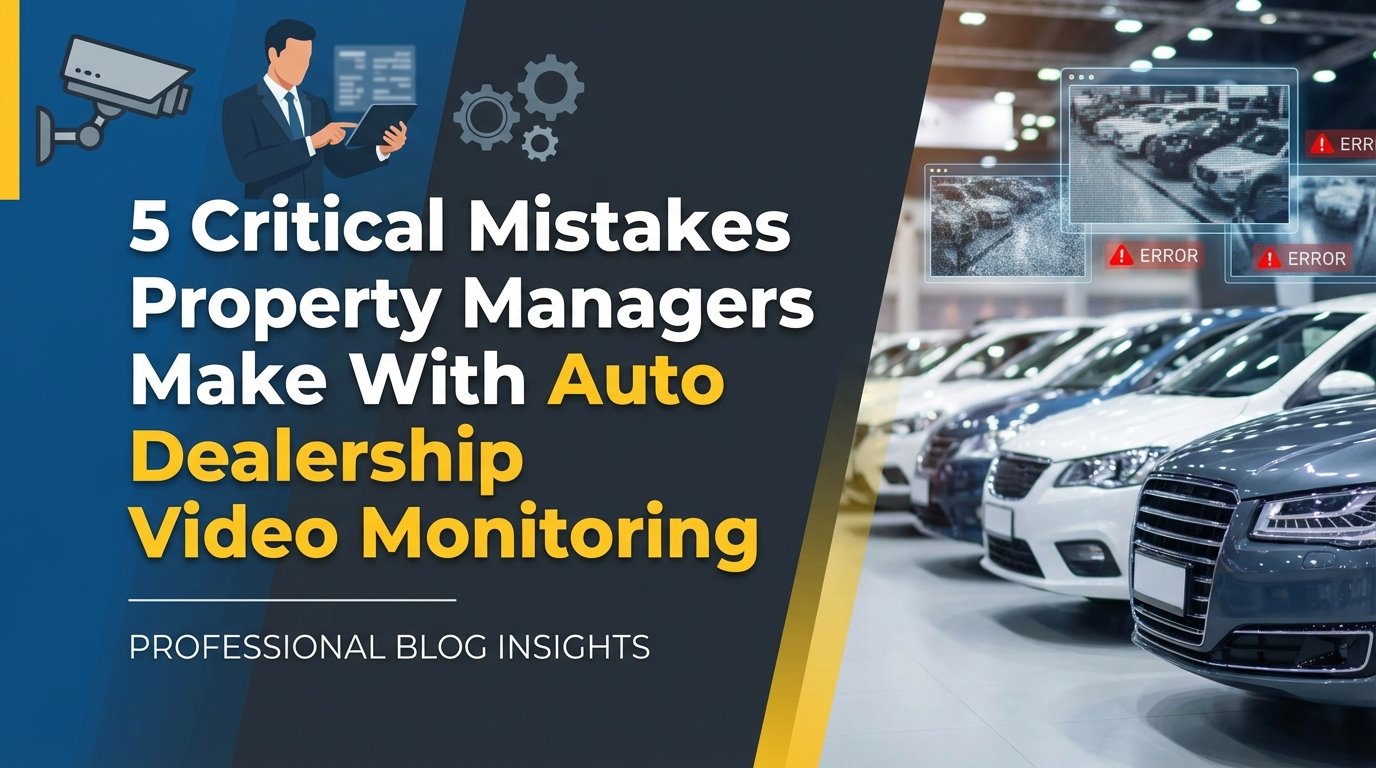
When critical incidents occur, dealerships often discover their recording system hasn’t been functioning properly for weeks or months. The camera covering the area where a theft occurred had failed, or the storage system ran out of space and stopped retaining footage, or image quality had degraded so severely that suspects cannot be identified.
Professional auto dealership video monitoring services include proactive system maintenance as part of their offerings. Remote operators immediately notice when cameras go offline or image quality degrades, generating service tickets before complete failures occur. Regular testing verifies that recording, storage, and backup systems function correctly.
Seasonal adjustments account for changing conditions throughout the year. Camera angles that provided excellent coverage in summer may be blocked by bare tree branches in winter. Lighting conditions change with daylight saving time transitions, requiring different sensitivity settings. Professional monitoring services make these adjustments proactively rather than discovering problems after incidents occur.
Software updates and security patches protect against evolving cyber threats. Hackers increasingly target surveillance systems as entry points into broader network infrastructure. Outdated firmware contains known vulnerabilities that sophisticated criminals exploit to disable cameras, delete footage, or gain access to dealership computer systems. Regular updates close these security gaps.
The Real Cost of Security Mistakes
These five mistakes create compounding vulnerabilities that expose dealerships to substantial financial and operational risks. The direct costs of theft and vandalism represent only part of the equation. Insurance premiums increase following claims. Customer confidence erodes when high-profile incidents occur. Employee safety concerns affect morale and retention. Regulatory compliance issues arise when security standards aren’t met.
Dealerships that have experienced major security incidents report average losses exceeding $150,000 when all factors are considered. These numbers don’t include the opportunity costs of management time spent dealing with investigations, insurance claims, and security upgrades that should have been implemented proactively.
Implementing Effective Dealership Security Monitoring
Correcting these mistakes begins with understanding that security represents an investment rather than an expense. Effective car dealership security monitoring protects assets worth millions of dollars while reducing operational costs compared to traditional guard services.
Start by conducting a comprehensive security assessment that identifies vulnerabilities specific to your property. Consider factors like location, traffic patterns, historical incidents, and surrounding crime data. This assessment should evaluate existing camera coverage, system integration, and monitoring procedures.
Partner with remote monitoring specialists who understand automotive dealership surveillance requirements. These providers design systems that eliminate blind spots, integrate multiple security components, and provide 24/7 professional monitoring at costs significantly lower than on-site guards.
Establish clear protocols for responding to security alerts. Define which situations require immediate law enforcement contact versus internal investigation. Ensure staff understands their roles during security incidents.
Schedule regular system maintenance and testing. Quarterly inspections should verify camera functionality, clean lenses, check recording systems, and update software. Annual comprehensive reviews assess whether coverage remains adequate as dealership layouts and inventory patterns change.
Protect Your Investment With Professional Monitoring
Auto dealerships cannot afford the vulnerabilities created by these common security mistakes. With inventory values continuously increasing and criminal tactics becoming more sophisticated, comprehensive vehicle lot monitoring has become essential rather than optional.
Digital Security Guard specializes in remote video monitoring solutions designed specifically for automotive dealerships. Our trained security professionals provide 24/7 surveillance that actively prevents crime rather than simply recording it. We eliminate the five critical mistakes outlined above through integrated systems, strategic camera placement, proactive maintenance, and experienced human analysis that technology alone cannot provide.
Contact Digital Security Guard today at 800-829-7459 to schedule a comprehensive security assessment for your dealership. Discover how professional remote monitoring protects your valuable inventory while reducing costs compared to traditional security approaches. Don’t wait for a costly incident to expose vulnerabilities in your current system—take proactive steps now to secure your property, protect your assets, and ensure peace of mind.