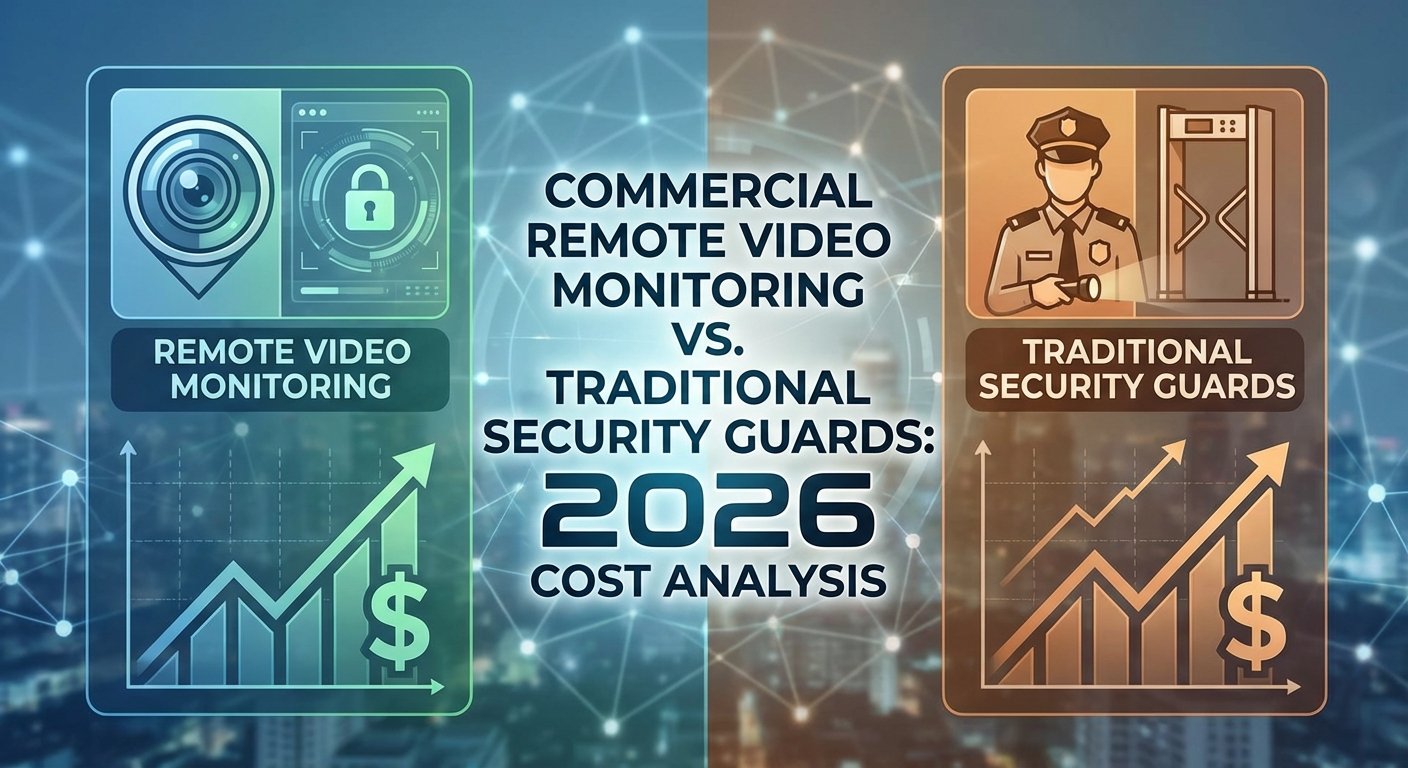
The average cost of hiring a traditional security guard in 2026 has climbed to $25-45 per hour depending on location and experience level, translating to over $200,000 annually for round-the-clock coverage. For business owners and property managers evaluating security options, this expense represents a significant operational burden—particularly when considering that on-site guards can only monitor one location at a time and may miss critical incidents during routine patrols or shift changes.
The fundamental question facing commercial property decision-makers today isn’t whether security is necessary—it’s which approach delivers the most effective protection per dollar spent. This comprehensive cost analysis examines both immediate expenses and long-term value to help security stakeholders make data-driven decisions for their properties.
Breaking Down Traditional Security Guard Costs
The sticker price of hiring security guards represents just the beginning of actual expenses. A complete cost analysis reveals multiple financial layers that property owners must consider.
Direct Labor Expenses
For 24/7 on-site security coverage, businesses need approximately 4.2 full-time equivalent employees to account for shifts, breaks, sick days, and vacation time. At current market rates in 2026:
- Base hourly wage: $25-45 per hour
- Annual cost per guard (40 hours/week): $52,000-93,600
- Full 24/7 coverage: $218,400-393,120 annually
- Weekend and holiday premium pay: Additional 15-30%
Hidden Overhead Costs
Beyond hourly wages, traditional security guards generate substantial overhead expenses that many property managers overlook during initial budgeting:
- Payroll taxes and workers’ compensation insurance: 25-35% of base wages
- Health insurance and benefits packages: $8,000-15,000 per employee annually
- Recruitment, background checks, and onboarding: $2,000-5,000 per hire
- Training and certification requirements: $1,500-3,000 per guard
- Uniforms, equipment, and communication devices: $800-1,500 annually per guard
- Supervision and management oversight costs
- Liability insurance premiums for security personnel
When factoring comprehensive costs, the true annual expense for traditional guard services at a single location frequently exceeds $300,000-500,000. For businesses operating multiple sites, these costs multiply proportionally.
Performance Limitations
Cost considerations must account for operational effectiveness. Traditional guards face inherent limitations including limited field of vision, potential distractions, fatigue during overnight shifts, and the physical impossibility of monitoring multiple areas simultaneously. Documentation gaps during shift changes create vulnerabilities that experienced criminals actively exploit.
Commercial Remote Video Monitoring: The Cost-Effective Alternative
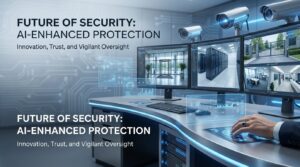
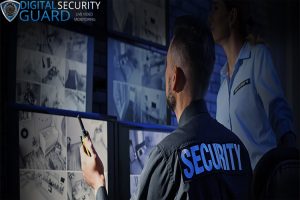
Commercial remote video monitoring represents a fundamental shift in security strategy. Rather than recording footage for post-incident review, trained security professionals actively watch live camera feeds from centralized monitoring stations, enabling real-time intervention when threats emerge.
Comprehensive Pricing Structure
Business video monitoring services typically operate on monthly subscription models with transparent pricing:
- Basic monitoring (4-8 cameras): $300-800 per month
- Standard coverage (8-16 cameras): $800-1,500 per month
- Enterprise solutions (16+ cameras): $1,500-3,000+ per month
- Initial installation and equipment: $3,000-15,000 depending on property size
Annual costs for commercial surveillance monitoring range from $3,600-36,000 plus initial setup—representing savings of 80-95% compared to traditional guard services while often providing superior coverage.
What’s Included in Business Security Monitoring
Modern commercial property monitoring services deliver comprehensive protection that extends far beyond simple camera installation:
- 24/7 live monitoring by trained security professionals
- Intelligent analytics detecting unusual activity patterns
- Immediate response protocols with law enforcement dispatch
- Two-way audio communication to warn off intruders
- Recorded evidence for investigations and insurance claims
- Multiple simultaneous camera views across unlimited zones
- Weather-resistant equipment with night vision capabilities
- Cloud storage and instant footage retrieval
- Mobile access for property managers
ROI Comparison: Side-by-Side Analysis
Examining a typical 50,000 square foot warehouse facility requiring 24/7 security illustrates the dramatic cost differential:
Traditional Security Guards (3-Year Total Cost)
- Annual guard services: $280,000
- Benefits and overhead (30%): $84,000
- Management and supervision: $25,000
- Three-year total: $1,167,000
Commercial Remote Video Monitoring (3-Year Total Cost)
- Initial installation (12 cameras): $10,000
- Monthly monitoring ($1,200): $14,400 annually
- Equipment maintenance: $2,000 annually
- Three-year total: $59,200
This scenario demonstrates savings of over $1.1 million across three years—capital that businesses can redirect toward growth initiatives, employee compensation, or facility improvements. Even when accounting for periodic equipment upgrades, the cost advantage remains overwhelming.
Industry-Specific Applications and Benefits
Construction Site Security
Construction sites face unique vulnerabilities with valuable equipment, copper wiring, and building materials exposed across sprawling, constantly changing layouts. Remote monitoring provides comprehensive coverage of multiple zones simultaneously, with cameras repositioned as construction progresses. The presence of visible cameras combined with active monitoring typically reduces theft by 60-80% according to industry data.
Retail Store Protection
Retailers benefit from both external perimeter monitoring and internal shrinkage prevention. Remote security professionals can observe suspicious behavior patterns, alert on-site managers to potential shoplifting, and verify after-hours alarms before dispatching law enforcement. This integrated approach reduces false alarm responses while improving actual threat detection.
Auto Dealership Monitoring
Vehicle dealerships managing millions in inventory across outdoor lots need comprehensive overnight protection. Business video monitoring services provide complete lot coverage, license plate recognition capabilities, and immediate response when unauthorized individuals enter restricted areas. The documentation also proves invaluable for insurance claims and liability disputes.
Apartment Complex Security
Residential property managers face resident safety concerns, parking area theft, and common area vandalism. Commercial surveillance monitoring creates documented security presence that reduces liability exposure while making residents feel protected. The ability to review footage also helps resolve disputes between tenants and provides evidence for law enforcement when incidents occur.
Beyond Cost: Operational Advantages
While financial savings drive initial consideration of remote monitoring, operational benefits often prove equally valuable:
Consistent Performance
Remote monitoring professionals maintain focus throughout shifts with rotation protocols and supervisor oversight. Multiple trained personnel review the same feeds, eliminating the single-point-of-failure inherent with on-site guards who might be distracted, unwell, or simply looking in the wrong direction during critical moments.
Scalability and Flexibility
Adding coverage to new areas requires only additional cameras rather than entirely new guard positions. Seasonal businesses can adjust monitoring intensity without hiring and training temporary security staff. Multi-location enterprises benefit from centralized monitoring across all properties without proportional cost increases.
Enhanced Documentation
Every incident generates timestamped, high-resolution video evidence—crucial for insurance claims, criminal prosecutions, and liability defense. This documentation capability alone has saved businesses hundreds of thousands in fraudulent injury claims and theft losses.
Proactive Crime Prevention
Rather than discovering theft the next morning, commercial property monitoring enables real-time intervention. Security personnel can activate speakers warning intruders they’re being watched and police are en route. This immediate response typically causes criminals to flee before causing significant damage, while recorded footage aids in apprehension.
Making the Transition: Implementation Considerations
Property owners evaluating the shift from traditional guards to remote monitoring should consider these implementation factors:
Site Assessment
Professional security consultations identify optimal camera placement for comprehensive coverage while minimizing blind spots. Factors include property layout, lighting conditions, high-value asset locations, and typical threat vectors. This assessment ensures maximum protection efficiency.
Technology Selection
Camera quality, analytics capabilities, and monitoring platform functionality vary significantly between providers. Property-specific requirements—such as license plate recognition for parking facilities or advanced motion detection for perimeter monitoring—should guide technology selection rather than simply choosing the lowest-cost option.
Integration with Existing Systems
Modern commercial remote video monitoring integrates with access control systems, alarm panels, and property management software. This coordination creates layered security that responds intelligently to multiple data inputs rather than operating in isolation.
Addressing Common Concerns
Decision-makers often raise predictable questions when evaluating business security monitoring alternatives:
What happens during internet outages? Quality systems include cellular backup connections and local recording that uploads once connectivity restores, ensuring no coverage gaps.
Can remote monitoring respond to on-site situations? While personnel can’t physically intervene, immediate law enforcement dispatch with verified criminal activity in progress receives priority police response—often faster than on-site guards can summon help.
How do insurance companies view remote monitoring? Most commercial insurers recognize professionally monitored video systems as superior security measures, frequently offering premium reductions that further improve ROI.
The 2026 Security Decision
Commercial property security in 2026 demands more than the traditional presence-based deterrence model. With guard costs continuing their upward trajectory while sophisticated monitoring technology becomes increasingly affordable and capable, the cost-benefit analysis increasingly favors remote solutions that deliver superior coverage at a fraction of traditional expenses.
For property owners managing tight operating budgets while facing genuine security threats, commercial remote video monitoring represents not just a cost-cutting measure but a strategic upgrade that improves protection while reducing expenses. The technology has matured beyond early-adoption risks into proven, reliable systems that consistently outperform conventional approaches across virtually every metric that matters.
Are you spending excessive amounts on traditional security guards while still experiencing theft, vandalism, or liability concerns? Digital Security Guard specializes in comprehensive commercial surveillance monitoring solutions tailored to your specific property challenges and budget constraints. Our experienced security professionals provide 24/7 live monitoring that actively prevents crime rather than simply recording it. Contact us today for a free site assessment and customized cost comparison showing exactly how much you can save while improving your property’s protection.