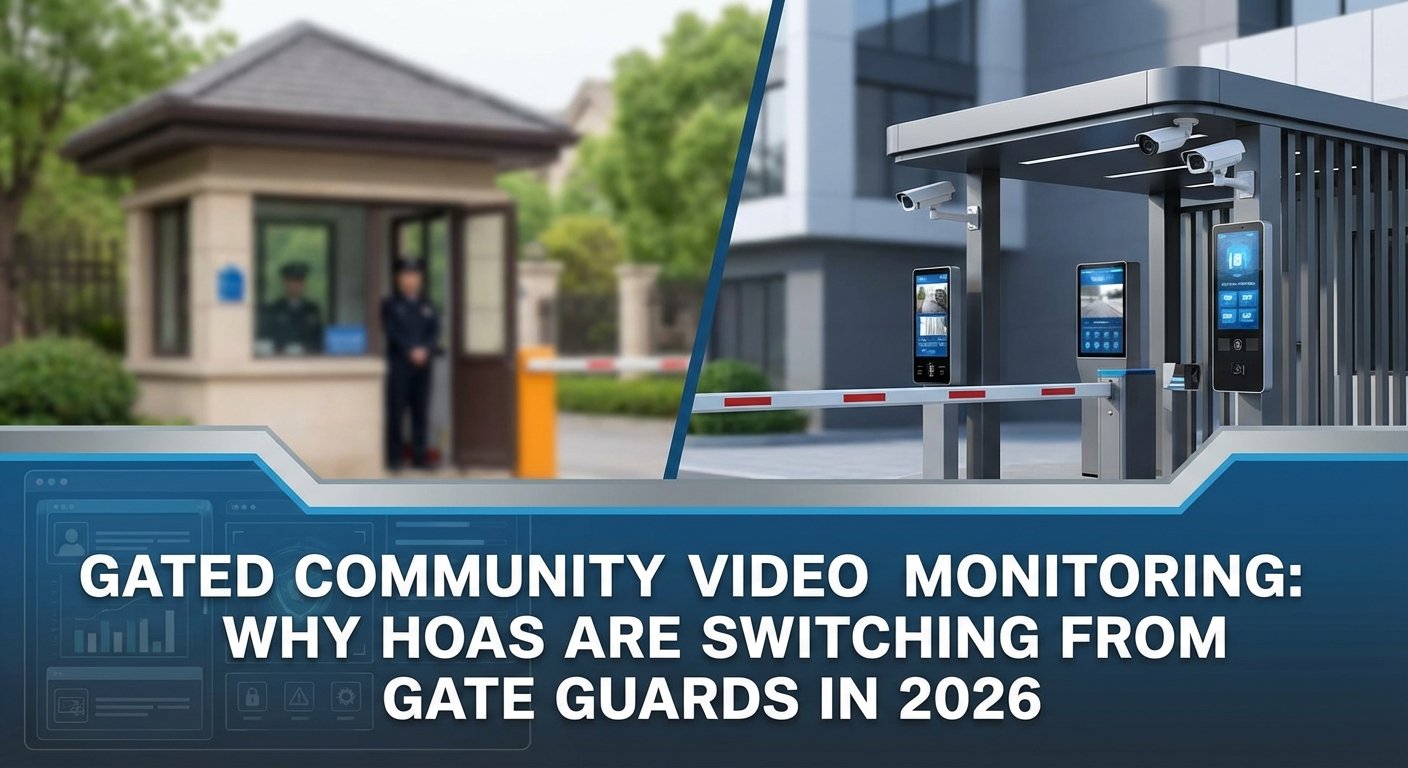
Homeowners associations across the country are experiencing a fundamental shift in how they approach community security. Traditional gate guard services, once the gold standard for gated communities, are rapidly being replaced by advanced video monitoring solutions that deliver superior results at a fraction of the cost. The numbers tell a compelling story: communities that have made the switch report average cost savings of 60-70% while simultaneously improving security coverage and response times.
This transition isn’t simply about cutting costs—it’s about fundamentally improving how residential communities protect their residents, assets, and quality of life. As we examine why this shift is accelerating in 2026, the advantages of modern remote video monitoring become increasingly clear for HOA boards making critical security decisions.
The True Cost of Traditional Gate Guard Services
For most gated communities, gate guard services represent one of the largest line items in the annual budget. A single guard stationed at an entrance typically costs between $50,000 and $75,000 annually when accounting for wages, benefits, insurance, and administrative overhead. Communities requiring 24/7 coverage need multiple guards to handle shift rotations, pushing annual costs well above $150,000—and that’s for just one entrance.
Beyond the direct financial burden, traditional gate guards present several operational challenges that HOA boards grapple with regularly:
- Staffing gaps due to illness, vacation, or turnover create security vulnerabilities
- Human fatigue during overnight shifts can reduce attentiveness
- Inconsistent enforcement of access policies between different guards
- Limited documentation of security incidents and visitor patterns
- No coverage of secondary entrances or interior common areas
- Rising liability concerns related to guard interactions with residents and visitors
These challenges have prompted forward-thinking HOAs to explore alternatives that address both budgetary constraints and operational effectiveness.
How Gated Community Video Monitoring Works
Modern residential community surveillance systems combine high-definition cameras at entry points with professional monitoring by trained security personnel at remote locations. This hybrid approach delivers the technological advantages of video surveillance with the critical human judgment needed for effective security decision-making.
The system architecture typically includes license plate recognition cameras, high-resolution overview cameras, two-way audio communication systems, and integration with automated gate controls. When a vehicle approaches, cameras automatically capture the license plate and check it against the community’s authorized access database. The remote monitoring team can visually verify visitors, communicate with them through speakers, and grant or deny access in real-time.
What sets this approach apart from simple security cameras is the proactive human oversight. Trained security professionals actively monitor live feeds, identify suspicious behavior before incidents occur, and respond immediately to potential threats. This isn’t passive recording for after-the-fact review—it’s active crime prevention.
Comprehensive Coverage Beyond the Gate
One significant advantage of hoa security monitoring systems is the ability to extend protection throughout the entire community, not just at entrance points. For the same cost as staffing a single guard post, communities can implement cameras at:
- All vehicle and pedestrian entrances
- Pool and clubhouse facilities
- Parking areas and garages
- Playgrounds and common spaces
- Package delivery locations
- Perimeter fencing and vulnerable access points
This comprehensive approach addresses a reality that traditional gate guards cannot: most security incidents in gated communities don’t happen at the main entrance. Vandalism, theft, and unauthorized access frequently occur at secondary locations. Remote monitoring provides simultaneous coverage of all these areas with trained eyes watching for problems.
Community Access Control Monitoring Advantages
Modern community access control monitoring systems offer sophisticated features that would be impossible with traditional staffing models. Automated license plate recognition builds databases of resident vehicles, regular visitors, and service providers, streamlining authorized access while flagging unknown vehicles for verification.
The system maintains detailed logs of all entry and exit activity, creating an invaluable resource for investigating incidents, tracking vendor access, and identifying patterns. If a resident reports suspicious activity or a package theft, security teams can quickly review footage and access records to identify vehicles and individuals present during the relevant timeframe.
Integration with resident mobile apps allows homeowners to authorize guest access remotely, receive notifications when family members arrive home, and review recent entry activity. This level of transparency and control exceeds what traditional gate guard services can provide while reducing friction for residents and their visitors.
Real-World Security Performance
The effectiveness of remote video monitoring in preventing crime and protecting communities is well-documented. A Florida HOA that switched from gate guards to professional video monitoring in 2025 reported a 45% reduction in property crimes within the first six months. The key difference was proactive intervention—when monitoring personnel spotted suspicious vehicles circling the community late at night, they used audio warnings to deter potential criminals before any crime occurred.
In another case, a Texas gated community identified a pattern of unauthorized contractor access that had gone unnoticed by gate guards for months. The contractors were using legitimate access codes during authorized hours, then returning after-hours to steal construction materials from active building sites. The detailed access logs and video evidence made it possible to identify the perpetrators and recover losses.
These outcomes highlight a critical distinction: gate guards are reactive, responding to situations as they unfold, while remote monitoring teams can observe broader patterns, monitor multiple locations simultaneously, and intervene before incidents escalate.
The Financial Case for Switching
When HOA boards evaluate security budgets, the cost comparison between gate guard services and remote monitoring is striking. A typical gated community with 200 homes might spend $160,000 annually for 24/7 gate guard coverage at their main entrance. Switching to comprehensive video monitoring with professional remote oversight typically costs $45,000-$60,000 annually—a savings of $100,000 or more.
These savings can be redirected toward other community priorities: deferred maintenance projects, amenity improvements, or reserve fund contributions. For communities with tight budgets or facing special assessments, this financial flexibility is transformative.
Beyond direct cost savings, remote monitoring reduces liability exposure. Incidents involving gate guards—from confrontations with residents to allegations of discrimination in access decisions—create legal risks that video monitoring systems largely eliminate. The objective, recorded documentation of all interactions provides clear evidence that protects the HOA from frivolous claims.
Addressing Common Concerns
What About the Personal Touch?
Some residents worry that losing the familiar face at the gate will diminish community character. In practice, most communities find that the consistent, professional service from remote monitoring teams—who get to know regular residents and visitors through repeated interactions—provides a better experience than rotating gate guards. The two-way audio systems allow for friendly greetings and assistance, maintaining the personal element while ensuring consistent service quality.
Technology Reliability
Professional monitoring systems include redundant internet connections, backup power supplies, and failover protocols that ensure continuous operation even during power outages or technical issues. This reliability typically exceeds traditional staffing, where a guard calling in sick might leave the gate unstaffed for hours.
Resident Privacy
Camera placement focuses on entry points and common areas, not individual homes. Reputable monitoring providers follow strict privacy protocols, with recorded footage secured and accessed only for legitimate security purposes or incident investigation. This approach actually provides more privacy protection than gate guards who might share information informally.
Implementation Considerations for HOAs
Communities considering the switch from gate guards to video monitoring should approach the transition strategically. Start by conducting a comprehensive security assessment that identifies all entry points, high-risk areas, and specific community vulnerabilities. This assessment guides camera placement and system design to address your community’s unique needs.
Engage residents early in the process through town halls or informational meetings that explain the benefits, address concerns, and gather input. Resident buy-in is crucial for successful implementation, and most homeowners appreciate the enhanced security and cost savings once they understand the system capabilities.
Select a monitoring provider with specific experience in residential community surveillance. The skills required for effective HOA security monitoring differ from commercial or industrial applications—operators need to balance security vigilance with customer service, understand residential access patterns, and handle the unique situations that arise in community settings.
The Future of Residential Security
As we move through 2026, the technology supporting gated community video monitoring continues to advance. Artificial intelligence now assists monitoring teams by automatically flagging unusual activity patterns, identifying vehicles that circle repeatedly, or detecting individuals attempting to bypass gates. These tools augment human decision-making rather than replacing it, allowing security professionals to focus their attention where it matters most.
Integration with other smart community systems creates additional value. Fire alarms, pool access controls, and amenity reservations can all feed into a unified security platform, giving monitoring teams comprehensive awareness of community activity and potential issues.
The communities making this transition now are positioning themselves at the forefront of residential security best practices while achieving immediate cost savings and improved protection for their residents.
Making the Switch: Next Steps
For HOA boards evaluating security options, the evidence strongly favors remote video monitoring over traditional gate guard services. The combination of superior coverage, significant cost savings, enhanced capabilities, and reduced liability makes this transition a straightforward decision for most communities.
The first step is obtaining detailed proposals from qualified providers that outline system design, monitoring protocols, implementation timelines, and total costs. Compare these proposals against current gate guard expenses, but look beyond simple price comparison to evaluate the comprehensive security value each option provides.
Request demonstrations of the monitoring center operations and speak with other HOAs that have made the switch. Their real-world experiences will provide valuable insights into both the benefits and any challenges to anticipate during implementation.
Digital Security Guard specializes in remote video monitoring solutions designed specifically for gated communities and HOAs. Our experienced security professionals provide 24/7 monitoring that protects your residents while reducing costs compared to traditional gate guard services. We understand the unique needs of residential communities and deliver reliable, professional security that gives HOA boards and homeowners confidence in their investment. Contact us today to schedule a consultation and learn how we can enhance your community’s security while reducing your annual security expenses.