The average commercial office building loses between $15,000 and $50,000 annually to theft, vandalism, and property damage—much of it preventable. Yet most facility managers are still paying for traditional on-site security guards who spend the majority of their shifts reacting to incidents that have already occurred. There’s a smarter, more cost-effective approach: office building security monitoring powered by remote video technology and trained human professionals watching your property in real time.
This isn’t about replacing security with cameras. It’s about combining advanced surveillance technology with the judgment and expertise of live monitoring professionals who can intervene before incidents escalate—at a fraction of the cost of physical guard staffing.
Why Traditional Guard-Based Security Falls Short
On-site security guards remain one of the most expensive line items in any commercial building’s operating budget. When you factor in wages, benefits, overtime, turnover costs, and the logistical challenge of ensuring consistent coverage across all shifts, the annual cost per guard can exceed $85,000 to $100,000. And that’s for a single post.
Beyond cost, there’s a performance problem. A lone guard monitoring a large office complex physically cannot watch every entry point, parking structure, stairwell, and exterior perimeter simultaneously. Fatigue, distraction, and human limitations mean that coverage gaps are inevitable—especially during overnight and weekend shifts when threat risk is often highest.
According to the Bureau of Justice Statistics, commercial property crimes peak during periods of low human activity—evenings, early mornings, and weekends. These are precisely the hours when stretched guard schedules create the most vulnerability.
How Remote Video Monitoring Works for Office Buildings
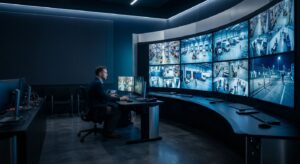
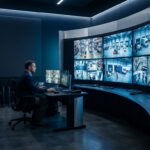
Commercial remote video monitoring replaces or supplements on-site guard presence with a network of strategically positioned cameras connected to a secure monitoring center staffed by trained security professionals—24 hours a day, 7 days a week, 365 days a year.
Here’s what that means in practice for an office building:
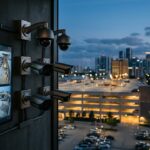
- Camera placement covers all critical zones: entry and exit points, parking garages, loading docks, server rooms, reception areas, and exterior perimeters.
- Live trained professionals review footage in real time, not after the fact. They’re watching for suspicious behavior, unauthorized access, loitering, and potential safety hazards.
- Two-way audio intervention allows monitoring agents to speak directly to individuals on your property—deterring trespassers or unauthorized visitors before they act.
- Immediate escalation protocols are triggered when threats are identified, including notifying on-site contacts, property management, or local emergency services.
The human element is what separates professional remote monitoring from basic recorded surveillance. Footage stored on a DVR does nothing to stop a break-in in progress. Trained eyes watching live—and acting on what they see—do.
Digital Security Guard delivers exactly this through nationwide remote video monitoring services, with 24/7 live security professionals monitoring commercial properties across the country.
The Real Cost Savings for Office Building Owners
Let’s look at the numbers honestly. A mid-sized office building requiring two guards per shift across three daily shifts is looking at roughly $500,000 or more annually in staffing costs alone—before overtime, training, and management overhead.
A comparable commercial remote video monitoring solution typically costs a fraction of that figure, often achieving 60% to 80% in savings depending on property size and monitoring scope. Those aren’t hypothetical savings. They’re operational budget recovered that can be redirected toward building improvements, tenant services, or business growth.
Beyond direct labor costs, consider these additional financial benefits:
- Reduced theft and vandalism losses: Proactive deterrence means fewer incidents, fewer repair bills, and less stolen equipment or inventory.
- Liability documentation: High-quality recorded footage protects building owners in slip-and-fall claims, disputes with tenants, and incidents involving visitors or contractors.
- Insurance documentation support: Many insurers view professional monitoring systems favorably when reviewing commercial property policies—speak with your broker about potential premium impact.
- Lower turnover-related costs: The staffing challenges of guard-based security—high turnover, overtime, sick days—simply don’t apply to remote monitoring.
Security Scenarios Remote Monitoring Handles Well
After-Hours Intrusion Attempts
Office buildings are attractive targets after business hours when foot traffic disappears. Remote monitoring professionals actively watch for individuals attempting to access the building through unsecured entry points, propping doors, or loitering near vulnerable access areas. Audio warnings are issued, and escalation follows if behavior continues. This proactive intervention often stops incidents before property is damaged or accessed.
Parking Structure Security
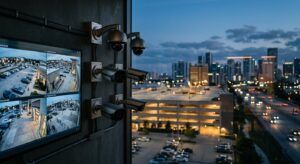
Parking garages and surface lots associated with office buildings are among the most difficult environments to monitor with on-site personnel. They’re large, have multiple blind spots, and are frequently targeted for vehicle break-ins and theft. Strategically positioned cameras combined with live monitoring coverage turn parking areas into actively protected spaces rather than unsupervised risk zones.
Contractor and Vendor Access Management
Office buildings routinely host after-hours contractors, cleaning crews, and delivery personnel. Remote monitoring professionals can verify that only authorized individuals are accessing sensitive areas and flag any deviation from expected patterns—a capability that on-site guards often miss simply due to their limited field of vision.
Employee Safety and Incident Response
For employees working late or arriving early, visible monitoring infrastructure and the knowledge that trained professionals are watching provides a meaningful layer of safety assurance. When incidents do occur—medical emergencies, confrontations, or accidents—remote monitoring agents can coordinate immediate response.
Integrating Remote Monitoring Into Your Building’s Security Plan
The most effective office building security monitoring strategies don’t treat remote video as a standalone solution. They integrate it thoughtfully with your existing access control systems, visitor management protocols, and property management workflows.
Key integration points include:
- Syncing camera coverage with access control alerts so monitoring agents are notified when doors are accessed outside of normal hours
- Establishing clear escalation contacts and communication trees so monitoring professionals know exactly who to notify and when
- Conducting periodic coverage audits to ensure camera placement keeps pace with building changes, new tenant configurations, or identified blind spots
- Aligning monitoring schedules with your building’s actual risk profile—not just a generic template
The U.S. Department of Homeland Security’s guidance on securing commercial facilities reinforces that layered security approaches—combining physical deterrents, surveillance, and human monitoring—consistently outperform single-method strategies in reducing risk.
For a broader look at how these principles apply across commercial property types, Digital Security Guard’s commercial remote video monitoring solutions offer a comprehensive framework that adapts to offices, retail environments, warehouses, and more.
What to Look for in a Remote Video Monitoring Provider
Not all business video monitoring services are created equal. When evaluating providers, prioritize these criteria:
- 24/7 live human monitoring: Automated motion alerts are not the same as trained security professionals actively watching your cameras. Confirm that real people—not just software—are monitoring your property around the clock.
- Trained and vetted monitoring staff: Ask about the training and background screening protocols for monitoring personnel. The quality of the human element matters as much as the technology.
- Scalable coverage: Your provider should be able to grow monitoring coverage as your building’s needs change, whether you’re adding floors, satellite locations, or new high-risk zones.
- Clear response protocols: Understand exactly what happens when an incident is detected. Who is notified? In what order? What documentation is generated?
- Nationwide service capability: If you manage multiple office locations, a provider offering nationwide remote video services eliminates the operational complexity of working with multiple regional vendors.
Frequently Asked Questions
How is remote video monitoring different from a basic security camera system?
A standard security camera records footage for review after an incident. Remote video monitoring puts trained security professionals watching that footage live, around the clock. The critical difference is intervention: monitoring agents can issue audio warnings, contact property management, or escalate to emergency services in real time—preventing incidents rather than just documenting them.
Can remote monitoring fully replace on-site security guards?
For many office buildings, professional remote monitoring provides equivalent or superior coverage at significantly lower cost. However, the right approach depends on your building’s specific needs. Some properties benefit from a hybrid model where remote monitoring handles the majority of coverage and on-site personnel address specific tasks like access control or visitor management.
What types of cameras work best for office building security monitoring?
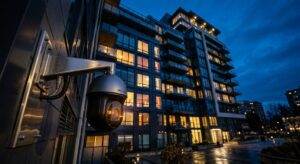
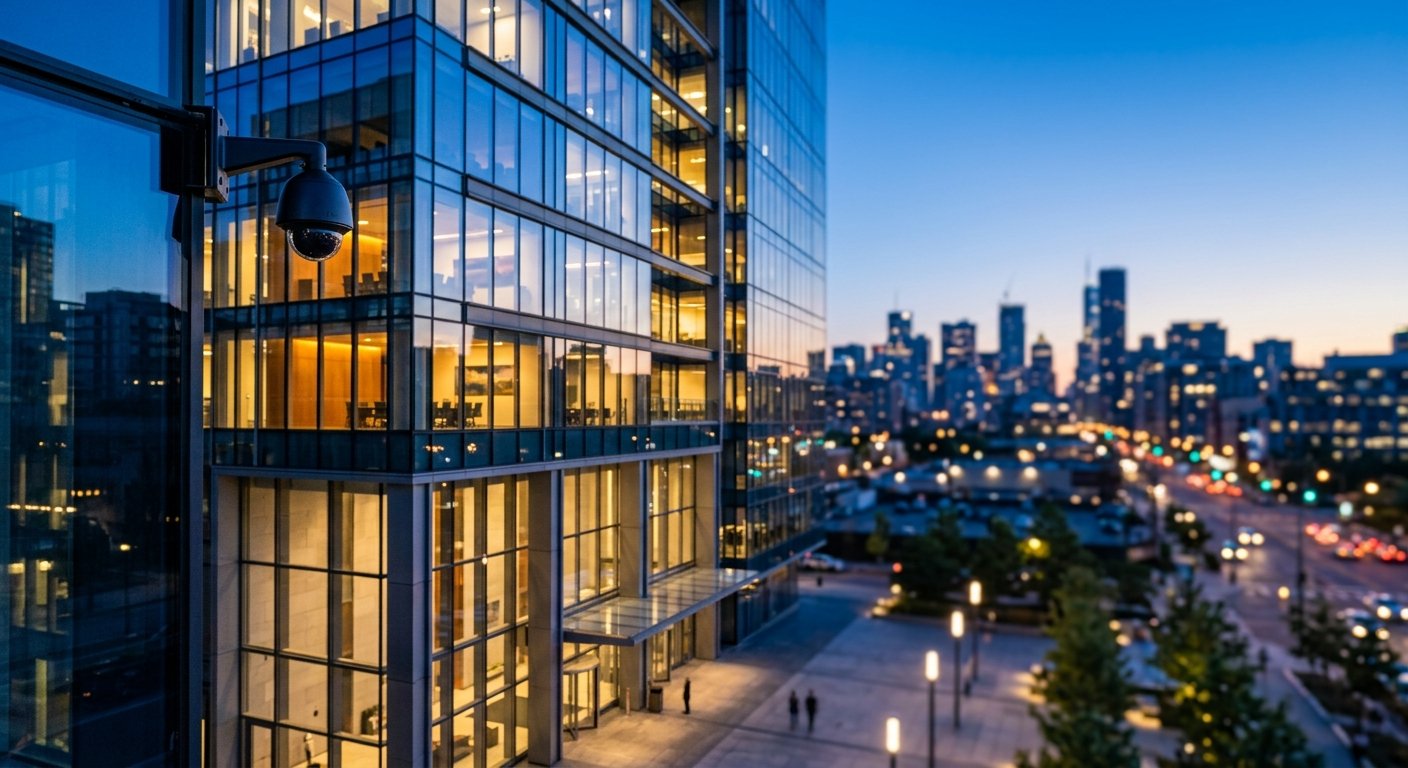
High-definition cameras with low-light capability are essential for overnight coverage. Pan-tilt-zoom (PTZ) cameras allow monitoring professionals to follow activity across larger areas. Camera placement strategy matters more than camera count—working with a professional remote monitoring provider ensures optimal positioning for your specific building layout.
How quickly do monitoring professionals respond to detected incidents?
Response actions by monitoring professionals—such as issuing audio warnings or notifying contacts—happen in real time as incidents are observed. The speed and nature of escalation depends on your pre-established protocols and the severity of the incident detected.
Is remote video monitoring cost-effective for smaller office buildings?
Yes. Smaller office buildings often see the greatest proportional savings because the cost of even one on-site guard typically far exceeds professional remote monitoring fees. The fixed costs of monitoring scale favorably regardless of building size.
Protect Your Office Building Proactively
The shift from reactive security to proactive prevention is the most important decision you can make for your office building’s safety and bottom line. Professional remote monitoring by trained security professionals delivers the coverage, deterrence, and peace of mind that traditional guard staffing promises but rarely delivers consistently—and at a cost structure that makes financial sense.
Digital Security Guard provides 24/7 live security monitoring for commercial properties nationwide. Whether you manage a single office building or a portfolio of commercial assets, our remote video monitoring solutions are built around your specific security challenges.
Contact Digital Security Guard today to discuss a monitoring plan tailored to your office building’s needs and get a clear picture of what proactive security can save you.