Retail shrink cost U.S. businesses approximately $112 billion in losses in recent years, and the problem isn’t getting smaller. Organized retail crime groups have grown more sophisticated, employee theft remains a persistent challenge, and traditional security cameras — the passive, recording-only kind — simply aren’t enough anymore. If your security strategy relies on reviewing footage after something goes wrong, you’re already behind.
The good news: retail store video monitoring has evolved dramatically. Today’s proactive, live surveillance systems don’t just document theft — they stop it. Here’s what every retail operator needs to understand about protecting their bottom line in 2026.
What Is Retail Store Video Monitoring?
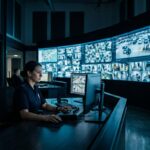
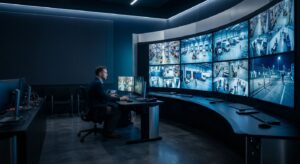
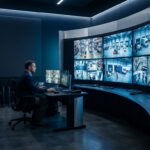
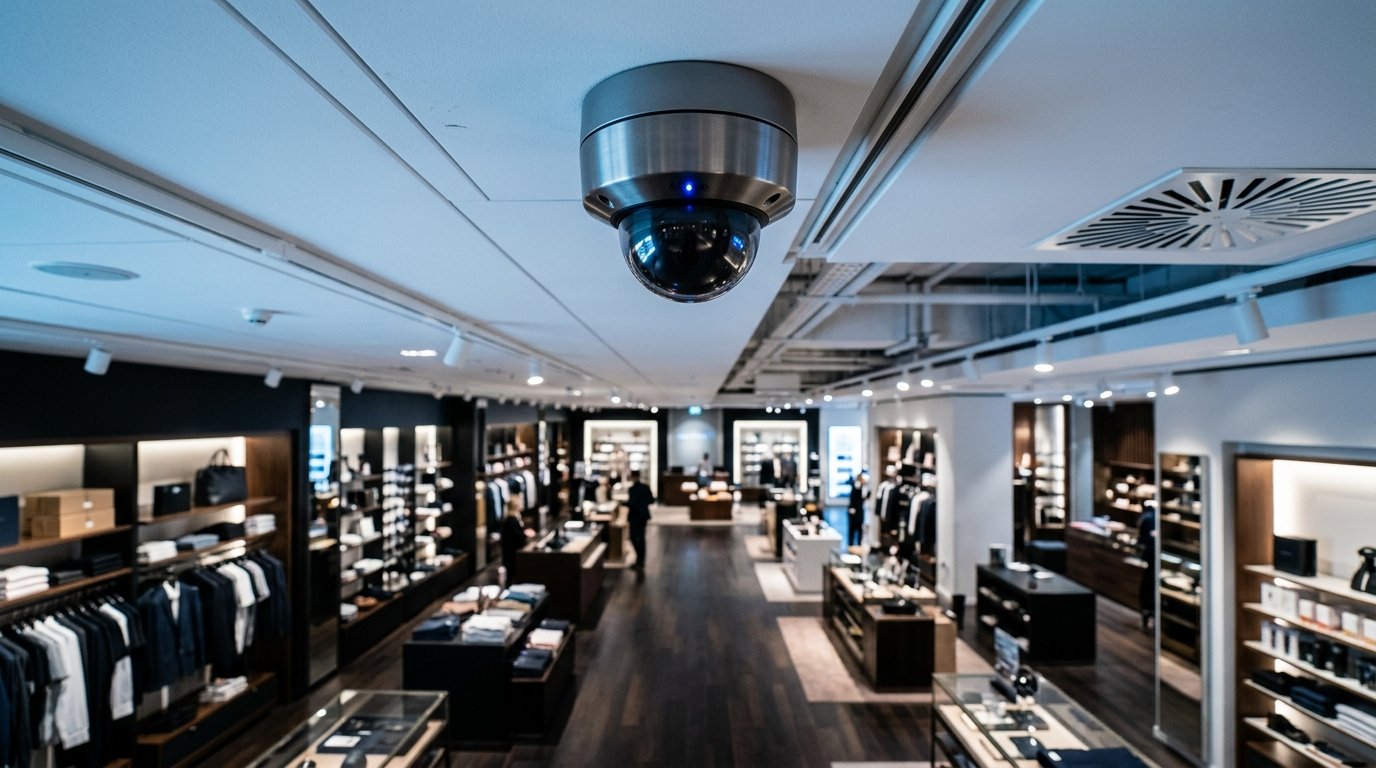
Retail store video monitoring refers to the continuous, live surveillance of a retail environment using strategically placed cameras monitored in real time by trained security professionals. This is fundamentally different from traditional closed-circuit TV systems that simply record footage for later review.
With modern remote video monitoring, live agents observe your store around the clock. When suspicious activity is detected — whether that’s a customer concealing merchandise, an after-hours intruder, or unauthorized access to a stockroom — the monitoring team can respond immediately. That response might include a live audio warning broadcast through on-site speakers, escalation to local authorities, or direct communication with your management team.
The critical distinction is intervention versus documentation. One stops the loss. The other confirms it happened.
The Real Cost of Retail Shrink
Shrink in retail comes from four primary sources:
- External theft (shoplifting and organized retail crime): Historically accounts for the largest share of retail losses
- Employee theft: Internal theft consistently ranks as one of the top contributors to shrink
- Administrative errors: Pricing mistakes, mislabeled inventory, and vendor fraud
- Vendor or supplier fraud: Short deliveries or invoice manipulation
According to the National Retail Federation’s annual security survey, retailers lose roughly 1.4% to 1.6% of total sales to shrink each year. For a store generating $2 million annually, that translates to $28,000–$32,000 in direct losses — before accounting for the labor, insurance, and operational costs associated with each incident.
Live video surveillance addresses the two largest shrink categories directly: external theft and employee misconduct. When employees and customers know that trained professionals are actively watching — not just recording — behavior changes.
How Live Monitoring Outperforms Traditional Security Cameras
Passive Recording vs. Active Prevention
A standard camera system records what happens. A live monitoring system prevents what’s about to happen. That’s the core difference, and it has enormous financial implications for retail operators.
When a trained monitor spots someone concealing merchandise in a fitting room or notices unusual behavior near a high-value display, they can act. An audio intervention — something as direct as “Attention: security is aware of activity in aisle four” — often resolves the situation without further escalation. Shoplifters rely on not being noticed. Remove that assumption and you remove much of the motivation.
The Deterrence Effect
Visible monitoring infrastructure combined with the knowledge that real humans are watching creates a powerful deterrent. Organized retail crime groups, in particular, conduct advance reconnaissance on target stores. When they identify active monitoring — visible cameras, posted signage, and occasional audio interventions — many simply move on to easier targets.
This deterrence effect compounds over time. As your location develops a reputation for proactive security, it becomes a less attractive target within criminal networks.
After-Hours and Low-Staff Period Coverage
Many retail theft incidents occur during closing procedures, early morning deliveries, or during low-traffic hours when staffing is minimal. Remote video monitoring provides consistent coverage regardless of how many employees are on-site. A single overnight manager restocking shelves isn’t a security team — but with 24/7 live monitoring backing them up, they’re far less vulnerable.
Specific Applications in Retail Environments
High-Value Merchandise Areas
Electronics displays, jewelry cases, pharmacy sections, and liquor departments are disproportionately targeted. Strategic camera placement combined with active monitoring creates a focused protective layer around your highest-margin inventory.
Point-of-Sale Monitoring
Employee theft at the register — including sweethearting (failing to ring up items for friends), refund fraud, and cash skimming — is notoriously difficult to catch without consistent observation. Live monitoring of POS areas provides an objective record and an active deterrent that shifts employee behavior even when management isn’t present.
Stockrooms and Receiving Areas
Back-of-house spaces are where inventory disappears quietly over time. Whether it’s vendor short-shipments going undocumented or employees walking out with product during shift changes, stockroom monitoring fills a critical gap that floor managers often can’t cover consistently.
Parking Lots and Exterior Areas
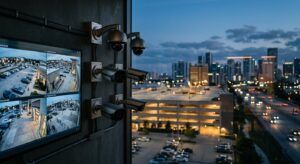
Security incidents don’t begin and end at your front door. Parking lot theft, customer assaults, and vehicle break-ins create liability exposure and damage your store’s reputation. Exterior commercial remote video monitoring extends your security perimeter to where incidents often start.
Remote Monitoring vs. On-Site Security Guards: The Cost Reality
Full-time on-site security guards are expensive. A single uniformed guard working 40 hours per week can cost $40,000–$60,000 or more annually when you factor in wages, benefits, training, and management overhead. Covering all hours — including nights, weekends, and holidays — multiplies that figure substantially.
Remote video monitoring delivers comprehensive, 24/7 coverage at a fraction of that cost. Multiple cameras, multiple zones, and professional monitoring can be deployed for what a single part-time guard would cost. For multi-location retailers, the economics are even more compelling — centralized monitoring can cover several stores simultaneously.
This isn’t about cutting corners on security. It’s about directing your security budget where it delivers the most consistent, measurable protection. Trained monitors watching live feeds across multiple camera angles often provide more reliable coverage than a single on-site guard managing a busy retail floor alone.
Choosing the Right Retail Monitoring Setup
Not every retail environment has the same security needs. Here are the key variables to consider:
- Store size and layout: Larger footprints require more cameras and thoughtful placement to eliminate blind spots
- Product mix: High-value or high-theft merchandise categories warrant more intensive monitoring coverage
- Operating hours: 24/7 operations require continuous monitoring; stores with defined hours may need to prioritize after-hours coverage
- Staffing levels: Lower staff-to-floor ratios increase monitoring urgency
- Historical loss data: Where have you lost inventory before? Start there
A professional remote monitoring provider should conduct a security assessment before recommending a configuration. Cookie-cutter solutions rarely address the specific vulnerabilities of any individual retail operation.
Liability Protection Beyond Theft Prevention
Shrink prevention is the headline benefit of retail video monitoring, but liability protection is equally valuable. Slip-and-fall claims, customer altercations, and employee disputes all benefit from objective, time-stamped video records. In litigation, clear video evidence often resolves disputes quickly and can significantly reduce legal exposure.
According to the National Center for State Courts, civil liability cases involving premises incidents are among the most common types of litigation facing retail businesses. Having documented, professionally monitored video footage provides a factual record that protects owners and managers from fraudulent or exaggerated claims.
Frequently Asked Questions
How is retail store video monitoring different from a standard security camera system?
Standard security cameras record footage passively — they document what happens but don’t prevent it. Retail store video monitoring involves trained security professionals watching live feeds in real time, enabling immediate intervention when suspicious activity is detected. This proactive approach stops theft before it’s completed rather than confirming it afterward.
Can remote video monitoring replace all on-site security staff?
Remote video monitoring is a powerful tool that dramatically reduces the need for on-site security personnel and is often more cost-effective for consistent coverage. However, the right security strategy depends on your specific environment, risk profile, and operational needs. Many retailers find that combining live remote monitoring with streamlined on-site staffing delivers the best protection and the strongest ROI.
What happens when a monitor detects suspicious activity?
Response protocols vary by situation, but typically include one or more of the following: a live audio announcement through on-site speakers to deter the activity, direct notification to store management or on-site staff, and escalation to local law enforcement when appropriate. The goal is always intervention before a loss occurs.
Is retail video monitoring effective against organized retail crime?
Yes. Organized retail crime groups specifically target stores they perceive as having weak security. Visible monitoring infrastructure combined with active human surveillance creates a high-risk environment that deters professional theft rings, which typically prefer easier targets. Live audio intervention capabilities are particularly effective at disrupting coordinated theft attempts.
How much does retail store video monitoring cost compared to on-site guards?
Remote video monitoring typically costs significantly less than employing on-site security guards, especially for extended coverage hours. A full-time guard runs $40,000–$60,000+ annually per shift; remote monitoring can cover multiple locations simultaneously at a fraction of that cost. Exact pricing varies based on the number of cameras, coverage hours, and specific monitoring requirements.
Make 2026 the Year You Stop Reacting to Shrink
Every dollar lost to shoplifting, employee theft, or after-hours break-ins is money that should have stayed in your business. Reactive security — reviewing footage after the fact, filing police reports, writing off inventory — isn’t a strategy. It’s an acceptance of ongoing losses.
Digital Security Guard’s nationwide remote video monitoring services give retail operators something fundamentally different: trained security professionals actively watching your property 24/7, ready to intervene before losses occur. Whether you operate a single location or manage a multi-site retail portfolio, proactive live surveillance is one of the highest-ROI security investments available today.
Stop documenting theft. Start preventing it. Contact Digital Security Guard today to discuss a customized retail monitoring solution for your property.