Remote video monitoring outperforms traditional on-site guards for most commercial properties when cost-efficiency, coverage consistency, and proactive deterrence are the priorities. Trained monitoring professionals watching live feeds 24/7 can detect threats in real time, trigger audio warnings, and contact law enforcement — usually at a lower cost than staffing a physical guard around the clock.
- Remote video monitoring typically costs significantly less than full-time on-site guards while delivering comparable or superior deterrence on most property types.
- Live human monitoring — not automated software alone — is what separates proactive crime prevention from simple video recording.
- On-site guards still add value in certain high-touch scenarios; hybrid security solutions combine both approaches strategically.
- Construction sites, auto dealerships, retail stores, and apartment complexes see strong ROI from remote surveillance systems.
- Consistency of coverage is a critical advantage: remote monitors never call in sick, take breaks, or get distracted.
The Real Security Question Most Owners Are Asking
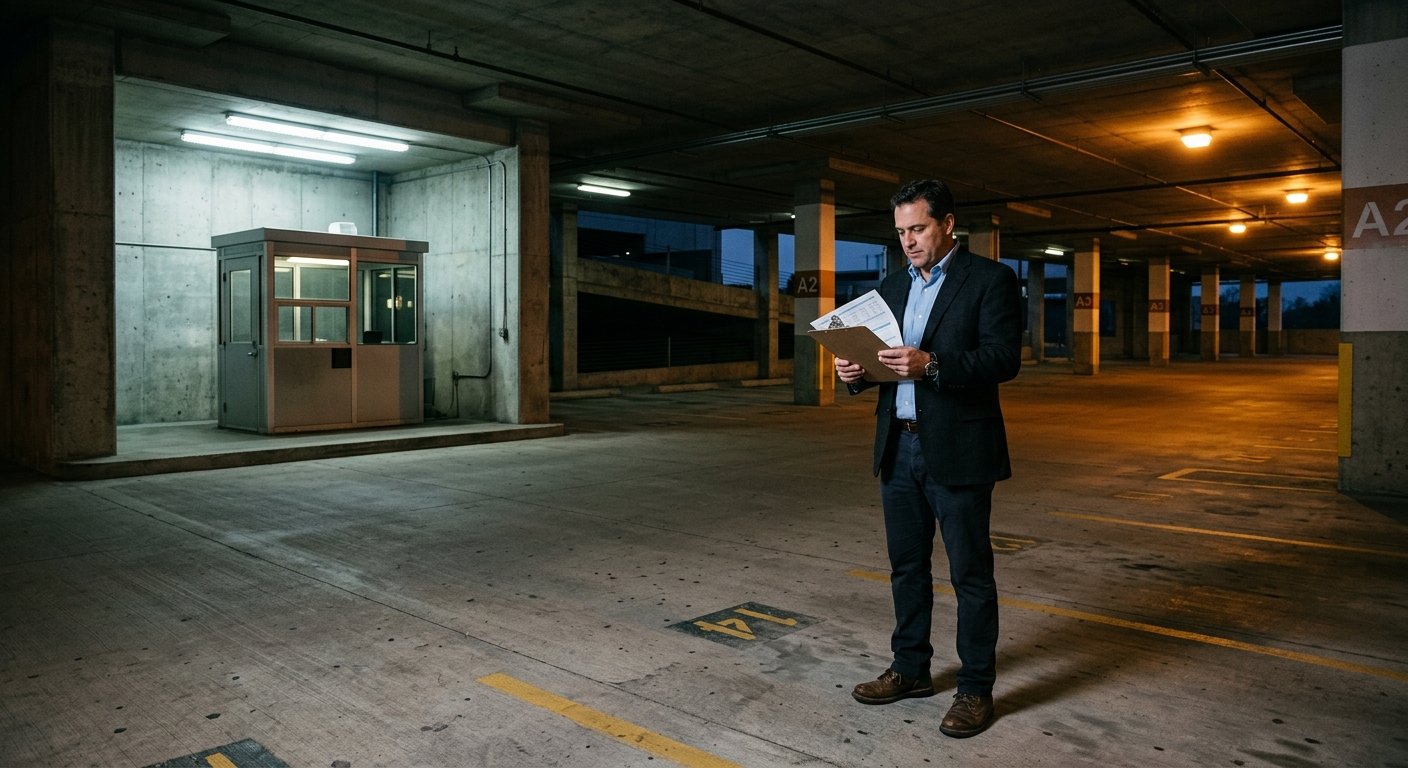
Security budgets are under pressure. The U.S. Bureau of Labor Statistics puts the median annual wage for security guards at $38,020 (May 2025) — that is wages alone, before benefits, training, turnover and agency overhead — and a single shift only covers one-third of the day. For many property owners, that math simply doesn’t work. Yet the alternative isn’t choosing between security and savings. It’s choosing between two fundamentally different models of protection.
Property crime — including burglary, theft, and vandalism — is a steady, expensive risk for businesses and property owners. The question isn’t whether you need security. It’s which model actually prevents crime rather than just documenting it afterward.
How Remote Video Monitoring Actually Works

The term “remote monitoring” is sometimes misunderstood as simply recording footage that gets reviewed after an incident. That’s CCTV recording — a fundamentally passive and reactive approach. True remote video monitoring is something very different.
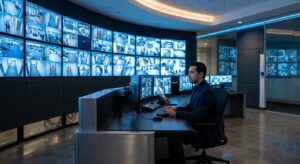
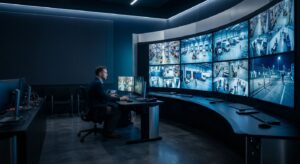
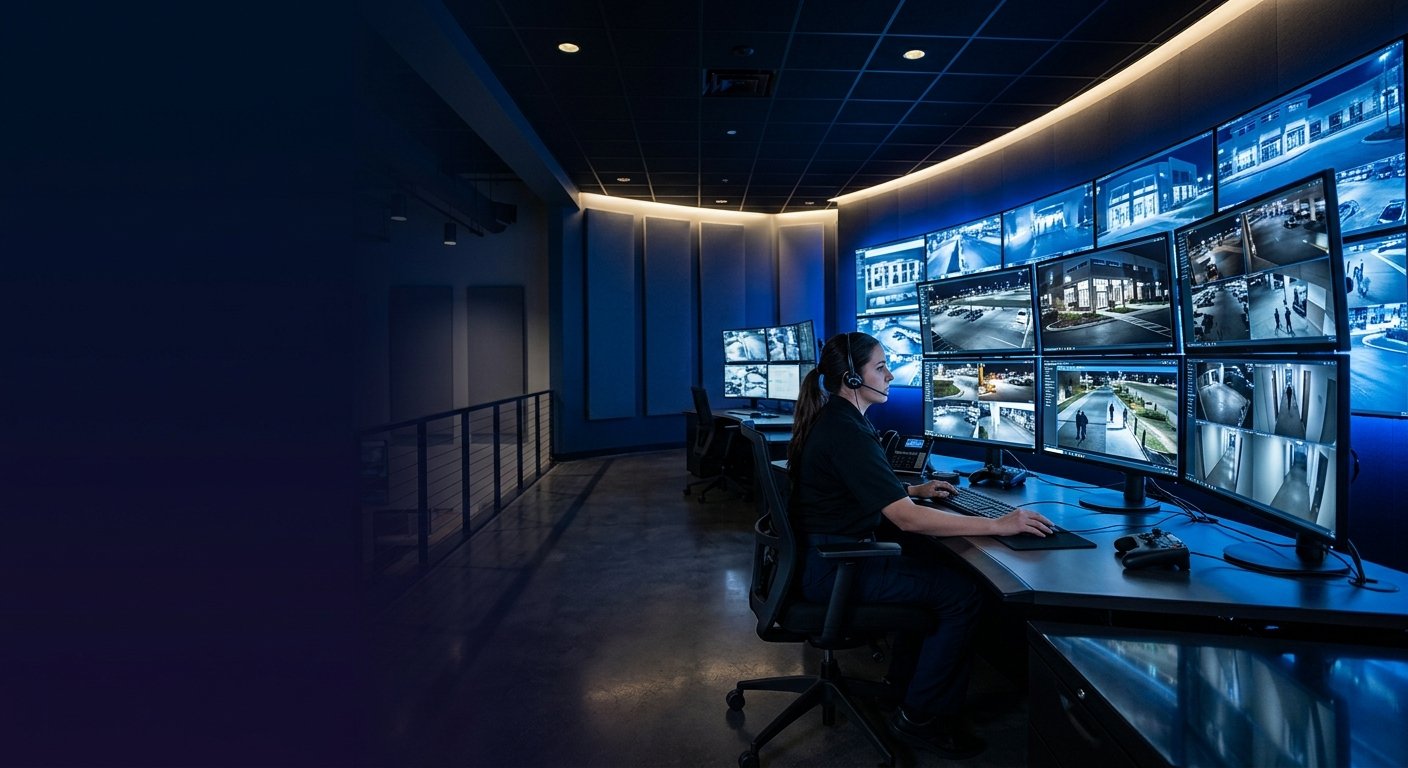
With a professional remote surveillance system, live camera feeds are streamed continuously to a monitoring center staffed by trained security professionals. When activity is detected — whether through motion triggers, behavioral analytics, or direct observation — a real person reviews the situation immediately. If a threat is confirmed, that professional can issue an audible warning through on-site speakers, escalate to law enforcement, or notify property management in real time. The intervention happens while the crime is still unfolding, not the morning after.
Digital Security Guard’s remote video monitoring platform is built around exactly this model: 24/7 live monitoring by trained security professionals who function as virtual security guards — eyes on your property every hour of every day, without the overhead of physical staffing.
The deterrence effect of remote monitoring is often understated. When potential intruders see signage indicating live monitoring and hear a direct audio challenge from a monitoring professional, the overwhelming majority choose to leave immediately. Prevention is always more valuable than documentation.
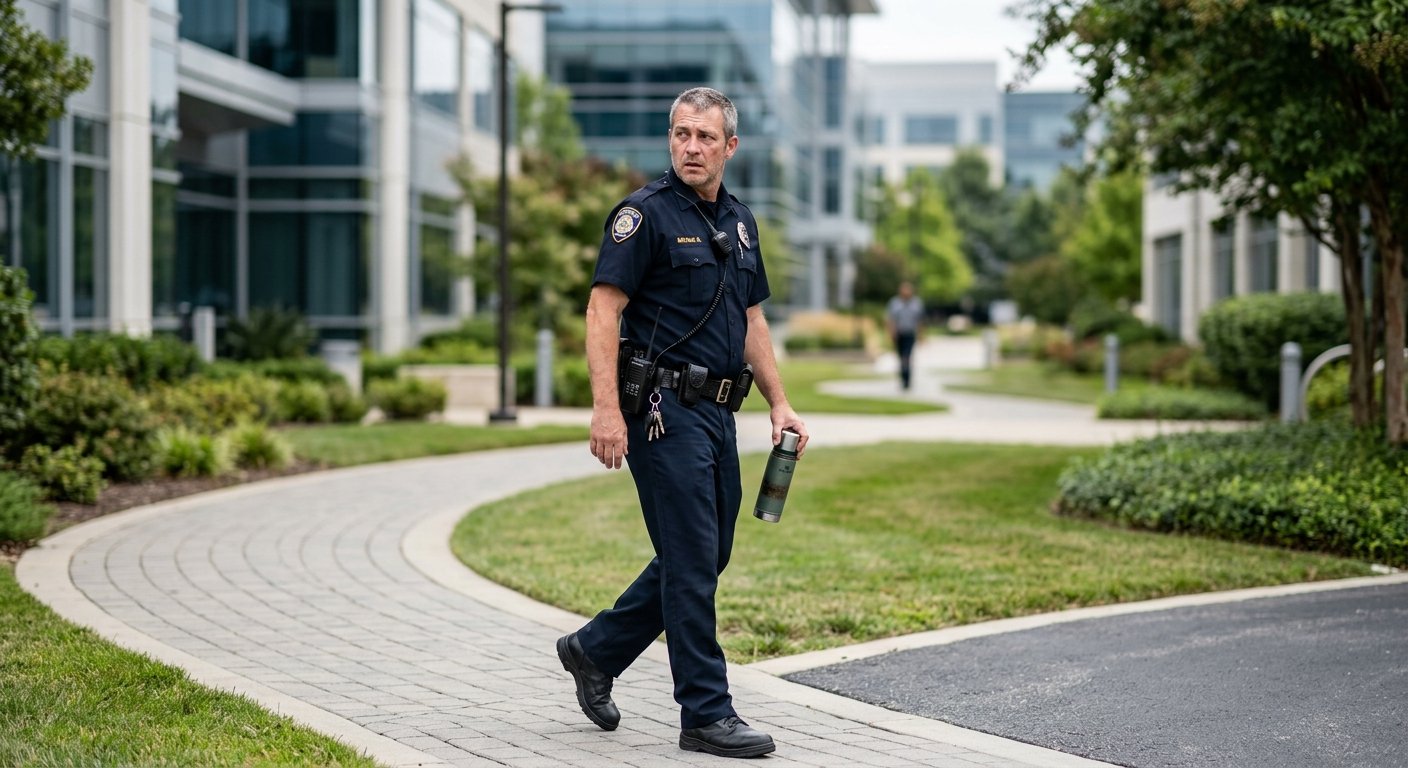
A Direct Comparison: What Each Model Delivers
| Criterion | On-Site Guards | Remote Video Monitoring |
|---|---|---|
| Coverage hours | Shift-based; gaps at shift changes | Continuous 24/7 with no gaps |
| Cost per year (24/7) | Three or more paid shifts, plus benefits and overtime | Fraction of on-site cost |
| Response to threats | Physical presence on-site | Audio intervention + law enforcement contact |
| Consistency | Variable; fatigue, distraction, turnover | Consistent; no fatigue or call-outs |
| Multi-location coverage | Requires separate staffing per site | Single solution covers multiple properties |
| Documentation | Incident reports; limited video | Full HD video record of all activity |
| Liability exposure | Higher (employee actions, injuries) | Lower operational liability |
Where Remote Monitoring Wins Clearly
Construction Sites
Construction sites are among the highest-risk property types for theft. Equipment, copper wire, tools, and materials disappear regularly — and traditional guard coverage of a sprawling, open site is both expensive and ineffective. Remote surveillance systems with wide-angle cameras and live monitoring cover every perimeter zone simultaneously, issuing real-time warnings when unauthorized individuals approach after hours.
Auto Dealerships
Dealership lots represent millions of dollars in inventory sitting in open outdoor space overnight. A single stolen vehicle or catalytic converter theft is an expensive loss. Virtual security guards monitoring live feeds can intervene before a theft is completed — something a single roving guard covering a large lot simply cannot guarantee.
Retail Stores and Warehouses
Retail shrink from shoplifting and employee theft remains a significant drain on margins. Industry retail associations consistently report shrink as one of the top profitability threats. Remote monitoring inside and outside retail environments provides both deterrence and incident documentation without the labor costs of floor security personnel.
Apartment Complexes and Gated Communities
Residential communities face a different security profile — resident safety, package theft, unauthorized access, and liability from incidents in common areas. Digital Security Guard’s gated community video monitoring solutions provide continuous oversight of entry points, parking areas, and amenity spaces, giving residents genuine peace of mind and property managers documented protection against liability claims.
Prevention is always more valuable than documentation — and remote monitoring delivers both.
Where On-Site Guards Retain an Advantage
Honest security advice requires acknowledging that on-site guards do offer something remote monitoring cannot: physical presence. For properties that require ID verification at entry, direct interaction with the public, or physical access control tasks, a human on-site adds a dimension remote systems alone don’t provide.
High-security facilities, certain government properties, and venues with large public gatherings may have specific requirements for physical personnel. In these cases, the most effective approach isn’t choosing one model — it’s combining them.
Many property managers find that deploying one on-site guard at a primary entry point, supported by remote video monitoring across the full property, delivers stronger overall security than staffing multiple guards — at a significantly lower total cost. This hybrid security approach is increasingly common in 2026.
The ROI Case for Remote Video Monitoring
The financial case is straightforward. Providing true 24/7 on-site guard coverage requires three full shifts of staffing — often four positions to cover days off and sick leave. As a rough example, three shifts paid at the BLS median wage above add up to more than $114,000 a year in wages alone — before benefits, overtime, management overhead and liability exposure.
Remote video monitoring delivers equivalent or superior coverage — particularly for outdoor areas, perimeters, and after-hours periods — at a fraction of that investment. For businesses operating multiple locations, the efficiency multiplies: one remote monitoring contract can cover several properties simultaneously, something that would require entirely separate guard contracts at each site.
Beyond direct cost savings, consider the indirect ROI: incidents prevented rather than documented, liability claims that don’t materialize because incidents didn’t occur, and management time not spent dealing with the aftermath of theft or vandalism. For commercial security decision-makers evaluating total cost of ownership, remote monitoring consistently outperforms on-site staffing across most property categories.
Frequently Asked Questions
Can remote video monitoring really deter crime, or does it just record it?
Professional remote video monitoring with live human oversight is genuinely proactive. When trained monitoring professionals detect suspicious activity, they can issue real-time audio warnings through on-site speakers and contact law enforcement before a crime is completed. This is fundamentally different from passive CCTV recording, which only documents crimes after the fact.
What types of properties benefit most from remote surveillance systems?
Properties with large outdoor areas, high-value inventory, after-hours vulnerability, or multiple access points see the strongest results. Construction sites, auto dealerships, retail centers, warehouses, apartment complexes, and gated communities are among the most common applications. Any property where 24/7 on-site staffing is cost-prohibitive is a strong candidate.
How is remote video monitoring different from a standard alarm system?
Alarm systems trigger alerts after a threshold is crossed — typically after someone has already entered a space. Remote video monitoring with live human oversight detects and responds to threats before they escalate, often before any unauthorized entry occurs. Trained professionals assess the situation in real time rather than relying on automated triggers alone.
Is a hybrid security approach — combining remote monitoring with on-site guards — a good option?
For many properties, a hybrid model delivers the strongest security posture at a manageable cost. One on-site guard handles direct public interaction and physical access control, while remote monitoring covers perimeters, parking areas, and after-hours periods comprehensively. This approach is increasingly adopted by commercial property managers in 2026 as a cost-effective middle ground.
How quickly can remote monitoring professionals respond to an incident?
Response speed depends on the monitoring platform and staffing levels. Professional monitoring centers with trained personnel reviewing live feeds can typically issue on-site audio interventions within seconds of detecting a confirmed threat and initiate law enforcement contact simultaneously. The key is live human oversight — not delayed review or automated alerts alone.
Get a Security Assessment for Your Property
Find out whether remote video monitoring, a hybrid solution, or another approach is the right fit — and get a clear picture of what 24/7 live monitoring would cost for your specific property.

About Digital Security Guard
Digital Security Guard provides remote video monitoring solutions for commercial and residential property owners seeking proactive crime prevention rather than reactive recording. Combining advanced security technology with trained human monitoring professionals, they deliver 24/7 surveillance services that prevent theft, vandalism, and liability issues at a fraction of the cost of on-site security guards. Their solutions serve diverse property types including construction sites, retail stores, auto dealerships, apartment complexes, and gated communities across the nation. Visit digitalsecurityguard.com →