Auto dealerships lose an estimated $1.3 billion annually to vehicle theft and parts theft, according to the National Insurance Crime Bureau. For dealership owners and fleet managers, that number isn’t a statistic — it’s a direct threat to inventory, revenue, and reputation. The hard truth is that most of that theft happens after the gates close, when no one is watching.
The question isn’t whether your vehicle lot needs better security. The question is what kind of security actually stops crime before it happens — not just records it after the fact.
Why Vehicle Lots Are High-Value Targets
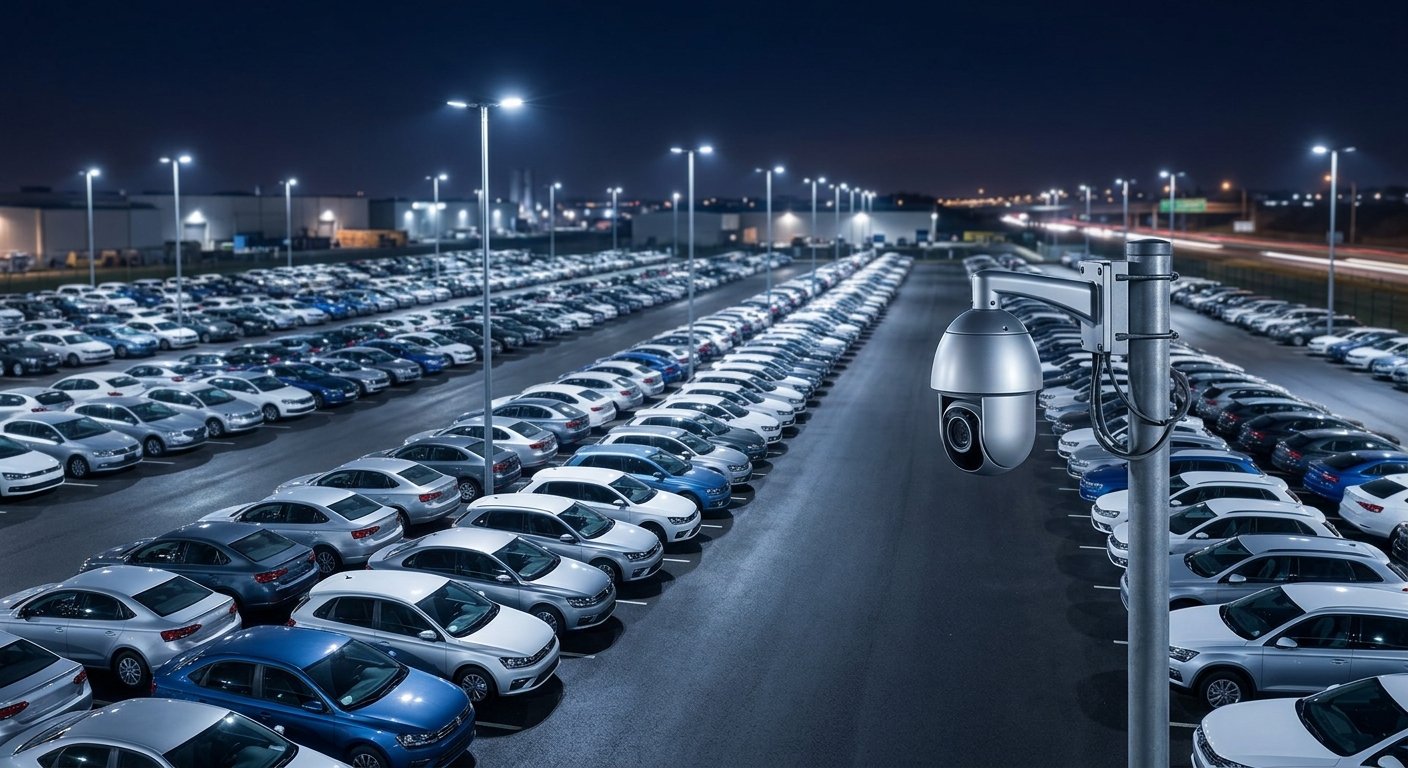
Vehicle lots present an attractive combination for criminals: high-value assets, predictable hours, and often minimal deterrents after closing time. Unlike a retail store with a complex interior layout, a car lot offers open lines of sight, multiple access points, and inventory that can be driven away or stripped for parts in minutes.
The vulnerabilities extend beyond full vehicle theft. Catalytic converter theft has skyrocketed in recent years — the National Highway Traffic Safety Administration has flagged it as one of the fastest-growing property crimes in the country. Add to that tire theft, wheel theft, stereo equipment removal, and vandalism, and the risk exposure on any unmonitored lot becomes significant.
Traditional security measures — perimeter fencing, basic cameras, motion-sensor lights — create the appearance of security without delivering its substance. Criminals who scout locations know exactly how to work around static deterrents. What they can’t easily counter is an alert human being watching in real time, ready to act.
The Limits of Recorded-Only Camera Systems
Installing cameras is a standard first step, and it’s a reasonable one. But there’s a critical distinction between a camera system that records events and one that actively prevents them. Most standalone camera setups fall firmly in the first category.
Recorded footage is valuable for insurance claims and police investigations after a theft occurs. It does very little to stop the theft in the first place. A criminal who has already stolen a vehicle or stripped a catalytic converter isn’t deterred by the knowledge that the crime was captured on video.
This is the reactive trap many property owners fall into: investing in documentation rather than deterrence. For high-value inventory environments like auto dealerships and fleet vehicle yards, that distinction carries a real financial cost.
How Remote Video Monitoring Changes the Equation
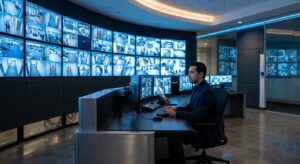
Remote video monitoring bridges the gap between passive recording and active protection. With professional remote video monitoring, trained security professionals watch your property in real time — 24 hours a day, 7 days a week — and can intervene the moment suspicious activity begins.
Here’s how it works in a vehicle lot context:
- Strategic camera placement covers all entry points, perimeter zones, and high-value inventory areas on the lot.
- Advanced video analytics detect unusual movement patterns after hours and alert monitoring professionals immediately.
- Live audio intervention allows monitoring specialists to address trespassers directly via on-site speakers — often ending the threat before damage or theft occurs.
- Coordinated law enforcement notification provides authorities with real-time information and video evidence when escalation is necessary.
The deterrent effect is significant. When a would-be thief hears an authoritative voice announce that they’re being observed and that law enforcement has been contacted, the calculus changes immediately. Most criminal activity is opportunistic — remove the opportunity, and you remove the incident.
Auto Dealership Video Monitoring: Industry-Specific Challenges
Auto dealerships face a unique set of security challenges that make generic security solutions inadequate. A dealership lot may hold millions of dollars in vehicle inventory spread across a large open area, with multiple access points including customer entrances, service bay doors, and delivery lanes.
After-hours risks at dealerships include:
- Test drive vehicle theft — vehicles left accessible or improperly secured after close
- Inventory vehicle break-ins — targeting electronics, navigation systems, and airbags
- Parts theft from service bay areas — tools, equipment, and customer vehicles left overnight
- Vandalism targeting new inventory — keying, window damage, and intentional tire deflation
- Catalytic converter theft — especially targeting hybrid models with higher-value converters
Professional commercial remote video monitoring for dealerships accounts for all of these threat vectors. Monitoring professionals learn the normal patterns of a specific lot — what vehicles are where, what the typical end-of-day configuration looks like — making anomalies easier to spot and faster to address.
Cost Comparison: Remote Monitoring vs. On-Site Guards
One of the most common objections to upgrading security is cost. That concern deserves a direct answer, because when you compare remote video monitoring to the alternative, the numbers tell a clear story.
A single on-site security guard working overnight shifts costs an average of $25 to $45 per hour, depending on the market. For one guard, one post, that adds up to roughly $5,500 to $9,900 per month — before accounting for holidays, sick days, liability coverage, or management overhead. Larger lots requiring multiple coverage points multiply that cost quickly.
Remote video monitoring with trained professionals watching multiple camera feeds simultaneously delivers comprehensive coverage at a fraction of that cost. One monitoring professional can oversee an entire dealership lot more effectively than a single on-site guard who is physically limited to one location at a time.
Beyond direct cost savings, the ROI calculation should also include:
- Reduction in theft and vandalism losses
- Potential insurance premium adjustments when professional monitoring is documented
- Liability protection through verifiable video records
- Reduced operational disruptions from criminal incidents
Virtual Security Guards: Technology With Human Intelligence
The term “virtual security guard” describes exactly what professional remote monitoring delivers — the judgment and response capability of a trained security professional, deployed remotely rather than physically on-site.
This isn’t an automated system making decisions based on simple motion triggers. The monitoring professionals overseeing your vehicle lot are trained to distinguish between a delivery driver arriving early, an employee returning for forgotten keys, and a criminal attempting to access inventory without authorization. That contextual judgment is what separates effective deterrence from nuisance alerts.
Digital Security Guard’s 24/7 live monitoring combines camera intelligence with human expertise. When an alert is generated, a trained professional reviews the situation in real time and determines the appropriate response — whether that’s a verbal warning, a law enforcement notification, or simply logging a confirmed non-threat. That human element is essential for both effectiveness and proportionality.
Vehicle Inventory Monitoring Beyond Dealerships
The need for professional vehicle lot security extends well beyond auto dealerships. Fleet operators, rental car companies, auction yards, and equipment rental businesses all maintain significant vehicle inventory that faces similar after-hours risks.
Construction sites with heavy equipment and work vehicles are particularly vulnerable — the equipment theft industry costs contractors hundreds of millions annually in direct losses and project delays. Apartment communities with large resident parking areas also benefit from monitored surveillance to prevent vehicle break-ins and protect residents.
Any property where vehicles represent significant value — whether to an owner, a customer, or a resident — is a candidate for professional vehicle lot monitoring.
What to Look for in a Vehicle Lot Monitoring Provider
Not all remote monitoring services deliver the same level of protection. When evaluating providers for your dealership or vehicle lot, prioritize these factors:
- Genuine 24/7 live monitoring — verify that humans are watching, not just recording
- Industry-specific experience with vehicle lots and dealership environments
- Two-way audio capability for real-time verbal deterrence
- Clear escalation protocols — documented response procedures for different threat levels
- Nationwide service coverage with consistent monitoring standards across locations
- Transparent reporting — regular incident logs and footage access
Digital Security Guard provides nationwide remote video monitoring services specifically designed for commercial properties, including auto dealerships and vehicle lots, with trained monitoring professionals available around the clock.
Frequently Asked Questions
How does remote video monitoring deter theft more effectively than cameras alone?
Remote video monitoring adds a human response layer that recorded-only systems lack. When a trained professional detects suspicious activity, they can issue live verbal warnings through on-site speakers and coordinate with law enforcement in real time. This active intervention stops most criminal activity before theft or damage occurs — something a passive recording system cannot do.
Can one monitoring center effectively watch an entire dealership lot?
Yes. Strategic camera placement combined with video analytics allows monitoring professionals to maintain full situational awareness of a dealership’s perimeter, inventory areas, and access points simultaneously. In many cases, remote monitoring provides broader and more consistent coverage than a single on-site guard who is physically limited to one location.
What happens when suspicious activity is detected after hours?
When monitoring professionals identify a potential threat, the typical response involves a live verbal warning through on-site audio speakers, followed by law enforcement notification if the situation warrants it. The specific escalation protocol is established with each client based on their property type and preferences.
Is remote vehicle lot monitoring cost-effective for smaller operations?
Remote monitoring is often more cost-effective for smaller operations than on-site guards, precisely because the cost of a monitoring professional is distributed across multiple clients. A single dealership or fleet yard can access professional-grade 24/7 surveillance at a monthly cost that’s typically well below what a part-time guard would cost.
How quickly can a monitoring professional respond to an alert?
Monitoring professionals review alerts as they’re generated — the response is live, not delayed. Advanced video analytics flag unusual activity immediately, and trained professionals assess the situation in real time rather than reviewing footage after the fact.
Protect Your Inventory Before the Next Incident
Vehicle theft doesn’t send advance notice. The dealerships and fleet operators who avoid significant losses aren’t the ones who respond fastest after a theft — they’re the ones who made it difficult for theft to happen in the first place.
Professional vehicle lot monitoring is that proactive layer. It’s the difference between handing investigators a video of a theft and preventing the theft from occurring at all.
If your dealership, fleet yard, or vehicle lot relies on recorded-only cameras and hope, it’s time to reconsider that strategy. Contact Digital Security Guard today to learn how our 24/7 live monitoring services can protect your vehicle inventory, reduce your liability exposure, and give you genuine peace of mind after the gates close.