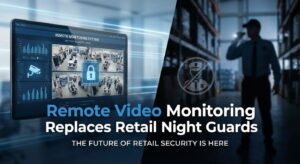
Security costs are rising faster than ever. Traditional security guard services now average $25-$40 per hour in 2026, translating to over $200,000 annually for a single 24/7 post. Meanwhile, theft, vandalism, and liability claims continue draining budgets across commercial and residential properties. Forward-thinking property managers are discovering that remote video monitoring delivers the same proactive protection at a fraction of the cost, with documented savings of 60-80% compared to physical guards.
Understanding the true return on investment for remote surveillance monitoring goes beyond simple price comparisons. When you factor in reduced theft, lower insurance premiums, eliminated liability risks, and prevented losses, the financial case becomes overwhelmingly clear. Let’s break down exactly how to calculate your security savings and why 2026 is the ideal time to make the switch.
The Real Cost of Traditional Security in 2026
Before calculating savings, you need to understand what you’re currently spending. Traditional security approaches carry visible and hidden costs that quickly accumulate:
On-Site Security Guard Expenses
A single security guard working 24/7 coverage requires 4.2 full-time employees when accounting for shifts, breaks, vacation, and sick time. At current 2026 rates:
- Base hourly wage: $25-$40 per hour
- Annual cost per guard position: $52,000-$83,200
- True 24/7 coverage cost: $218,400-$349,440 annually
- Additional costs: Benefits, insurance, training, equipment, supervision
- Total annual investment: $250,000-$400,000 per location
These figures don’t account for the inconsistency problem. Guards experience fatigue, distraction, and physical limitations. They can only be in one location at a time, creating blind spots across your property. Security gaps lead to missed incidents and reactive responses rather than crime prevention.
Basic Camera System Limitations
Many properties install camera systems expecting comprehensive security, only to discover cameras alone provide just evidence collection, not active protection. Recording equipment captures crimes but doesn’t prevent them. Without professional monitoring, your cameras become expensive documentation tools that rarely deliver ROI through actual loss prevention.
How Remote Video Monitoring Works
Professional video monitoring transforms passive cameras into proactive security systems. Trained security professionals watch your property in real-time from remote monitoring centers, responding immediately to suspicious activity. Unlike basic camera systems, remote surveillance monitoring provides:
Live monitoring by trained security personnel who recognize threats and take action instantly. When someone enters a restricted area after hours, monitors don’t just record—they activate audio warnings, alert authorities, and direct responses that stop crimes in progress.
Multiple camera angles covered simultaneously by a single operator using advanced software that flags unusual activity. This multiplies effectiveness while reducing costs compared to physical patrols.
Consistent vigilance without human fatigue factors. Remote monitoring teams work in optimal conditions with backup support, ensuring no lapses in coverage during shift changes or emergencies.
Calculating Your Remote Monitoring ROI
Use this framework to determine exact savings for your property. These calculations reflect real 2026 pricing and demonstrated results from current business security solutions implementations.
Direct Cost Comparison
Start with the straightforward substitution calculation:
Traditional Guard Cost: $250,000-$400,000 annually for 24/7 coverage
Remote Video Monitoring Cost: $800-$2,500 monthly ($9,600-$30,000 annually) depending on property size, camera count, and monitoring hours
Immediate Savings: $220,000-$370,000 per year (60-80% reduction)
For a construction site paying $300,000 annually for guard services, switching to 24/7 video monitoring services at $18,000 yearly creates $282,000 in direct savings. That’s a first-year ROI of over 1,500%.
Prevented Loss Value
Remote monitoring stops crimes before completion, preventing losses that impact your bottom line:
- Construction site theft averages $15,000-$50,000 per incident in 2026
- Retail inventory shrinkage costs businesses 1.6% of revenue annually
- Auto dealership vehicle theft attempts average $35,000-$75,000 per vehicle
- Vandalism damage and cleanup ranges from $5,000-$25,000 per occurrence
A single prevented theft incident often pays for an entire year of virtual security monitoring. Properties report average theft reduction of 70-90% after implementing professional monitoring, translating to tens or hundreds of thousands in prevented losses depending on your industry.
Insurance Premium Reductions
Insurance carriers recognize that proactive monitoring significantly reduces risk. Property owners typically see:
- Commercial property insurance reductions: 10-25%
- Liability coverage discounts: 15-30%
- Workers compensation savings through improved safety: 5-15%
On a $50,000 annual insurance premium, a conservative 15% reduction creates $7,500 in additional annual savings, further improving your security system ROI.
Liability and Legal Cost Avoidance
Remote monitoring creates documented response records that protect against liability claims. When incidents occur, you have verified evidence showing proper security measures were in place and appropriate actions taken. This documentation prevents frivolous lawsuits and reduces settlement costs.
A single prevented slip-and-fall lawsuit (averaging $50,000-$150,000 in settlements) or wrongful security claim covers years of monitoring costs.
Industry-Specific ROI Examples
Construction Sites
Construction sites face unique security challenges with valuable equipment, materials, and copper wiring spread across large, changing layouts. A typical 5-acre commercial construction site calculation:
Previous Security Cost: Two rotating guards at $280,000 annually
Remote Monitoring Cost: $24,000 annually
Prevented Equipment Theft: $85,000 (estimated based on previous losses)
Total First-Year Value: $341,000
Retail Locations
Retail businesses benefit from both external security and internal loss prevention. Remote monitors watch for shoplifting, employee theft, and after-hours break-ins while also verifying opening/closing procedures:
Previous Security Approach: Part-time guard plus basic cameras: $65,000
Remote Monitoring: $15,600 annually
Reduced Shrinkage: $42,000 (1.2% inventory reduction on $3.5M revenue)
Total First-Year Value: $91,400
Apartment Communities
Multi-family properties require comprehensive coverage across parking areas, amenities, and entry points. A 200-unit community analysis:
Previous Security: Roving guard service at $120,000 annually
Remote Monitoring: $21,000 annually
Reduced Property Damage: $18,000
Liability Claims Avoided: $25,000
Resident Retention Value: $30,000 (improved security increases renewals)
Total First-Year Value: $172,000
Auto Dealerships
Dealerships protect high-value inventory vulnerable to organized theft rings. Remote monitoring provides lot coverage that physical guards cannot match:
Previous Security: $180,000 for guard coverage
Remote Monitoring: $28,000 annually
Prevented Vehicle Theft: $140,000 (two incidents stopped)
Insurance Reduction: $12,000
Total First-Year Value: $304,000
Hidden Benefits That Multiply ROI
Beyond direct financial returns, remote surveillance monitoring delivers operational advantages that improve your business:
Operational Intelligence: Monitoring footage reveals workflow inefficiencies, safety hazards, and operational patterns that help optimize processes. Property managers use monitoring data to improve lighting, adjust access schedules, and enhance overall operations.
Employee Safety Enhancement: Workers feel more secure knowing trained professionals watch for threats and can summon emergency response immediately. This improves morale, reduces turnover, and minimizes workers compensation claims.
Vendor and Contractor Accountability: Remote monitoring verifies that cleaning crews, maintenance teams, and contractors perform scheduled work properly and safely. This oversight prevents disputes and ensures service quality.
Scalability Without Proportion Cost Increases: Adding coverage to new areas or additional properties costs incrementally with remote monitoring, while physical guard expansion requires full additional headcount.
Maximizing Your 2026 Remote Monitoring Investment
Achieve optimal ROI by following these implementation best practices:
Conduct a Security Audit: Document current costs including guards, equipment, losses, insurance, and incident responses. Identify high-risk areas and peak threat times to optimize camera placement and monitoring schedules.
Start with Critical Coverage: Implement monitoring at highest-risk locations first to demonstrate immediate value and build support for expanded coverage.
Choose Monitored Entry Points and Assets: Strategic camera placement at access points, high-value storage, and perimeter boundaries creates comprehensive protection efficiently.
Integrate with Existing Systems: Professional video monitoring works with most camera systems, access controls, and alarm systems, maximizing your previous security investments.
Measure and Document Results: Track incidents, response times, prevented losses, and cost savings. Documented results justify expansion and demonstrate security program effectiveness to stakeholders.
Making the Switch in 2026
The security landscape has shifted dramatically. Advanced analytics, improved network infrastructure, and sophisticated monitoring platforms make remote video monitoring more effective and affordable than ever. Property owners who delay adoption continue paying premium prices for inferior protection.
The transition process is straightforward. Professional monitoring providers assess your property, recommend optimal camera positioning, integrate with existing equipment where possible, and begin coverage within days. Many providers offer trial periods that let you verify effectiveness before long-term commitment.
Calculate your specific ROI by totaling current security expenses, estimating prevented losses based on past incidents, and comparing against remote monitoring costs for your property size. The math consistently favors professional monitoring across virtually all commercial and residential applications.
Secure Your Property and Your Budget
Remote video monitoring delivers superior protection at a fraction of traditional security costs. The 60-80% savings compared to physical guards, combined with prevented losses and reduced insurance premiums, creates compelling financial returns that improve your bottom line immediately.
Digital Security Guard specializes in professional video monitoring tailored to your specific security challenges. Our trained security professionals provide 24/7 monitoring coverage that actively prevents crime rather than just recording it. We’ve helped property owners across industries eliminate security gaps while dramatically reducing costs.
Contact Digital Security Guard today for a customized ROI analysis for your property. Discover exactly how much you can save while improving security effectiveness. Call us now or visit our website to schedule your free security assessment and start protecting your property and your budget in 2026.