Hiring on-site security guards costs the average commercial property owner between $30,000 and $80,000 per year — per guard. For properties that require 24/7 coverage across multiple access points, that number multiplies quickly. Yet despite that significant investment, a single guard walking a patrol route can only be in one place at a time, and cannot monitor 15 camera feeds simultaneously while also managing an entry gate.
Virtual security monitoring changes the equation entirely. By combining advanced camera technology with trained human professionals who monitor your property remotely in real time, this approach delivers broader coverage, faster threat detection, and documented deterrence — often at a fraction of traditional guard costs. Here’s why more property owners, facility managers, and HOA boards are making the switch.
What Is Virtual Security Monitoring?
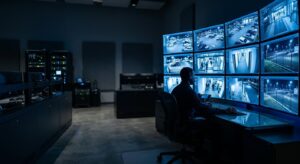
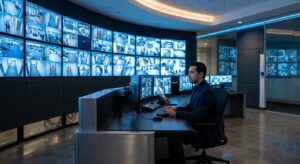
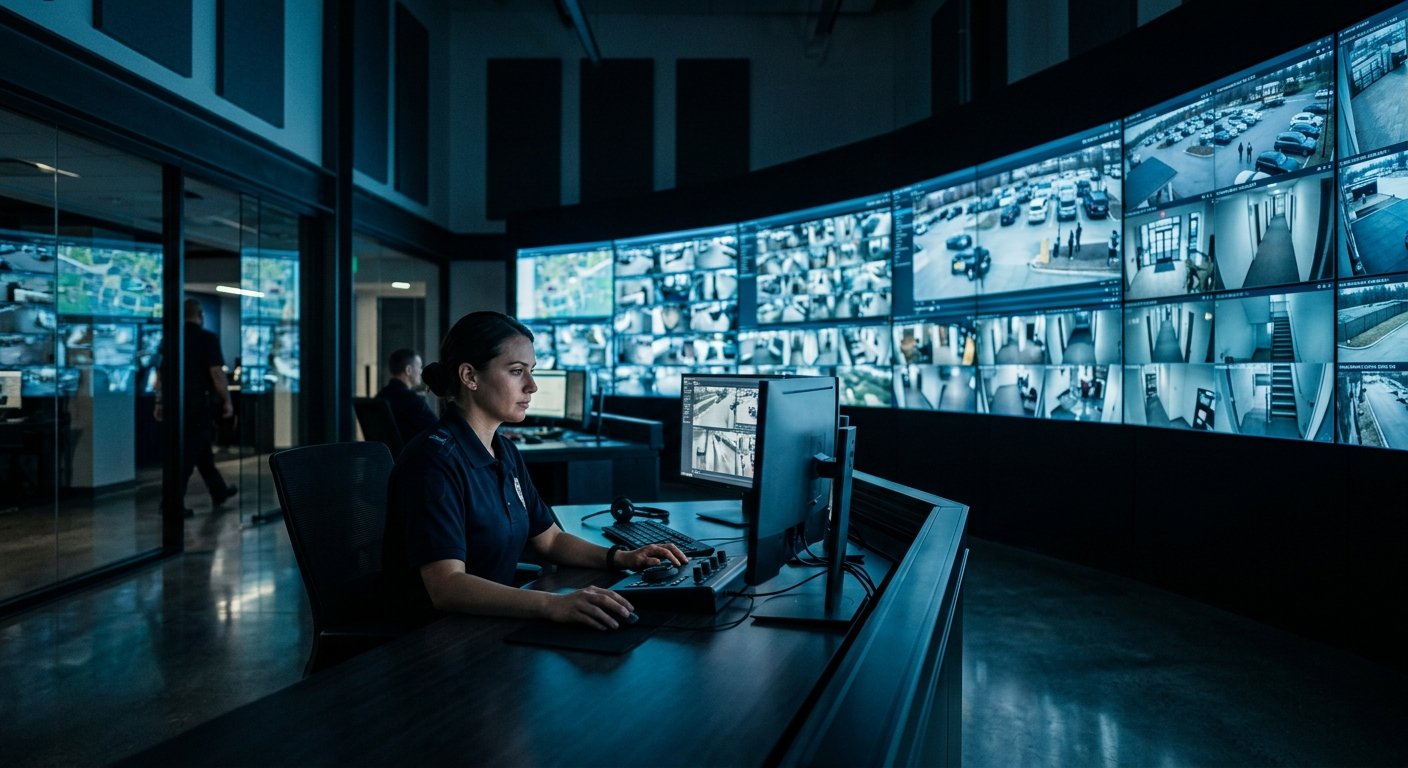
Virtual security monitoring — also called remote video monitoring or virtual guard services — is a proactive security service where trained professionals watch live video feeds from your property around the clock. When suspicious activity is detected, those professionals can issue real-time audio warnings through on-site speakers, contact local authorities, or alert designated personnel immediately.
This isn’t passive recording. It’s active, human-driven intervention. The distinction matters: a traditional DVR system captures crime after the fact, while live video surveillance with professional monitoring aims to stop incidents before they escalate. According to the Bureau of Justice Statistics, visible deterrents and active monitoring are among the most effective tools for reducing property crime — and virtual monitoring delivers both.
1. Dramatically Lower Cost Without Sacrificing Coverage
Cost is usually the first conversation. A licensed, insured on-site security guard working a standard 8-hour shift typically costs $18–$35 per hour. Round-the-clock coverage with overlapping shifts, benefits, and turnover costs can push annual expenses well past six figures for a single location.
Remote surveillance systems serving the same property — with trained professionals monitoring multiple camera feeds simultaneously — typically cost significantly less. One monitoring professional can actively oversee an entire construction site, auto dealership lot, or apartment complex perimeter at once, without bathroom breaks, fatigue, or distraction.
For operations directors managing multiple locations, the math becomes even more compelling. A single virtual security monitoring team can cover several properties simultaneously, delivering consistent oversight that would require staffing up at every site independently.
2. More Eyes, More Coverage, All the Time
A security guard walking a perimeter can watch one area at a time. Even a stationary guard at a booth monitors only what’s directly visible. Virtual guard services eliminate these blind spots.
With a properly designed remote video monitoring setup, trained professionals can watch:
- All entry and exit points simultaneously
- Parking lots, loading docks, and storage areas
- Interior corridors, lobbies, and high-value zones
- Perimeter fencing across large footprints like construction sites or auto dealerships
- Multiple properties in different locations from a single monitoring center
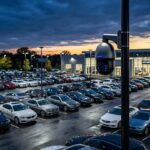
This comprehensive coverage is particularly valuable for properties with complex layouts. Auto dealerships, for example, have large outdoor lots with high-value inventory spread across significant acreage. Our auto dealership video monitoring solutions are specifically designed to address this challenge — keeping watch over every row of inventory through the night when theft risk is highest.
3. Proactive Deterrence, Not Just Documentation
Here’s the critical difference between recorded surveillance and live video surveillance with active monitoring: one documents crime, the other prevents it.
When a monitoring professional spots someone attempting to breach a fence line at 2 a.m., they don’t just note it in a log. They can immediately broadcast a live audio warning through on-site speakers — “This property is under active surveillance. You are being recorded. Leave immediately.” — which, in the vast majority of cases, stops the intrusion before any damage or theft occurs.
This proactive intervention model is what sets professional virtual security monitoring apart from simply installing cameras. The Center for Problem-Oriented Policing at Arizona State University has extensively documented that crime prevention is most effective when would-be offenders perceive a high likelihood of detection and response — exactly what active remote monitoring provides.
For construction sites, this means equipment and materials are protected overnight. For retail environments, it means potential shoplifters or after-hours break-in attempts are intercepted. For gated communities, it means tailgaters and unauthorized vehicles are challenged before they access the property.
4. Consistent, Documented Performance
Human guards, however professional, face inherent limitations. Fatigue affects alertness during overnight shifts. A single distraction — a phone call, a conversation — creates a window of vulnerability. And measuring performance is largely subjective.
Virtual guard services operate on documented, measurable standards. Every monitoring session is logged, timestamped, and reviewable. Every intervention is recorded. Property owners and facility managers can access reports on activity patterns, incidents flagged, and responses taken. This accountability creates a level of transparency that traditional guard contracts rarely match.
This documentation also carries significant value for liability purposes. Slip-and-fall claims, parking lot incidents, and employee disputes often hinge on what was recorded and when. A comprehensive remote video monitoring system provides a clear, continuous record that protects property owners in ways that a guard’s incident report cannot replicate.
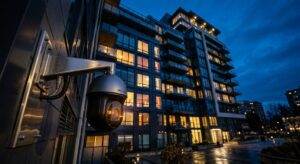
For apartment communities and gated neighborhoods, this matters deeply. Our gated community video monitoring services provide HOA boards and property managers with the documentation they need to address resident concerns, support law enforcement, and demonstrate due diligence.
5. Scalability Without Staffing Headaches
Growing your security coverage with on-site guards means hiring, vetting, training, scheduling, and managing more staff. It also means dealing with call-outs, turnover, and the administrative burden of HR compliance. For multi-site operations, this becomes a significant management challenge.
Virtual security monitoring scales without those friction points. Adding a new location means integrating additional cameras into an existing monitoring infrastructure — not posting a job listing. Coverage adjustments for events, seasonal risks, or new construction phases can be made quickly without operational disruption.
This flexibility is particularly valuable for commercial property owners managing multiple facilities, or developers running several active construction sites simultaneously. The commercial remote video monitoring solutions offered through Digital Security Guard are built for exactly this kind of scalable, multi-site security management.
Retailers expanding locations, warehouse operators adding shifts, and residential developments phasing new buildings — all benefit from security infrastructure that grows with the operation rather than creating new staffing bottlenecks at every stage.
Where Virtual Monitoring Works Best
While virtual security monitoring delivers advantages across nearly every property type, certain environments see exceptional results:
- Construction sites: High theft rates for equipment and materials, large perimeters, and no permanent on-site staff after hours make remote monitoring essential.
- Auto dealerships: High-value outdoor inventory requires overnight surveillance that covers the entire lot, not just a guard shack near the entrance.
- Retail centers: After-hours break-ins, parking lot incidents, and employee safety concerns are all addressed through live monitoring with intervention capability.
- Apartment complexes: Package theft, unauthorized access, and parking lot incidents are among the most common resident complaints — and the most preventable with active monitoring.
- Gated communities and HOAs: Gate access control, visitor management, and perimeter monitoring protect residents and reduce association liability.
According to the FBI’s crime statistics division, property crimes remain among the most frequently reported offenses nationwide — and most occur when properties are unoccupied or understaffed. That pattern directly underscores the case for 24/7 live monitoring by trained security professionals.
Frequently Asked Questions
How is virtual security monitoring different from standard security cameras?
Standard security cameras record footage passively. Virtual security monitoring pairs those cameras with trained human professionals who watch live feeds in real time, intervene when threats are detected, and take action — whether that’s issuing audio warnings, contacting authorities, or alerting property managers. It’s the difference between recording a crime and preventing one.
Can remote video monitoring really replace on-site guards?
For many properties, virtual guard services provide more consistent and cost-effective coverage than traditional guards. A single monitoring professional can watch an entire property simultaneously, without the physical limitations of a patrol route. That said, the right security strategy depends on the specific property, risk profile, and operational needs — and some facilities benefit from a combined approach.
What happens when suspicious activity is detected?
When a trained monitoring professional identifies a threat, they can immediately broadcast a live audio warning through speakers installed on the property, contact local law enforcement, alert designated personnel, or initiate a combination of these responses — all in real time, not after the fact.
Is virtual security monitoring cost-effective for smaller properties?
Yes. Because remote surveillance systems allow one professional to monitor multiple camera feeds simultaneously, the cost per protected area is significantly lower than deploying individual guards. Small retail locations, single auto dealerships, and mid-size apartment complexes all benefit from this cost structure.
How quickly can a remote monitoring service be set up for my property?
Setup timelines vary based on property size and camera infrastructure already in place, but many properties can be operational with professional virtual monitoring relatively quickly once equipment is installed and configured. Digital Security Guard works with clients to assess existing infrastructure and determine the most efficient path to full coverage.
The Bottom Line
Virtual security monitoring isn’t a technology trend — it’s a practical solution to a real problem that property owners face every day: how to protect their assets, their people, and their liability exposure without unsustainable security costs.
By combining advanced remote surveillance systems with 24/7 live monitoring by trained security professionals, Digital Security Guard delivers proactive crime prevention that traditional on-site guards often can’t match — in coverage, consistency, documentation, and cost-efficiency.
If you’re evaluating your security options or looking for a smarter approach to property protection, contact Digital Security Guard today for a no-obligation assessment of your property’s coverage needs. Our team is ready to show you exactly what nationwide remote video monitoring can do for your specific situation.