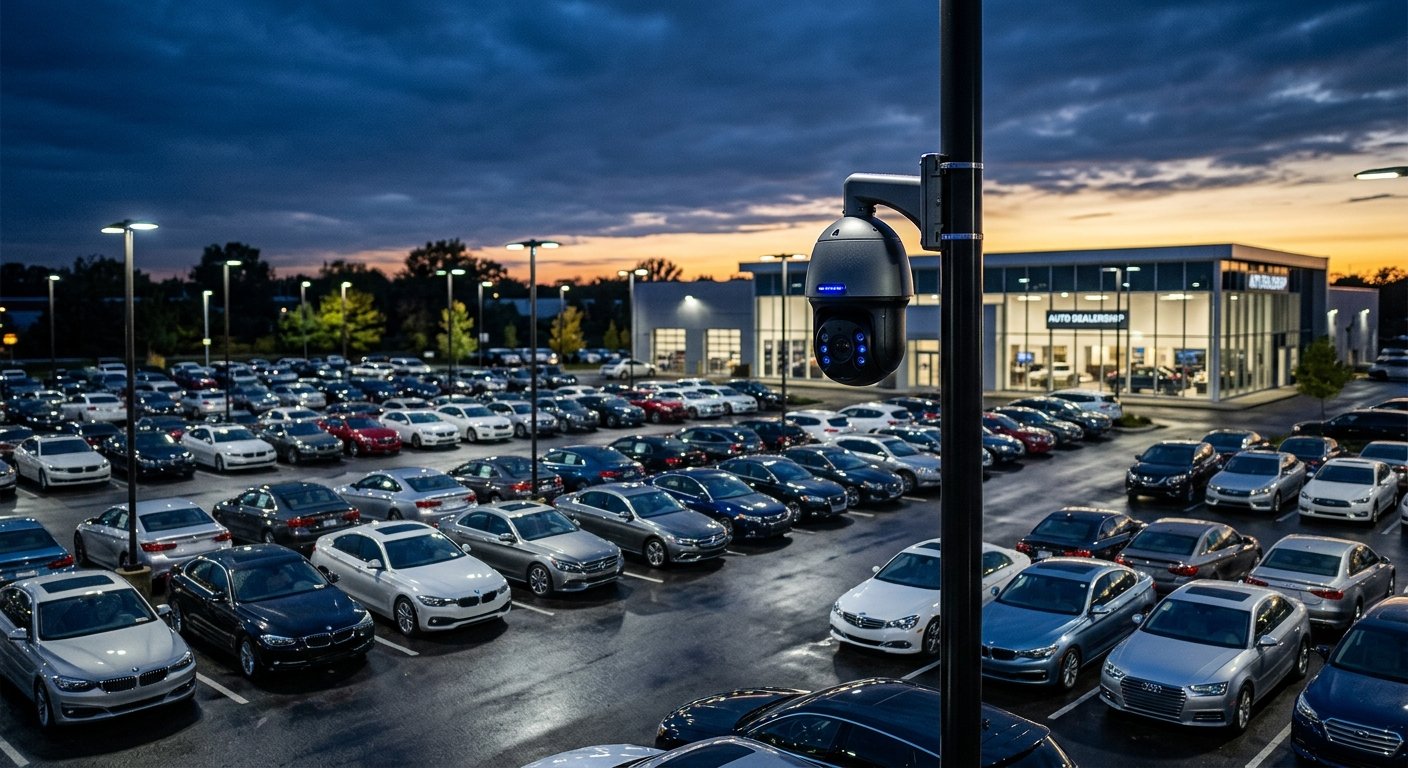
The average auto dealership carries $2 to $5 million in vehicle inventory on any given night. That’s an enormous amount of exposed value sitting on an open lot for 12 or more unguarded hours. Yet many dealerships still rely on outdated alarm systems, minimal lighting, and reactive approaches that only document a crime after it’s already happened.
If you’re evaluating whether auto dealership video monitoring is worth the investment, this breakdown will give you the numbers, scenarios, and strategic perspective you need to make a confident decision.
The Real Cost of Dealership Theft and Vandalism
Automotive theft is a significant and growing problem. According to the National Insurance Crime Bureau, vehicle theft rates have remained stubbornly high in recent years, with commercial lots representing a disproportionate share of high-value losses. A single stolen vehicle can cost a dealership $25,000 to $80,000 in direct losses—and that’s before factoring in insurance deductibles, administrative time, customer relationship fallout, and lot disruption.
Vandalism compounds the problem. Keyed vehicles, broken windows, and tampered interiors can cost $1,500 to $10,000 per incident in repairs and depreciation. When you multiply that by several incidents per year—which many dealerships experience—the financial impact becomes impossible to ignore.
Then there’s the liability exposure. Slip-and-fall incidents, employee misconduct, after-hours trespassing, and accidents on the lot can all create legal and insurance headaches that dwarf the cost of prevention.
Why Traditional Security Falls Short
The traditional response to dealership security has been a combination of on-site guards, basic cameras, and perimeter fencing. Each of these has real limitations.
- On-site security guards typically cost $50,000 to $90,000 annually per guard when you factor in wages, benefits, scheduling, and turnover. And a single guard can only be in one place at a time.
- Basic camera systems record footage but don’t prevent crime. By the time anyone reviews the tape, the vehicle is gone and the perpetrator has disappeared.
- Perimeter fencing creates a physical deterrent, but determined thieves breach fencing regularly—especially when they know no one is actively watching.
The critical gap in all of these approaches is the same: they’re reactive. They respond to crime rather than preventing it.
What Remote Video Monitoring Actually Does
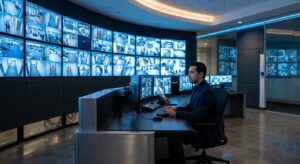
Remote video monitoring is fundamentally different from simply recording camera footage. With professional car dealership security monitoring, trained security professionals watch your lot in real time, 24 hours a day, 7 days a week. When something suspicious happens—a person scaling a fence at 2 a.m., a vehicle being approached with tools, a group loitering near your inventory—the monitoring team responds immediately.
That response typically includes activating on-site audio warnings (letting the individual know they are being watched and that authorities are being contacted), escalating to local law enforcement, and creating a documented record of the event. In most cases, the verbal intervention alone is enough to deter the threat before any damage occurs.
This is the difference between a dealership that loses three vehicles a year and one that loses none. Prevention beats documentation every time.
ROI Breakdown: Numbers That Matter
Comparing Costs
A professional automotive security monitoring service typically costs a fraction of what you’d pay for equivalent on-site guard coverage. While specific pricing varies by lot size, camera count, and monitoring hours, the general cost comparison looks like this:
- Single on-site guard (annual): $55,000–$90,000+
- Remote video monitoring (annual): Significantly lower, often 60–80% less for equivalent or superior coverage
That cost differential alone often justifies the investment, even before you account for loss prevention.
Theft Prevention Value
If remote monitoring prevents even one stolen vehicle per year at a dealership with mid-range inventory, the savings typically exceed the entire annual monitoring cost. That’s not an optimistic projection—it’s straightforward math. The monitoring service pays for itself the moment it stops one theft that would have otherwise gone undetected until morning.
Liability and Insurance Impact
Documented surveillance and proactive monitoring can help when dealing with liability claims. When incidents are caught on camera and addressed in real time, you have clear records of what happened, when, and how it was handled. This can be valuable during insurance claims processes and legal disputes involving accidents, employee incidents, or customer complaints on your property.
Many dealerships also find that demonstrating a serious commitment to security—including 24/7 monitored systems—strengthens their position during insurance renewals, though specific premium outcomes vary by provider and policy.
Employee and Customer Safety
There’s a less quantifiable but equally important ROI dimension: the safety of your team and your customers. Dealership employees working late hours, opening the lot early, or handling test drives face real risks. 24/7 video monitoring services mean someone is always watching, always ready to escalate if a situation turns dangerous. That peace of mind has real value—both for retention and for avoiding workplace incidents that carry their own financial and legal consequences.
Specific Applications Across the Dealership Lot
Vehicle Inventory Monitoring
Vehicle inventory monitoring is the core use case. Cameras positioned to cover every row of your lot, all entry and exit points, and the perimeter give monitoring professionals complete situational awareness. Any unauthorized presence triggers immediate review and response—not a morning-after investigation.
Service Bays and Parts Inventory
Internal theft is a real problem in automotive service environments. Parts inventory, tools, and customer vehicles in service bays represent significant value. Camera coverage inside service areas, reviewed by trained professionals, creates accountability and catches issues before they become patterns.
Showroom and Office Areas
After-hours break-ins targeting financial documents, customer data, and high-value accessories are a known risk. Remote monitoring extends coverage inside the building as well as outside, creating a comprehensive security posture rather than just perimeter defense.
Test Drive Monitoring
Vehicle theft via fake test drives is an increasingly documented problem. While monitoring professionals can’t follow a test drive in progress, camera coverage of how vehicles leave and return to your lot—combined with proper dealer protocols—reduces vulnerability.
Why the Human Element Matters
It’s worth being direct about something: AI-based detection and automated alerts have their place, but they are not a substitute for trained human judgment. A security professional watching your lot in real time can distinguish between a customer who arrived early and someone casing your inventory. They can assess context, make judgment calls, and respond appropriately in situations that an algorithm might miss or misfire on.
Digital Security Guard’s nationwide commercial remote video monitoring approach centers on exactly this—trained security professionals providing live oversight around the clock. The technology enables scale; the human expertise ensures quality.
According to research from the RAND Corporation on security effectiveness, human oversight combined with technology consistently outperforms purely automated systems in complex, variable environments—exactly what a busy dealership lot represents.
Implementation: What to Expect
Transitioning to professional dealership theft prevention through remote monitoring is typically straightforward. Key steps include:
- Site assessment: Identifying camera placement to eliminate blind spots across your inventory, service areas, and building perimeter
- Camera integration: Connecting your camera infrastructure to the monitoring center’s platform
- Protocol development: Establishing response protocols specific to your dealership—who to contact, how to escalate, what documentation to preserve
- Ongoing review: Regular check-ins to refine coverage and address new vulnerabilities as your lot layout or inventory mix changes
For a more detailed look at how this applies specifically to auto dealerships, our auto dealership video monitoring resource walks through the full picture.
Frequently Asked Questions
How much does auto dealership video monitoring cost?
Pricing varies based on lot size, number of cameras, and monitoring hours required. Most dealerships find that professional remote monitoring costs significantly less than maintaining even a single on-site guard—often 60 to 80 percent less—while providing broader, more consistent coverage.
Can remote monitoring actually prevent theft, or does it just record it?
Professional remote monitoring is designed for prevention, not just documentation. When trained monitoring professionals detect a threat in real time, they can activate on-site audio deterrents, contact law enforcement, and intervene before a theft or incident is completed. This proactive approach is what separates monitored systems from passive recording.
What happens when the monitoring team spots something suspicious?
Monitoring professionals follow escalation protocols tailored to your dealership. This typically includes audio challenges through on-site speakers, contacting local law enforcement, notifying your designated contacts, and preserving video documentation of the incident.
Do I need to replace my existing cameras to use remote monitoring?
In many cases, existing camera infrastructure can be integrated into a remote monitoring platform, though a site assessment will determine whether coverage gaps or equipment limitations need to be addressed for effective monitoring.
Is remote video monitoring effective for dealerships with multiple locations?
Yes—remote monitoring scales efficiently across multiple locations in ways that on-site guards simply cannot match at comparable cost. Multiple lots can be monitored from a central platform, creating consistent security standards across your entire operation.
The Bottom Line
Auto dealership security isn’t just about protecting vehicles—it’s about protecting your business model. Every stolen car, every vandalized hood, every liability incident, and every employee safety concern represents a real cost that compounds over time. Professional auto dealership video monitoring addresses all of these risks proactively, with trained human professionals watching over your investment around the clock.
The ROI isn’t theoretical. It’s the vehicles that don’t disappear, the incidents that get stopped before they escalate, and the operational confidence that comes from knowing your lot is genuinely protected—not just recorded.
Ready to see what proactive dealership security looks like for your operation? Contact Digital Security Guard today for a no-obligation site assessment and customized monitoring solution.