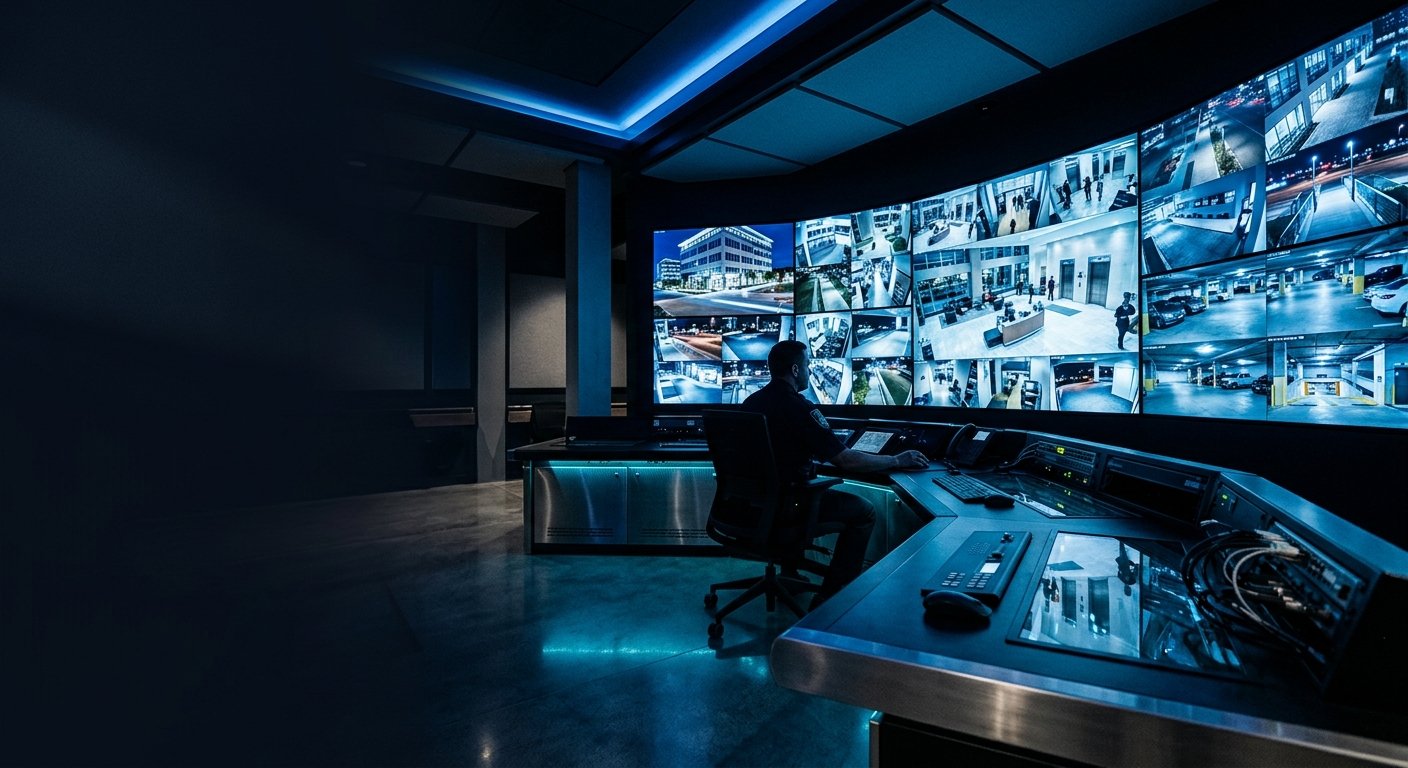
Office building security monitoring uses live video surveillance, remote monitoring stations, and trained security professionals to watch your property 24 hours a day — detecting threats in real time rather than simply recording them for review after an incident. It applies to any commercial property where protecting employees, assets, and liability exposure matters.
- Remote video monitoring deters crime before it happens — not just after.
- Trained human monitors review live feeds and intervene with audio warnings or law enforcement contact when threats are detected.
- Office buildings face after-hours theft, vandalism, and unauthorized access risks that recorded-only systems miss entirely.
- Remote monitoring costs significantly less than deploying on-site security personnel around the clock.
- The right system combines strategically placed cameras with live human oversight — technology alone is not enough.
Why Office Buildings Are a Frequent Target
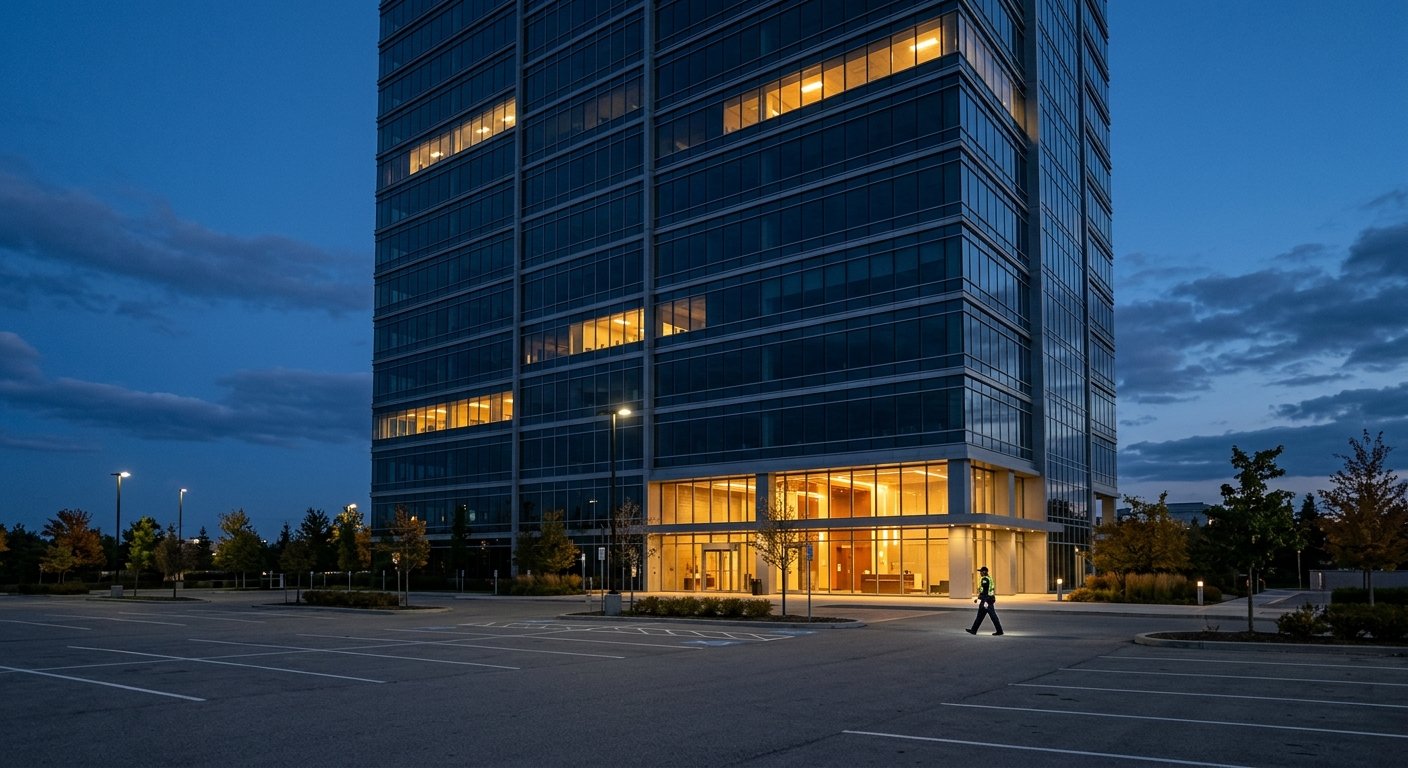
Office buildings hold concentrated value: computers, servers, confidential documents, expensive furniture, and sometimes cash. Yet for the majority of each day — evenings, weekends, holidays — those buildings sit largely unoccupied. According to the Bureau of Justice Statistics, commercial properties experience a disproportionate share of property crimes precisely because unoccupied spaces offer lower risk of detection to would-be offenders.
Beyond theft, office buildings face vandalism, trespassing, and package or equipment theft in parking areas and loading zones. Liability is another pressure point: slip-and-fall incidents, altercations, and unauthorized vehicle access all become legal and insurance concerns when there is no verified record of what actually occurred. A passive recording system captures footage, but it does nothing to stop an event in progress.
A camera that only records gives you evidence after the fact — but it does nothing to stop a break-in at 2 a.m. Office building security monitoring becomes genuinely protective only when a trained human being is watching that feed in real time and can respond immediately.
What Office Building Security Monitoring Actually Involves
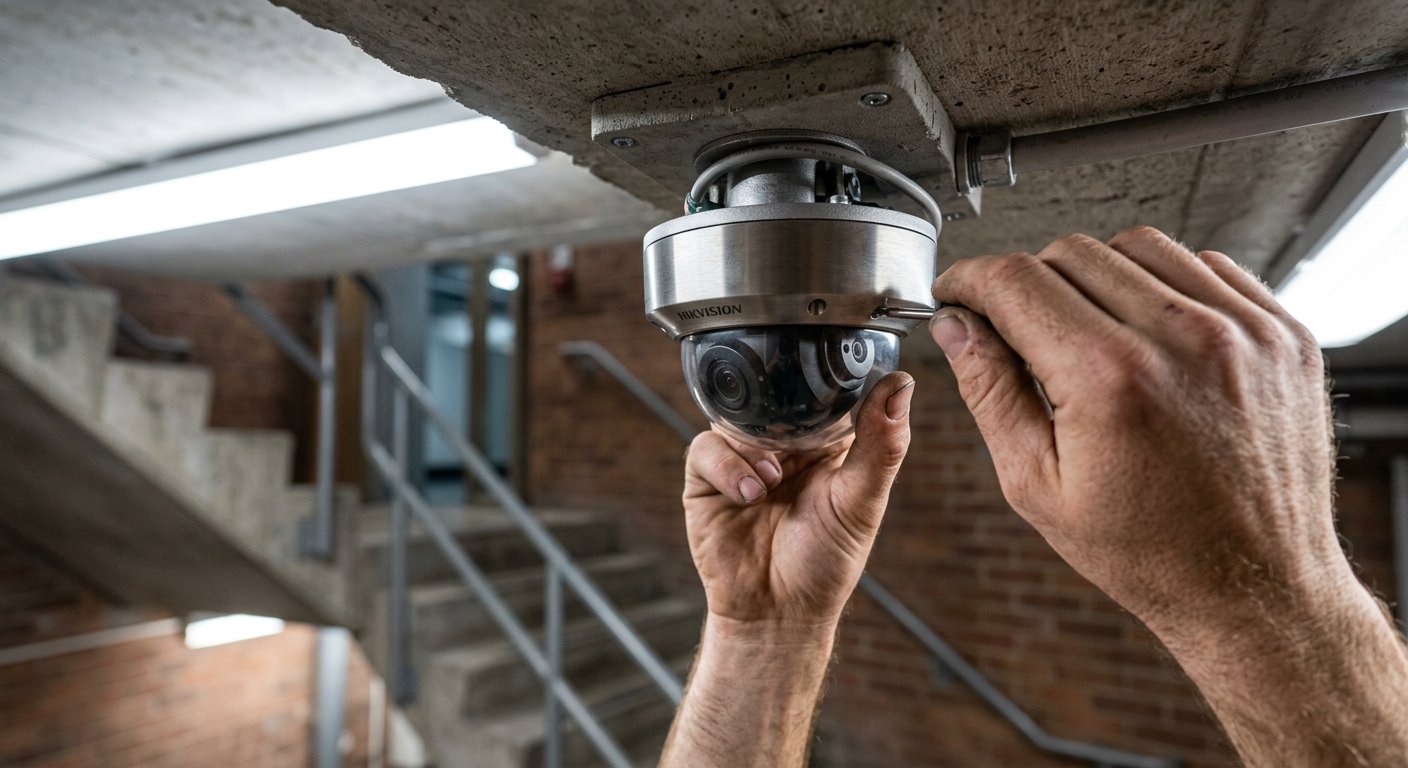
Effective office building security monitoring is a combination of physical infrastructure and professional human oversight. Here is how a complete system works in practice.
Strategic Camera Placement
Coverage matters more than camera count. Entry points, parking structures, loading docks, server rooms, and common areas like lobbies and stairwells represent the highest-risk zones. Blind spots are a liability — both literally and legally. High-definition cameras with low-light capability ensure useful footage around the clock, not just during business hours.
Remote Monitoring Stations and Live Human Oversight
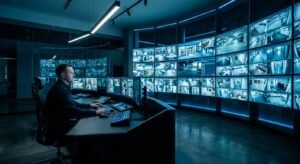
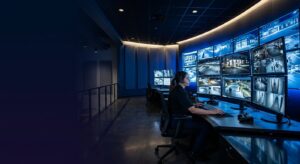
This is where commercial remote video monitoring separates itself from basic security camera installations. Rather than footage sitting on a local hard drive until something goes wrong, feeds are transmitted to a professional monitoring center staffed by trained security professionals. Those professionals are watching your property in real time — identifying suspicious behavior, verifying threats, and responding before an incident escalates.
When a monitor detects a problem, they have several tools: broadcasting a live audio warning directly to the property (“This property is under surveillance — please leave immediately”), contacting local law enforcement with real-time information, or alerting designated property contacts. This proactive capability is what converts a passive recording system into a genuine deterrent.
Detection
Cameras identify motion or anomalies at entry points, parking areas, or interior zones after hours.
Human Review
A trained security professional reviews the live feed immediately, assessing whether the activity is a genuine threat.
Intervention
The monitor issues an audio warning to the site, contacts law enforcement with real-time details, or alerts property management.
Documentation
All events are logged with timestamped video, creating a verified record for law enforcement, insurance, or legal purposes.
Remote Monitoring vs. On-Site Security Guards
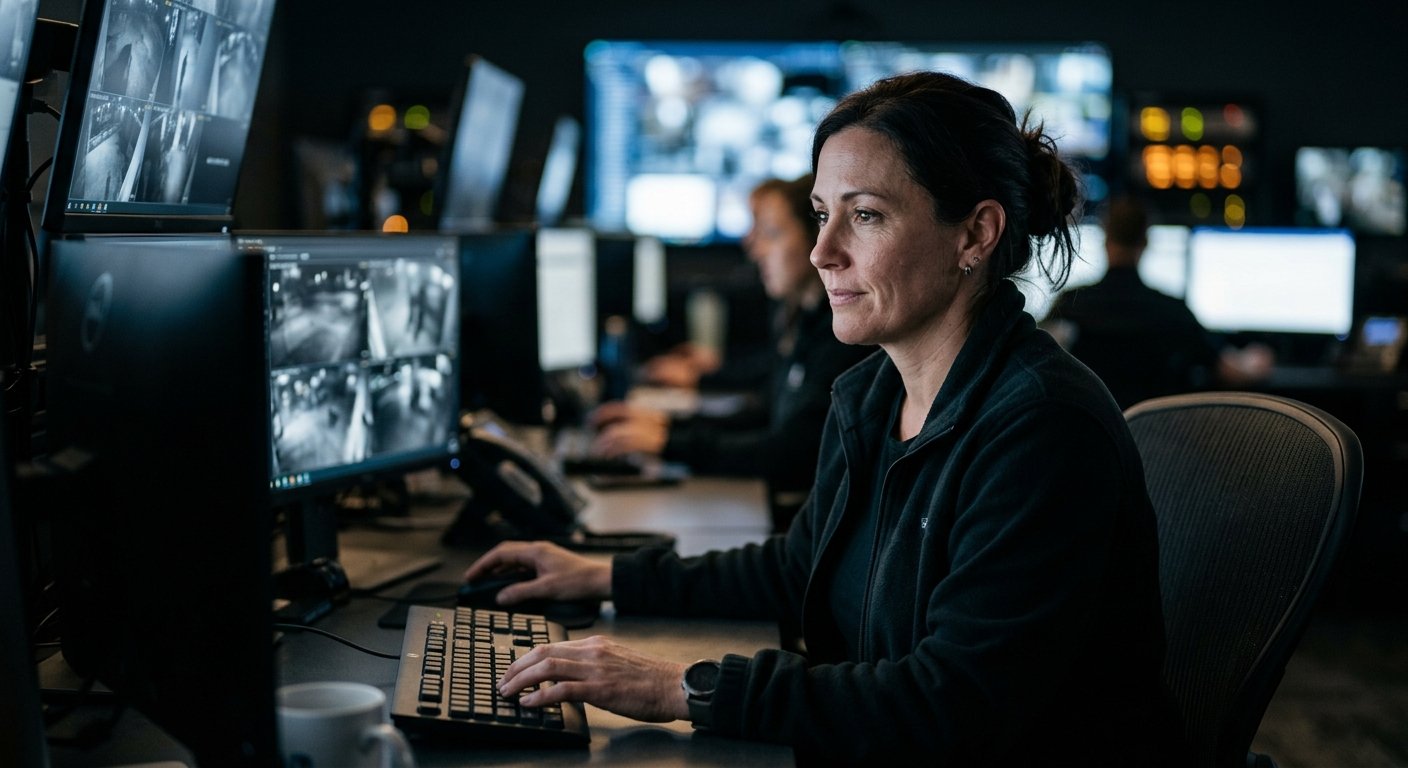
Many facility managers default to on-site security guards when they think about protecting an office building. On-site personnel have their place, but for most commercial properties, 24/7 human-staffed guard coverage is cost-prohibitive and operationally difficult to sustain without gaps. Remote video monitoring provides continuous coverage by trained professionals at a fraction of the staffing cost — and with no sick days, shift changes, or attention lapses that a single guard walking rounds might experience.
| Capability | On-Site Guard | Remote Video Monitoring |
|---|---|---|
| Coverage hours | Shift-dependent, gaps at handoff | 24/7 continuous |
| Response to live threat | Present on-site | Audio intervention + law enforcement contact |
| Multiple zones at once | Limited — one guard, one location | Monitors multiple camera feeds simultaneously |
| Documented evidence | Incident reports after the fact | Timestamped video with real-time log |
| Relative cost | Higher — full-time staffing overhead | Lower — shared professional monitoring |
It is worth noting that remote monitoring does not claim to replace every function an on-site guard serves. For properties requiring a physical access control presence — a staffed reception desk, for example — a hybrid approach may be appropriate. But for after-hours protection, parking lot coverage, and perimeter security, remote monitoring consistently delivers broader, more consistent coverage.
Proactive crime prevention — stopping an incident before it happens — delivers far more value than footage reviewed the morning after a break-in.
Security Challenges Specific to Office Buildings
After-Hours Access and Tailgating
One of the most common vulnerabilities in multi-tenant office buildings is unauthorized access — either through propped doors, compromised access credentials, or tailgating behind legitimate employees. Remote monitors watching access points in real time can identify and flag this behavior immediately, rather than discovering it days later when a theft is reported.
Parking Structure and Exterior Perimeter
Parking structures represent a distinct security challenge: high foot traffic during the day, near-isolation at night, limited natural visibility, and frequent vehicle break-ins. The Urban Institute’s research on parking and crime has documented how environmental design and active monitoring can reduce crime rates in these spaces. Live video surveillance of parking structures, monitored by professionals who can respond in real time, addresses the gap that lighting improvements alone cannot close.
Package Theft and Loading Dock Vulnerabilities
High-value deliveries — IT equipment, office supplies, even sensitive documents — are frequently targeted at loading docks and mail rooms. Remote monitoring of these areas provides a verified record of delivery and pickup activity, and can alert property management to unauthorized access attempts immediately.
Map your highest-risk zones before finalizing camera placement. Entry points, server rooms, parking areas, and loading docks are typically your priority zones — not lobbies and corridors, which get most of the attention but carry lower risk.
The ROI Case for Business Security Monitoring
Calculating the value of business security monitoring goes beyond the cost of cameras and monitoring fees. Consider what a single after-hours break-in costs: replacement hardware, downtime, IT recovery, insurance claims processing, and potentially compromised client data. Vandalism to a parking structure or lobby can run into significant repair and repainting costs. Each of these incidents also carries liability exposure if employees, tenants, or visitors were affected.
For property owners managing multiple commercial tenants, documented security monitoring capability is increasingly a factor in tenant retention and lease negotiations. Tenants — especially in professional services, finance, and technology sectors — perform security due diligence on buildings they occupy. A verifiable 24/7 monitoring program addresses that concern directly.
Digital Security Guard provides nationwide remote video monitoring services for commercial properties of all sizes, including multi-tenant office buildings, with 24/7 live monitoring by trained security professionals. For a broader look at how this approach works across commercial property types, the commercial remote video monitoring overview covers the full picture.
Frequently Asked Questions
How is remote video monitoring different from a standard security camera system?
A standard security camera system records footage passively — footage that is reviewed only after an incident is reported. Remote video monitoring adds live human oversight: trained security professionals actively watch your camera feeds in real time, respond to threats as they develop, and can intervene with audio warnings or law enforcement contact before an incident escalates.
What happens when a monitor detects suspicious activity at my office building?
The monitoring professional first verifies that the activity represents a genuine threat rather than a false alert. If confirmed, they can broadcast a live audio warning directly to the site, contact local law enforcement with real-time location and suspect information, and simultaneously alert designated property contacts. All activity is logged with timestamped video.
Can remote monitoring cover multiple buildings or locations?
Yes. One of the primary advantages of remote video monitoring is scalability. A professional monitoring center can cover multiple locations for a single property owner simultaneously — something that would require a proportional increase in on-site staffing to replicate with physical guards.
Is office building security monitoring useful during business hours, or only after hours?
Both. After-hours coverage addresses break-ins, vandalism, and unauthorized access. During business hours, live surveillance supports employee safety, monitors visitor access, documents loading dock activity, and provides liability protection in common areas and parking structures where incidents are most likely to occur.
How does this differ from virtual security guards?
The terms are often used interchangeably. Virtual security guards and remote video monitoring both describe trained professionals monitoring live camera feeds from a remote location — as opposed to automated motion-detection alerts with no human review. The key distinction from a purely automated system is the human judgment involved in verifying threats and responding appropriately.
Taking the Next Step for Your Property
Office building security is not a one-size-fits-all problem. The right coverage depends on your building’s size, occupancy patterns, existing infrastructure, and the specific risks your property faces. What is consistent across nearly every commercial property is that reactive recording — watching footage after something goes wrong — leaves a significant and preventable gap in protection.
For properties with specific access control challenges, the principles that apply to gated community video monitoring translate directly to office building perimeter management. And for operators managing vehicle-heavy properties adjacent to office facilities, the auto dealership video monitoring framework offers relevant parallels for parking lot and lot-perimeter coverage.
Get a Security Assessment for Your Building
Speak with a monitoring specialist to identify your property’s highest-risk zones and design a monitoring solution that prevents incidents rather than just recording them.

About Digital Security Guard
Digital Security Guard provides remote video monitoring solutions for commercial and residential property owners seeking proactive crime prevention rather than reactive recording. Combining advanced security technology with trained human monitoring professionals, they deliver 24/7 surveillance services that prevent theft, vandalism, and liability issues at a fraction of the cost of on-site security guards. Their solutions serve diverse property types including construction sites, retail stores, auto dealerships, apartment complexes, and gated communities across the nation. Visit digitalsecurityguard.com →