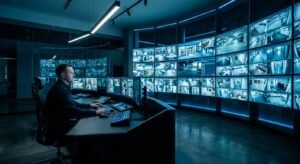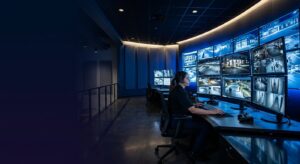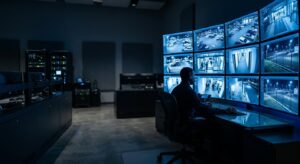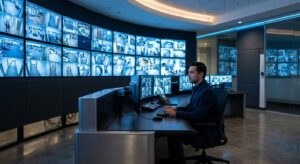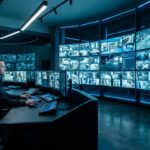
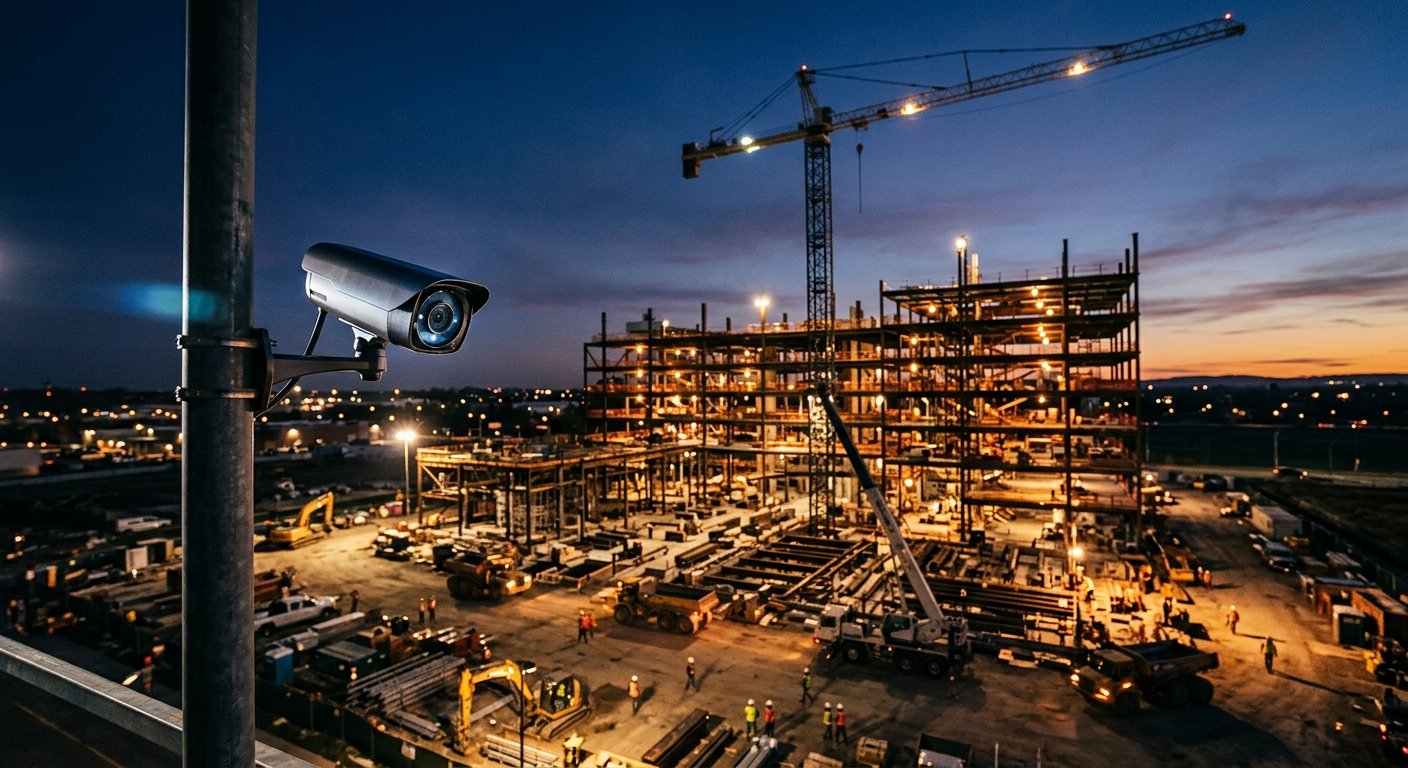
Remote video monitoring is one of the most effective and cost-efficient security solutions for construction sites. By combining high-definition cameras with 24/7 live oversight from trained security professionals, property owners can deter theft, vandalism, and unauthorized access before incidents escalate—protecting both assets and project timelines without the overhead of on-site guards.
- Construction sites are among the highest-risk properties for theft and vandalism due to open perimeters and valuable equipment.
- Remote video monitoring combines advanced cameras with live human oversight to prevent incidents in real time.
- Virtual security guards can monitor multiple zones simultaneously, something a single on-site guard cannot do.
- Live monitoring deters criminal activity before damage or loss occurs—reactive recording alone does not.
- Remote monitoring delivers significant cost advantages compared to deploying round-the-clock physical security personnel.
Why Construction Sites Are High-Value Targets
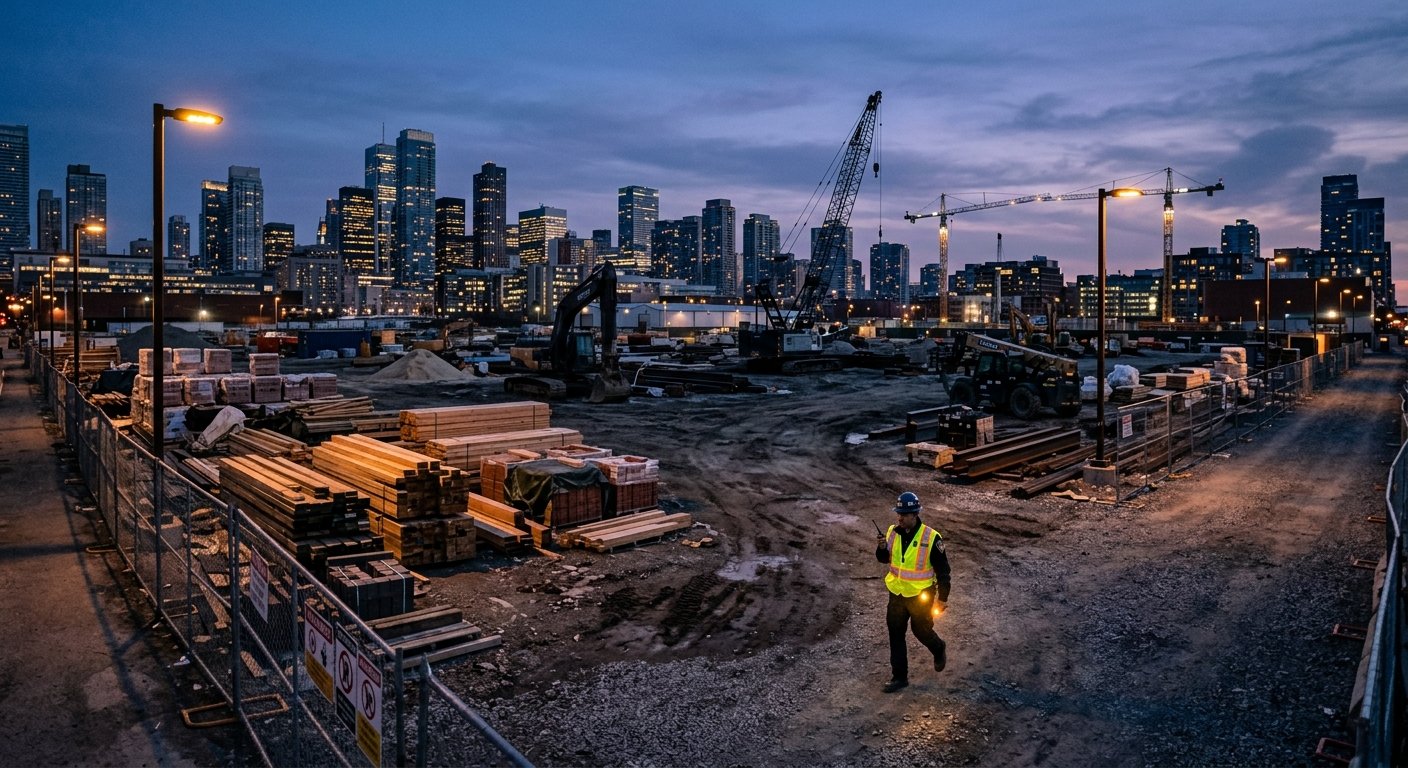
Construction sites present a unique security challenge. They operate across large, often unfenced perimeters, store expensive equipment and materials overnight, and cycle through dozens of workers, subcontractors, and delivery personnel daily. According to the Associated General Contractors of America, equipment theft costs the construction industry an estimated $300 million to $1 billion annually, with recovery rates on stolen equipment remaining stubbornly low.
The problem extends beyond theft. Vandalism, copper wire stripping, unauthorized access by trespassers, and liability exposure from after-hours accidents on job sites all compound the risk. A single incident—whether a stolen excavator or an injured trespasser—can delay a project by weeks and generate legal costs that dwarf any initial security investment.
Most construction site thefts occur between Friday evening and Monday morning, when sites are unoccupied and response times from local law enforcement are longest. A camera system without live monitoring is simply a recording device—not a deterrent.
What Remote Video Monitoring Actually Does

Remote video monitoring is not a passive recording system. It is an active, proactive security service in which trained professionals watch live camera feeds and intervene when something looks wrong. At Digital Security Guard, monitoring professionals review activity across your site in real time, 24 hours a day, seven days a week. When a threat is detected—someone cutting a perimeter fence at 2 a.m., a vehicle entering a restricted area, or unauthorized individuals near equipment storage—the monitoring team can issue live audio warnings through on-site speakers, contact local law enforcement, or alert your designated site manager immediately.
This is what separates remote video monitoring from a standard camera installation. The human element is what creates deterrence. Criminals who hear a real voice addressing them directly—informing them they are being observed and that authorities are being contacted—typically abandon the attempt. That outcome protects your tools, your materials, and your schedule.
A camera system without live monitoring is simply a recording device—not a deterrent.
Key Components of a Construction Site Monitoring System
Camera Placement Strategy
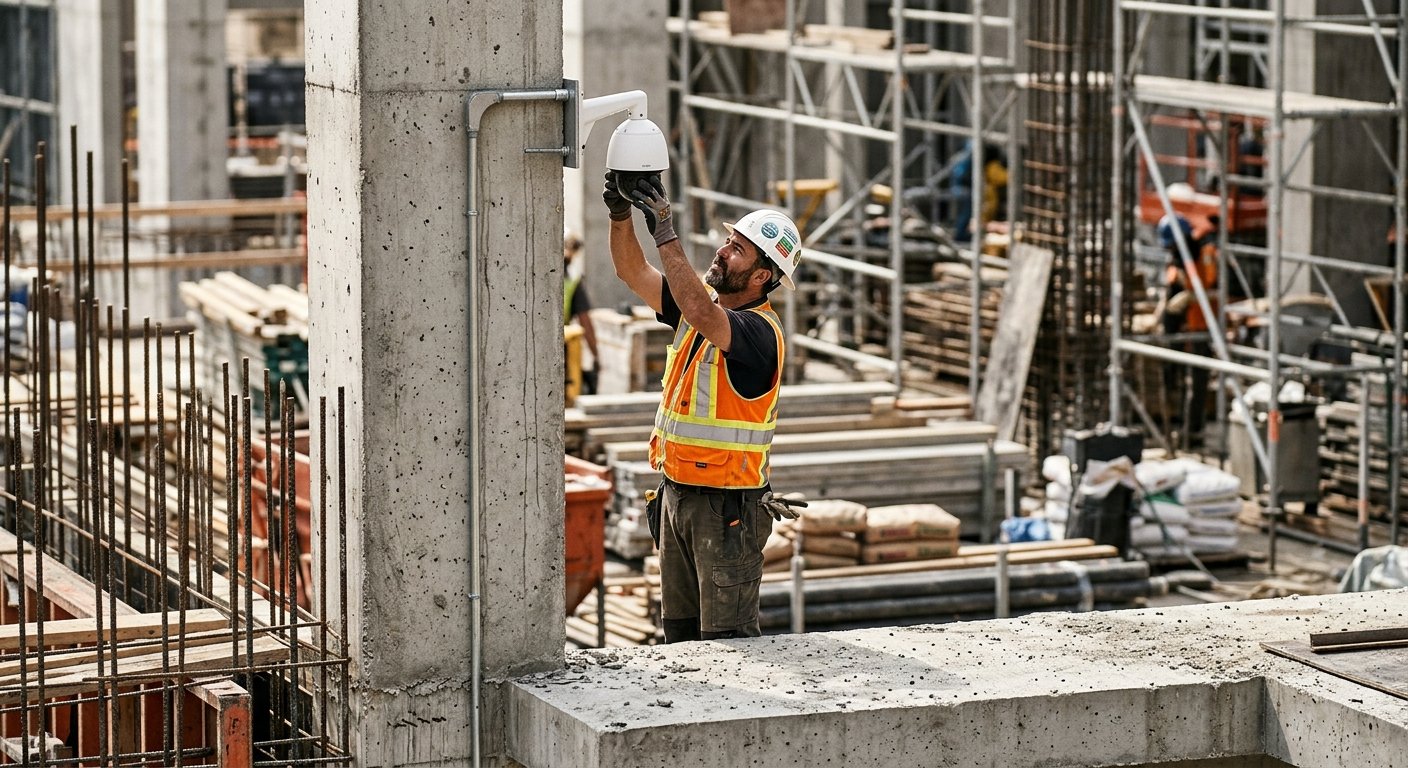
Effective construction site security monitoring begins with a thoughtful camera layout. Every entry and exit point needs coverage, but so do material storage areas, equipment staging zones, and the perimeter at large. Construction sites are dynamic—their footprint changes as the build progresses—so camera positioning should be evaluated periodically throughout the project lifecycle.
- Entry and exit gates: Capture every vehicle and individual entering or leaving the site.
- Tool and material storage: High-resolution coverage of trailers, lumber yards, and equipment yards.
- Perimeter lines: Wide-angle and pan-tilt-zoom (PTZ) cameras covering fence lines and blind spots.
- Interior structures: As buildings take shape, interior access points warrant coverage as well.
Lighting and Detection Technology
Low-light conditions don’t limit modern monitoring systems. Thermal imaging, infrared illumination, and AI-assisted motion detection allow trained monitors to identify human movement and vehicle activity even in complete darkness. These technologies work best when paired with adequate site lighting, which itself acts as a passive deterrent.
Solar-powered cameras and temporary cellular-connected units are ideal for sites without established power or internet infrastructure, making remote monitoring practical from day one of a project.
Audio Intervention Capability
Two-way audio speakers positioned at key locations allow monitoring professionals to broadcast live warnings to anyone on site. This capability is one of the most powerful crime prevention tools available—more effective in many situations than a physical guard who may only cover one corner of a large site at a time.
Remote Monitoring vs. On-Site Security Guards
The comparison between virtual security guards and on-site personnel comes down to coverage, cost, and capability. A single physical guard can only be in one place at a time. On a large construction site spanning multiple acres, a guard patrolling one end of the property cannot simultaneously monitor the storage yard, the equipment staging area, and the main entrance.
| Factor | On-Site Security Guard | Remote Video Monitoring |
|---|---|---|
| Coverage area | Limited to patrol route | Entire site simultaneously |
| Hours of operation | Requires shift changes | True 24/7 without gaps |
| Response to incidents | Reactive, location-dependent | Proactive with live audio intervention |
| Documentation | Written reports, manual logs | Recorded video, timestamped events |
| Scalability | Add headcount = add cost | Add cameras, same monitoring team |
For construction companies managing multiple active job sites, remote monitoring scales efficiently. A centralized monitoring team can oversee multiple properties simultaneously, providing consistent coverage without multiplying labor costs for each location. To learn more about how this model applies to commercial properties broadly, visit Digital Security Guard’s commercial remote video monitoring services.
Practical Crime Prevention Applications
After-Hours Theft Prevention
The majority of construction site theft happens after business hours. Remote monitoring closes this window. When a monitoring professional observes a vehicle approaching a material storage area at midnight, they can respond in seconds—issuing an audio warning, logging the incident, and contacting authorities before any theft occurs. This response model is proactive, not reactive.
Unauthorized Access and Trespasser Management
Trespassers on construction sites create liability exposure. If an unauthorized individual is injured on your property, the legal and financial consequences can be severe. According to OSHA’s construction safety guidelines, site owners carry responsibility for maintaining a reasonably safe environment, which includes controlling unauthorized access. Live monitoring supports compliance with these obligations by detecting and addressing trespassers before accidents occur.
Employee and Subcontractor Accountability
Not all construction site losses come from external sources. Video monitoring also supports internal accountability—verifying that access control policies are followed, that equipment is properly secured at end of shift, and that site procedures are being observed. This visibility gives project managers and site supervisors documented evidence when disputes arise.
Liability and Insurance Documentation
When an incident does occur, timestamped video footage is invaluable. It provides objective documentation for insurance claims, legal proceedings, and internal investigations. Many insurers look favorably on sites with professional monitoring systems in place when evaluating risk profiles, though specific outcomes vary by insurer and policy.
Frequently Asked Questions
How quickly can remote video monitoring be set up on a new construction site?
Modern remote monitoring systems can be operational within days of project kickoff. Temporary cellular-connected cameras require no hardwired infrastructure, making deployment fast even on sites that lack established power or internet connectivity. The monitoring team begins active oversight as soon as cameras are live.
What happens when monitoring professionals spot a potential threat?
Trained monitoring professionals can respond in multiple ways depending on the situation: issuing a live audio warning through on-site speakers, alerting your site manager or designated contact, or notifying local law enforcement. The goal is to intervene before an incident escalates, not simply to document it after the fact.
Can one monitoring service cover multiple construction sites at the same time?
Yes. Remote video monitoring is designed to scale across multiple locations. A centralized team of security professionals monitors all active sites simultaneously, which is far more cost-effective than deploying separate on-site personnel at each location. This is a key advantage for general contractors managing concurrent projects.
Does remote monitoring work in areas with poor connectivity?
Cellular-enabled camera systems are specifically designed for locations without reliable broadband access. 4G and 5G connectivity options make it possible to maintain live video feeds in rural or undeveloped areas, though connection quality will depend on local carrier coverage in your specific location.
Is construction site remote monitoring different from residential monitoring?
Construction site monitoring involves larger perimeters, more complex access control needs, and a higher volume of authorized personnel movement during working hours. Professional security monitoring teams trained in commercial and industrial site security understand these distinctions and calibrate their response protocols accordingly, rather than applying a one-size-fits-all residential model.
Choosing the Right Monitoring Partner
Not every remote monitoring provider is equipped to handle the specific demands of active construction sites. Look for a service that offers true 24/7 live monitoring by trained human professionals—not just automated alerts sent to your phone. Automation alone misses context. A trained monitor understands the difference between a delivery driver arriving early and an unauthorized vehicle entering a restricted zone.
Digital Security Guard provides nationwide remote video monitoring services with staffed monitoring centers operating around the clock. For construction projects located in residential developments or gated communities, integrated solutions are also available—explore the gated community video monitoring options for properties where construction overlaps with residential security needs.
When evaluating a monitoring provider, ask specifically whether a human reviews every alert in real time or whether alerts are automated. The distinction matters enormously for crime prevention effectiveness. Trained professionals make judgment calls that automated systems cannot.
The right partner will conduct a site assessment, recommend camera placement based on your specific layout, and configure monitoring protocols matched to your project schedule and access control requirements. Security is not a static installation—it should adapt as your site evolves.
Protect Your Construction Site Starting Now
Contact Digital Security Guard to discuss a remote monitoring solution tailored to your job site’s size, schedule, and security challenges.

About Digital Security Guard
Digital Security Guard provides remote video monitoring solutions for commercial and residential property owners seeking proactive crime prevention rather than reactive recording. Combining advanced security technology with trained human monitoring professionals, they deliver 24/7 surveillance services that prevent theft, vandalism, and liability issues at a fraction of the cost of on-site security guards. Their solutions serve diverse property types including construction sites, retail stores, auto dealerships, apartment complexes, and gated communities across the nation. Visit digitalsecurityguard.com →