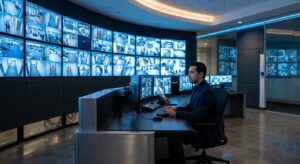
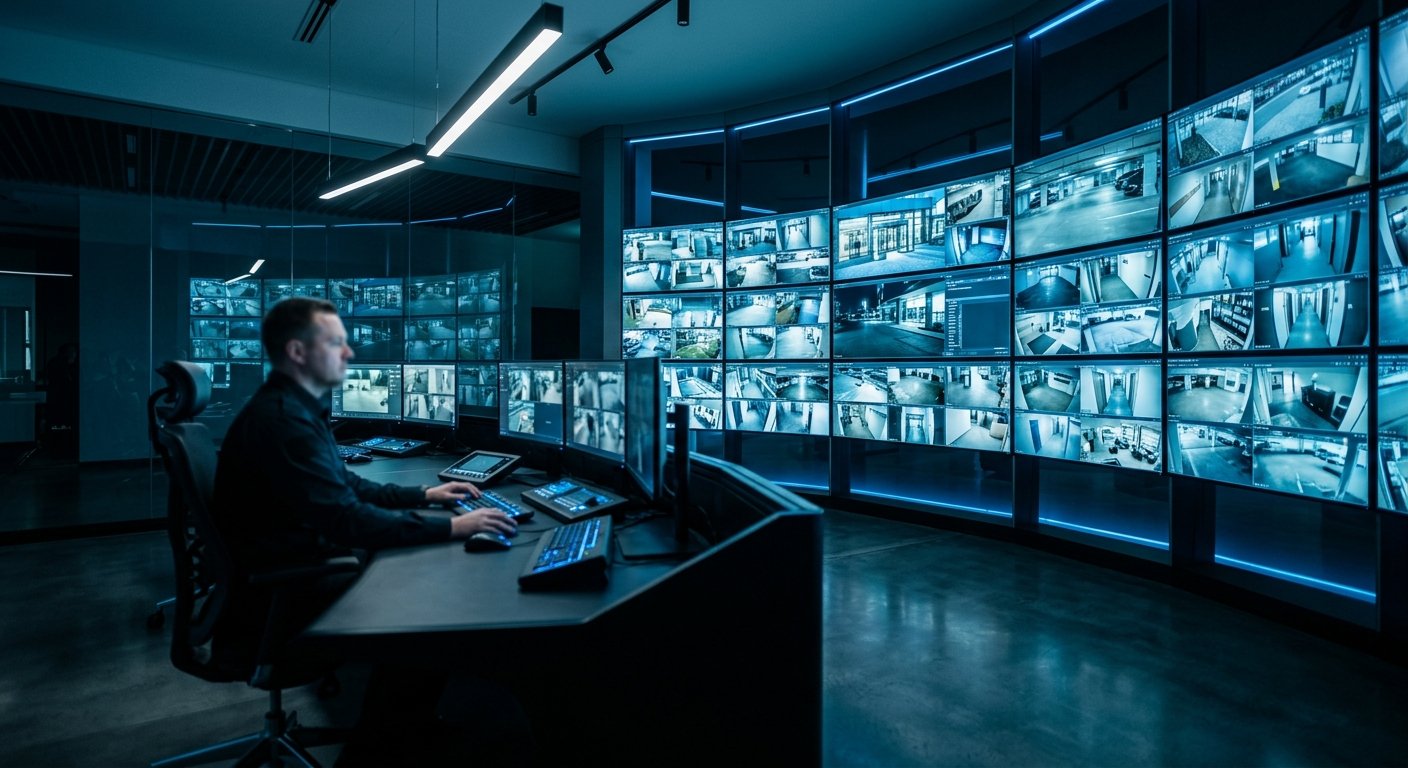
Remote video monitoring typically costs significantly less than hiring on-site security guards, making it one of the most cost-effective proactive security solutions available to commercial property owners. Pricing depends on the number of cameras, monitoring hours, and property type — but the financial case for professional video monitoring becomes clear once you compare it to traditional security staffing.
- Remote video monitoring is structured around camera count, monitoring hours, and response protocols — not a one-size-fits-all price.
- On-site security guards carry payroll, benefits, and liability costs that remote monitoring does not.
- Proactive monitoring by trained professionals stops incidents as they happen, not after the fact.
- Construction sites, auto dealerships, retail stores, and apartment complexes all have distinct monitoring needs that affect pricing.
- The ROI case is strongest when comparing prevented losses — theft, vandalism, and liability claims — against monthly monitoring fees.
Why Security Buyers Get Confused About Monitoring Costs
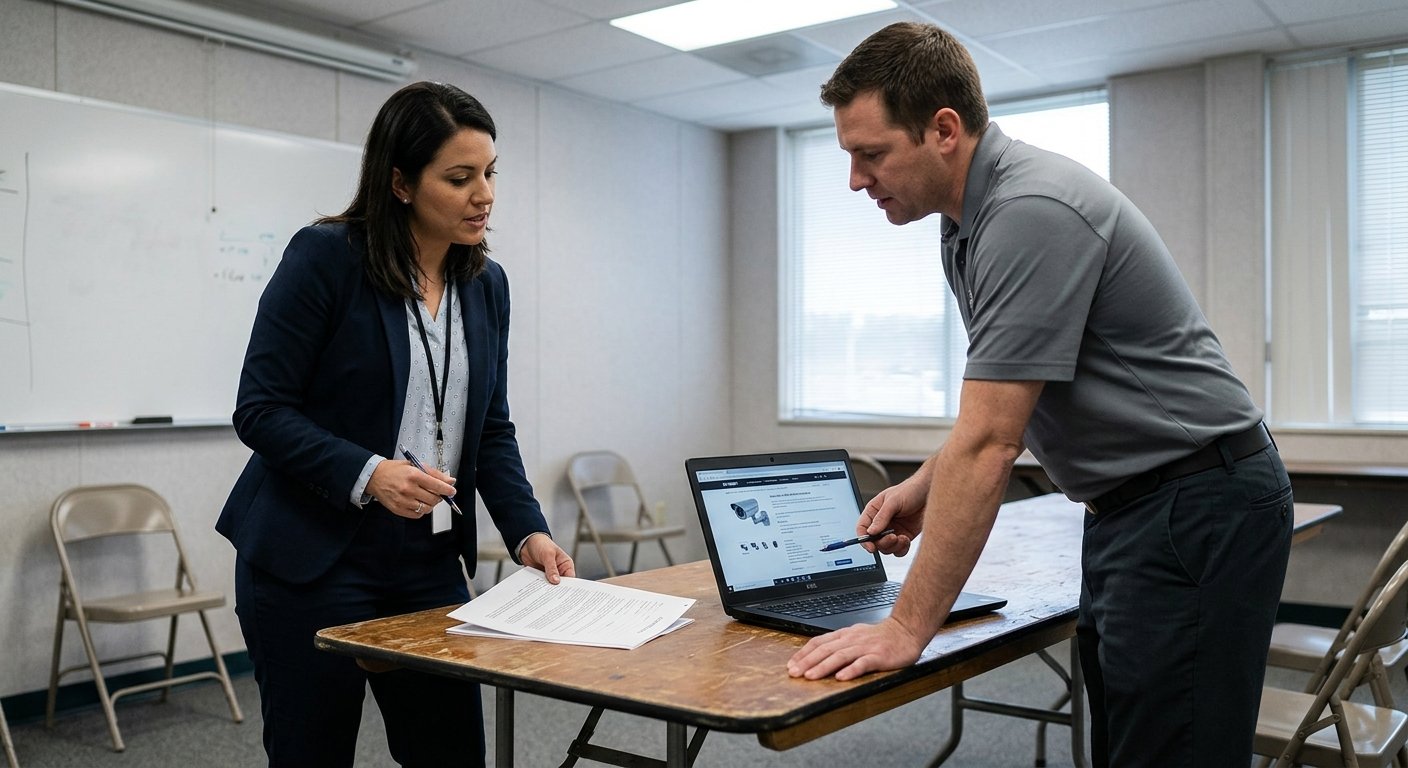
A common misconception among property managers is that “cameras” and “monitoring” are interchangeable costs. They are not. The hardware — cameras, network equipment, storage — is a capital expense. The monitoring service is an operational expense. Confusing the two leads buyers to either overpay for camera systems they think come with live oversight, or to underpay for a recording-only setup that provides no prevention value whatsoever.
According to the FBI’s Uniform Crime Reporting data, property crimes remain among the most frequently occurring offenses in the United States. A surveillance system that only records after the fact does nothing to deter a theft in progress. That distinction — prevention versus documentation — is the core value proposition of professional remote video monitoring, and it is what you are actually paying for.
What Drives the Cost of Remote Video Monitoring

There is no universal price list for 24/7 video monitoring services, and any provider quoting a flat rate without assessing your property is offering you a guess, not a solution. The variables that genuinely shape cost include:
- Number of camera feeds: More cameras mean more bandwidth to monitor and more time for trained operators to review. A small retail location with four cameras is priced differently from a construction site with 20 active feeds.
- Monitoring hours: Full 24/7 video monitoring services cost more than after-hours-only coverage. Many commercial clients choose overnight and weekend monitoring when staff is absent and risk is highest.
- Response protocols: Do you need voice-down audio deterrence when operators spot an intruder? Law enforcement dispatch escalation? Custom notification workflows? Each layer adds both capability and cost.
- Property type and risk profile: A gated residential community has different threat patterns than an open construction site. Risk complexity drives monitoring intensity.
- Video analytics integration: AI-assisted motion filtering reduces false alerts and allows human operators to focus on genuine threats, which improves service quality and can affect pricing structure.
When requesting quotes, ask specifically what happens when a camera detects motion at 2 a.m. on a Saturday. The answer reveals whether you are buying passive recording or active intervention by trained security professionals.
Remote Monitoring vs. On-Site Guards: The Real Cost Comparison
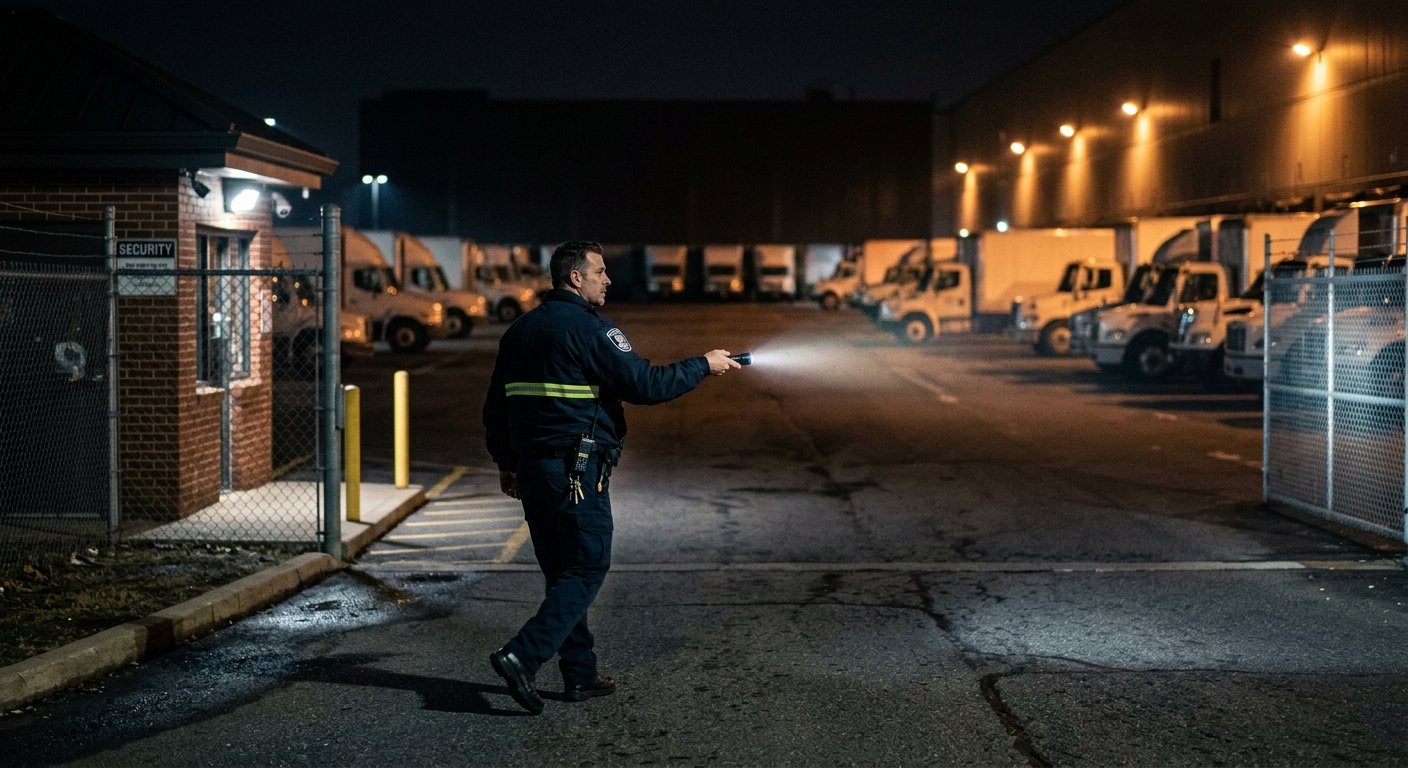
The most meaningful cost benchmark is not camera-to-camera — it is remote monitoring against physical guard deployment. The U.S. Bureau of Labor Statistics reports that security guards earn a median hourly wage that, when extended across a full year of 24/7 coverage with multiple shifts, overtime, benefits, and employer taxes, represents a substantial annual personnel expense. A single post staffed around the clock requires multiple full-time guards to cover all shifts.
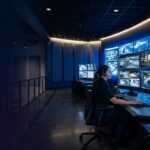
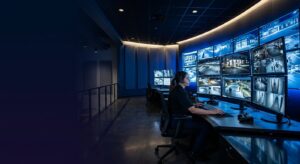
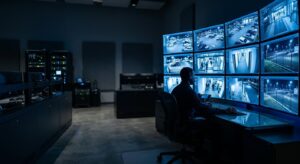
Remote video monitoring consolidates that coverage. Trained monitoring professionals can observe multiple client properties simultaneously, which distributes labor costs across a broader client base. The result is active, human-driven security oversight at a fraction of the cost of stationing a guard on-site.
| Comparison Factor | On-Site Security Guard | Remote Video Monitoring |
|---|---|---|
| Coverage hours | Limited by shift scheduling | 24/7 with no shift gaps |
| Response to incidents | Physical presence on-site | Audio deterrence + law enforcement dispatch |
| Cost structure | Wages, benefits, overtime, liability | Monthly monitoring service fee |
| Scalability | Requires additional hires per location | Add camera feeds without adding headcount |
| Documentation | Incident reports, variable quality | Recorded video evidence for every event |
Cost Scenarios by Property Type
Construction Sites
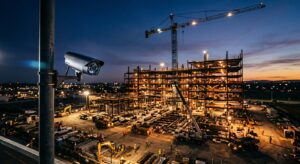
Construction sites are among the highest-risk environments for theft and vandalism. Equipment, copper wire, tools, and materials are attractive targets, and sites are often unoccupied overnight and on weekends. Remote video monitoring for construction sites typically involves temporary camera towers with cellular connectivity — no permanent infrastructure required. The monitoring cost is weighed against the potential loss of equipment worth tens or hundreds of thousands of dollars. For most general contractors, a single prevented theft event justifies months of monitoring fees.
Auto Dealerships
Dealer lots present a unique overnight risk: high-value inventory in an open, difficult-to-physically-secure environment. Commercial remote video monitoring for dealerships focuses on lot perimeter coverage, active deterrence when trespassers are detected, and documentation for insurance purposes. The ability for a monitoring operator to issue a verbal warning through on-site speakers before a theft is completed is a capability that cameras-only systems simply cannot provide.
Retail Stores and Warehouses
Retail environments deal with both external theft and internal shrinkage. After-hours monitoring addresses the former; some clients extend monitoring to business hours for high-risk stock areas. Warehouses with loading dock activity benefit from monitored entry points during shift changes and overnight periods.
Apartment Complexes and Gated Communities
Residential community monitoring focuses on access control points, parking areas, and common spaces. The liability dimension is significant here — documented surveillance of common areas can be critical when slip-and-fall claims or criminal incidents lead to legal proceedings. For a deeper look at how this applies specifically to residential communities, Digital Security Guard’s gated community video monitoring services detail the protocols that protect residents and HOA boards alike.
Active human oversight transforms a passive camera network into a proactive security presence — the difference between documenting a crime and preventing one.
What You Are Actually Paying For
When a property owner engages professional remote video monitoring, the monthly fee covers more than screen time. It funds the infrastructure of a 24/7 monitoring operation: trained operators, redundant monitoring centers, communication systems, documented protocols, and the institutional knowledge to distinguish a legitimate threat from an environmental false trigger.
This human element is not incidental — it is the service. Automated alerts without a trained professional reviewing and acting on them add noise without value. The Security Industry Association has consistently emphasized that the integration of human judgment with video analytics is what separates meaningful security monitoring from automated motion alerts that property owners routinely ignore.
Digital Security Guard’s remote video monitoring model is built on exactly this principle: trained security professionals reviewing live feeds and acting on verified threats, not just flagging motion events for a property manager to review the next morning.
Remote video monitoring does not replace every on-site security function — there are access-control and physical response scenarios where an on-site presence remains appropriate. The strongest security programs evaluate which functions are best handled remotely and which require physical presence, then budget accordingly.
Evaluating ROI Beyond the Monthly Fee
Cost-conscious buyers are right to scrutinize the monthly monitoring fee. But the complete ROI calculation includes prevented losses, not just service costs. Consider the categories of loss that active monitoring reduces:
- Theft and vandalism: Equipment, inventory, and property damage costs that never appear because incidents were deterred or interrupted.
- Liability exposure: Video documentation of incidents in common areas or on commercial property creates a factual record that can defend against inflated or fraudulent claims.
- Operational disruption: A construction site shutdown following an equipment theft or a retail closure following an overnight break-in carries costs far beyond the stolen items.
- Insurance documentation: Many insurers respond positively to verified monitoring programs when underwriting commercial properties, though specific outcomes vary by carrier and policy.
For commercial properties with meaningful theft exposure, the calculation often tilts decisively in favor of monitoring. Explore how this applies to commercial properties specifically through Digital Security Guard’s commercial security monitoring services.
Frequently Asked Questions
What is included in a remote video monitoring service fee?
A professional monitoring fee typically covers live observation of your camera feeds by trained security operators, incident response protocols such as voice-down deterrence and law enforcement notification, documented event logging, and access to recorded footage. Hardware costs — cameras, networking, storage — are usually separate capital expenses, though some providers bundle equipment into service agreements.
How does remote monitoring compare in cost to hiring a security guard?
On-site security guards carry payroll, benefits, overtime, and liability costs that add up significantly for 24/7 coverage across multiple shifts. Remote monitoring consolidates human oversight across multiple properties, which distributes cost and typically results in meaningfully lower monthly expenses for comparable hours of coverage. The trade-off is physical presence on-site versus active remote intervention.
Can remote video monitoring actually stop crimes in progress?
Yes, when monitoring includes two-way audio capability, trained operators can issue real-time verbal warnings to individuals on your property before a theft or vandalism incident is completed. This voice-down deterrence is one of the most effective crime prevention tools in remote surveillance monitoring. Operators can also dispatch law enforcement simultaneously for a coordinated response.
Is remote video monitoring suitable for temporary sites like construction projects?
Absolutely. Temporary camera solutions with cellular connectivity eliminate the need for permanent infrastructure, making remote video monitoring practical for job sites with finite timelines. Coverage can be scaled as a project progresses and relocated when the site closes — a flexibility that fixed guard posts cannot match.
How do I know how many cameras my property needs?
Camera count should be determined by a site assessment that identifies access points, high-value asset locations, blind spots, and lighting conditions. A qualified monitoring provider will conduct this evaluation before recommending a configuration. More cameras are not always better — strategic placement monitored effectively outperforms dense coverage with no active oversight.
Get a Clear-Eyed Cost Assessment for Your Property
Digital Security Guard’s team will assess your property’s specific risk profile and monitoring needs — no generic pricing, no guesswork.

About Digital Security Guard
Digital Security Guard provides remote video monitoring solutions for commercial and residential property owners seeking proactive crime prevention rather than reactive recording. Combining advanced security technology with trained human monitoring professionals, they deliver 24/7 surveillance services that prevent theft, vandalism, and liability issues at a fraction of the cost of on-site security guards. Their solutions serve diverse property types including construction sites, retail stores, auto dealerships, apartment complexes, and gated communities across the nation. Visit digitalsecurityguard.com →