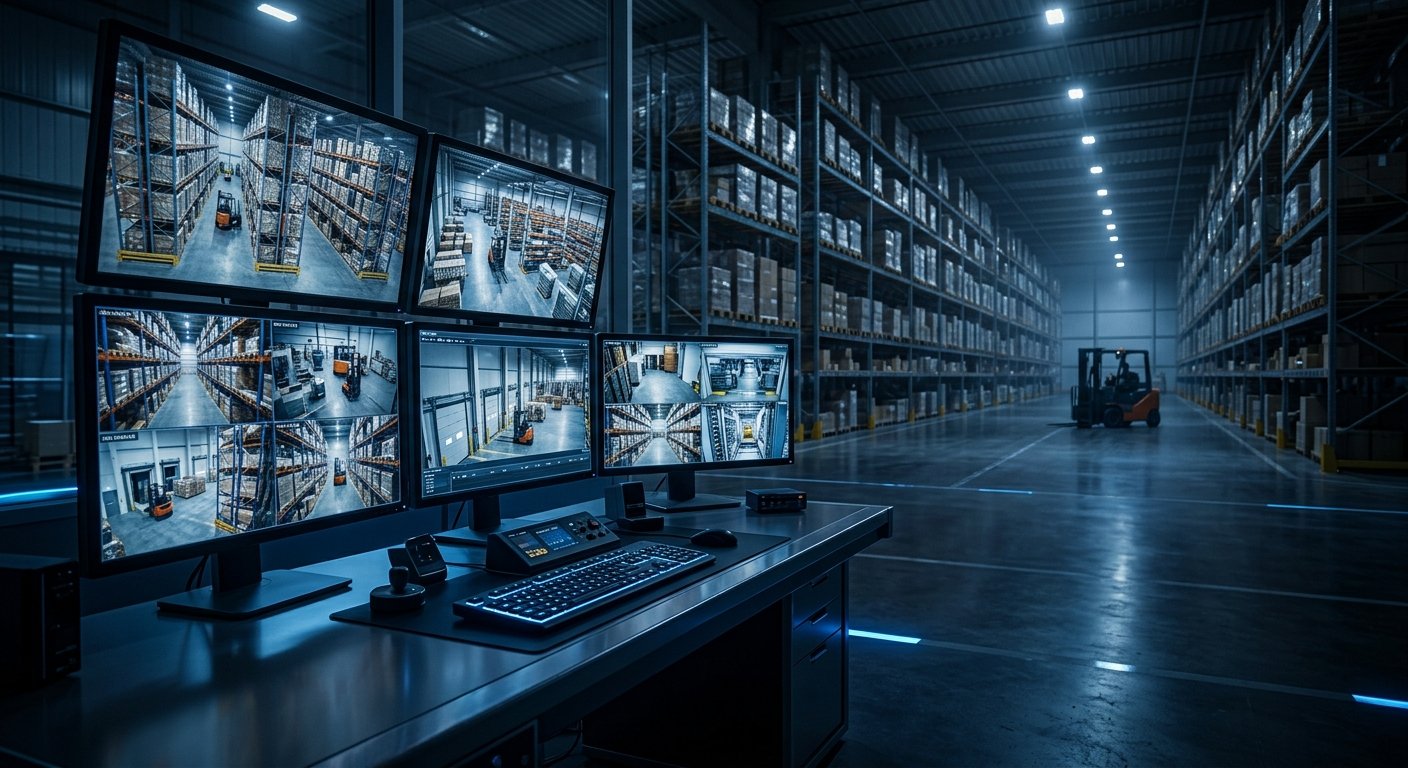
Warehouse video monitoring is a professional security service where trained operators watch live camera feeds from your facility around the clock, intervening in real time when threats appear. Unlike passive recording systems, professional remote surveillance turns cameras into active deterrents—stopping theft, vandalism, and unauthorized access before losses occur, not after. It applies to any warehouse, distribution center, or industrial storage facility concerned about shrinkage, liability, or after-hours risk.
- Live human monitoring stops incidents in progress rather than simply documenting them after the fact.
- Remote surveillance typically costs significantly less than deploying on-site security personnel across multiple shifts.
- Coverage gaps—loading docks, blind corners, after-hours perimeters—are the highest-risk zones in most warehouses.
- Documented video evidence reduces liability exposure and supports insurance claims.
- Professional monitoring pairs technology with trained judgment, reducing costly false alarms and missed threats alike.
Why Warehouses Face Unique Security Challenges
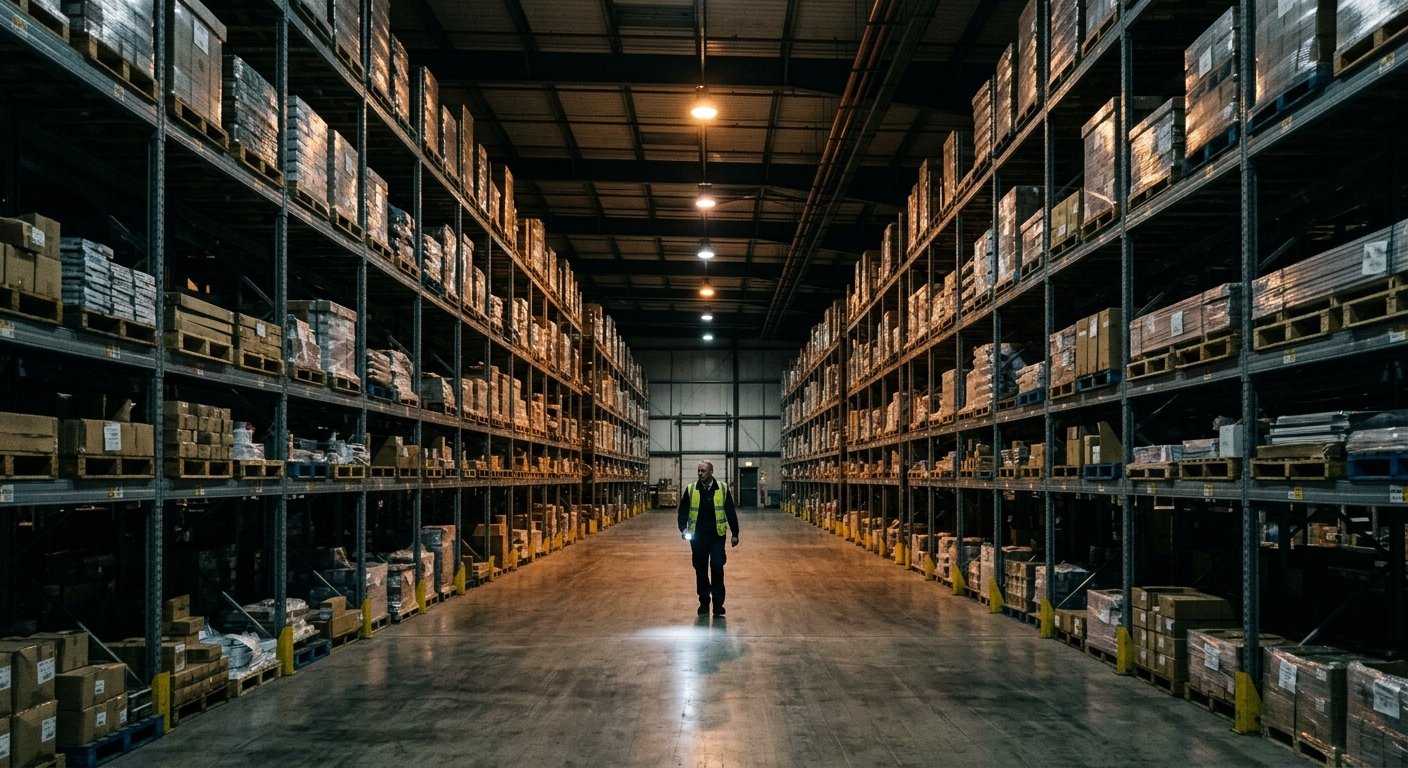
Warehouses present a combination of risk factors rarely found in other commercial settings. High-value inventory moves in and out continuously. Facilities often operate across multiple shifts—or sit empty overnight. Loading docks, receiving areas, and blind corridors create natural cover for theft. And with large square footage to secure, coverage gaps are almost inevitable without a deliberate strategy.
According to the FBI’s Uniform Crime Reporting data, property crimes—including commercial burglary and larceny-theft—remain among the most common and costly offenses affecting businesses nationwide. Warehouses are a frequent target precisely because they concentrate high-value goods with relatively low daytime supervision and limited overnight presence.
Internal theft compounds the problem. Inventory shrinkage from employee theft and administrative error costs retailers and distributors billions annually, and warehouses—with their fast-moving inventory, limited sightlines, and shift-change blind spots—are particularly exposed. A camera system that records but is never actively monitored does little to deter someone who understands its limitations.
Most warehouse burglaries and internal theft incidents occur during shift changes, after closing, or on weekends—exactly the periods when passive recording systems offer no deterrent and no real-time response. Live monitoring closes this window.
What Professional Warehouse Video Monitoring Actually Looks Like
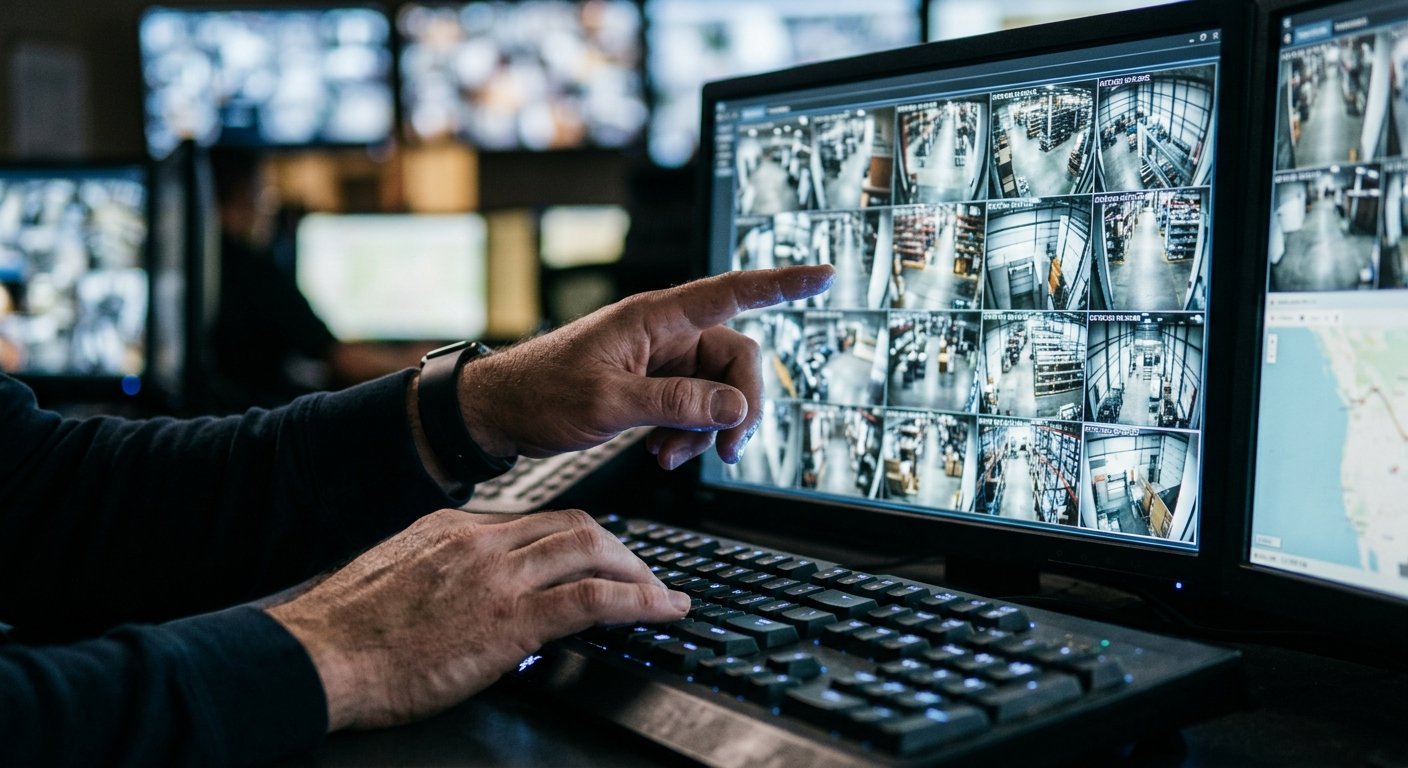
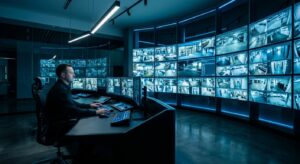
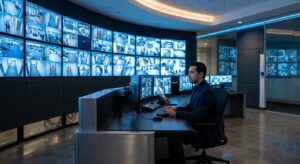
When people picture video monitoring, they often imagine a guard staring at a wall of screens in a back office. Professional remote video monitoring is fundamentally different. Cameras installed across your facility transmit live feeds to an off-site monitoring center staffed by trained security professionals—24 hours a day, seven days a week.
When those professionals detect suspicious activity—someone approaching a perimeter fence after hours, a vehicle in a restricted area, movement in a locked zone—they can respond immediately. That response typically includes an audio warning through on-site speakers, notification to your designated contacts, and escalation to local law enforcement if the situation warrants it. The goal is intervention, not documentation.
Camera network installed
Strategic placement covers high-risk zones: loading docks, inventory areas, perimeter fencing, entry points, and blind corridors.
Live feeds monitored 24/7
Trained security professionals at a remote monitoring center watch your facility continuously, using intelligent analytics to flag anomalies.
Threat detected
An operator identifies suspicious activity—unauthorized access, perimeter breach, or loitering—and assesses the situation in real time.
Active intervention
The operator issues a verbal warning through on-site speakers, alerts your team, and contacts law enforcement if escalation is needed.
Incident documented
All activity is recorded and logged, creating an evidence trail for insurance claims, legal proceedings, or internal investigations.
High-Risk Zones Every Warehouse Manager Should Prioritize
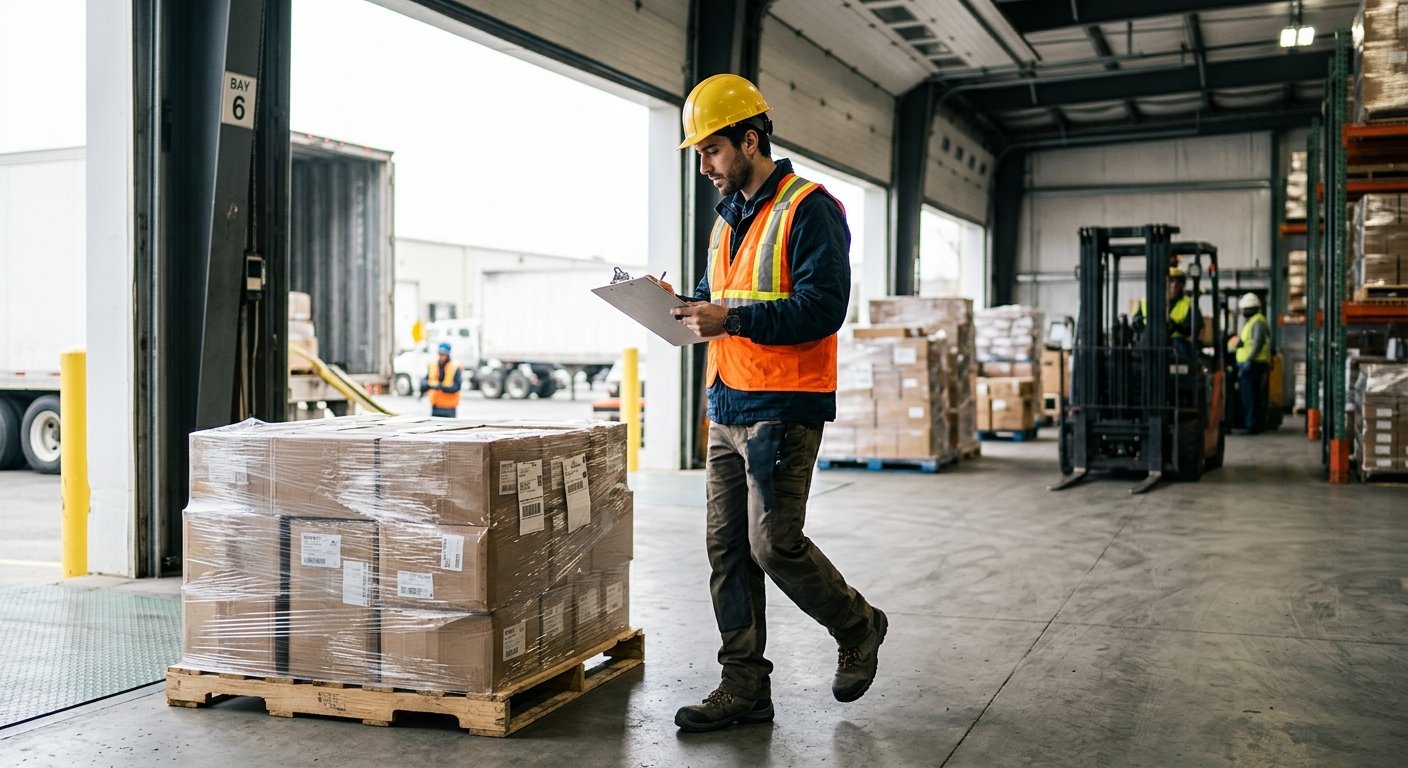
Effective warehouse video monitoring isn’t about placing cameras everywhere—it’s about covering the right places. An audit of warehouse theft and intrusion patterns consistently points to the same vulnerability zones.
- Loading docks and receiving areas: The highest-traffic, highest-risk zone in any distribution facility. Cargo theft, short-loading, and unauthorized entry often occur here.
- Perimeter fencing and vehicle gates: After-hours intrusions typically begin at the perimeter. Monitored cameras here allow operators to intercept threats before they reach the building.
- High-value inventory storage: Designated areas holding electronics, pharmaceuticals, or other premium goods require priority coverage.
- Blind corridors and staging areas: Spaces where employees work without direct supervision are statistically associated with internal theft incidents.
- Parking lots and access roads: Vehicle theft and cargo theft from parked trucks are common at facilities without active perimeter monitoring.
Before finalizing your camera placement, walk your facility at night with the lights off. The areas where you feel most uncertain about visibility are exactly where criminals feel most confident. Prioritize those zones first.
Remote Monitoring vs. On-Site Guards: An Honest Comparison
The question most warehouse operators face isn’t whether to invest in security—it’s how to allocate that investment. On-site guards provide a physical presence, but they come with significant constraints: a single guard can only be in one place at a time, fatigue affects attentiveness during overnight shifts, and the costs of staffing multiple shifts around the clock add up quickly.
| Criterion | On-Site Security Guards | Remote Video Monitoring |
|---|---|---|
| Coverage area | Limited to patrol route | Entire facility simultaneously |
| Hours | Shift-dependent | 24/7 without gaps |
| Response type | Physical presence | Audio intervention + law enforcement escalation |
| Fatigue factor | High (overnight shifts) | None (operators rotate) |
| Documentation | Incident reports | Video evidence + logs |
| Scalability | Add headcount | Add cameras |
For many warehouse operators, the most practical outcome is a hybrid model—remote monitoring handles continuous coverage, while physical security is deployed selectively for high-risk periods or specific post assignments. Commercial remote video monitoring can function as the primary security layer for large facilities where 24/7 guard coverage would be cost-prohibitive.
A camera that records but is never actively monitored is a liability log, not a security system.
Liability Reduction and the Business Case for Monitoring
Beyond theft prevention, professional 24/7 video monitoring services serve a critical liability function. Slip-and-fall claims, workplace accidents, vendor disputes, and wrongful termination allegations all become more defensible—or more easily settled—when documented video evidence exists. The Occupational Safety and Health Administration (OSHA) requires employers to maintain safe working environments, and video records of conditions, compliance practices, and incident timelines can be essential in regulatory investigations.
Insurance providers increasingly recognize the value of monitored surveillance systems. While specific policy outcomes depend on your insurer and coverage terms, documented security infrastructure is a legitimate factor in underwriting risk assessments. Consult your insurance provider about how professional monitoring documentation may factor into your policy evaluation.
For warehouse and distribution operations concerned about cargo liability, video documentation of loading, receiving, and handoff procedures creates an objective record that protects against disputed claims from carriers, vendors, or customers.
Choosing the Right Business Video Monitoring Service
Not all monitoring services are equivalent. When evaluating options for your warehouse, ask specific questions about the human element—because the technology is only as effective as the professionals behind it.
- Is monitoring truly 24/7? Some services reduce staffing overnight. Confirm that trained operators are always watching, not just algorithms.
- What is the operator-to-camera ratio? Overstretched monitoring staff miss events. Ask how many active screens each operator manages.
- How is escalation handled? Understand the exact steps from detection to law enforcement notification.
- Can the system scale with your facility? Warehouses expand. Your monitoring solution should accommodate additional cameras and new coverage zones without starting over.
- What reporting do you receive? Regular activity logs, incident reports, and video clips help you identify patterns and strengthen your overall security posture.
Digital Security Guard provides nationwide remote video monitoring services backed by 24/7 live monitoring from trained security professionals—not just automated detection. Their monitoring teams respond to real-time events with judgment, not just motion alerts, which makes a practical difference in how often genuine threats are caught versus how often your team receives unnecessary notifications.
Frequently Asked Questions
How is warehouse video monitoring different from a standard CCTV system?
A standard CCTV system records footage passively—it documents what happened but doesn’t respond to it. Professional warehouse video monitoring involves trained security operators watching live feeds around the clock. When a threat is detected, they intervene in real time through verbal warnings, client notifications, and law enforcement escalation. The difference is prevention versus documentation.
What areas of a warehouse benefit most from remote monitoring?
Loading docks, receiving areas, perimeter fencing, high-value inventory zones, and parking lots consistently represent the highest-risk areas. Blind corridors and staging areas also benefit from coverage, particularly when internal theft is a concern. A proper site assessment identifies the specific coverage gaps in your facility before cameras are placed.
Can remote video monitoring replace on-site security guards entirely?
For many warehouse operations, remote monitoring serves as the primary security layer with on-site personnel deployed selectively for specific high-risk periods or access control posts. Whether it fully replaces guards depends on your facility’s size, risk profile, and compliance requirements. Many clients use both in a cost-effective hybrid model.
How quickly can monitoring operators respond to an incident?
Response begins the moment an operator identifies a threat on their live feed. Audio warnings are issued immediately through on-site speakers, and client contacts are notified in parallel. Law enforcement is contacted when the situation calls for it. Response speed depends on the monitoring center’s staffing model and camera coverage—ask your provider specifically about their protocols.
Is professional video monitoring suitable for multi-location warehouse operations?
Yes. Remote surveillance monitoring is particularly well-suited to multi-site operations because a single monitoring center can cover multiple facilities simultaneously. This makes it far more scalable than deploying on-site guards at each location. It also standardizes your security protocols and documentation across all sites.
Protect Your Warehouse Before the Next Incident
Connect with Digital Security Guard to discuss a monitoring solution tailored to your facility’s specific risks and coverage gaps.

About Digital Security Guard
Digital Security Guard provides remote video monitoring solutions for commercial and residential property owners seeking proactive crime prevention rather than reactive recording. Combining advanced security technology with trained human monitoring professionals, they deliver 24/7 surveillance services that prevent theft, vandalism, and liability issues at a fraction of the cost of on-site security guards. Their solutions serve diverse property types including construction sites, retail stores, auto dealerships, apartment complexes, and gated communities across the nation. Visit digitalsecurityguard.com →