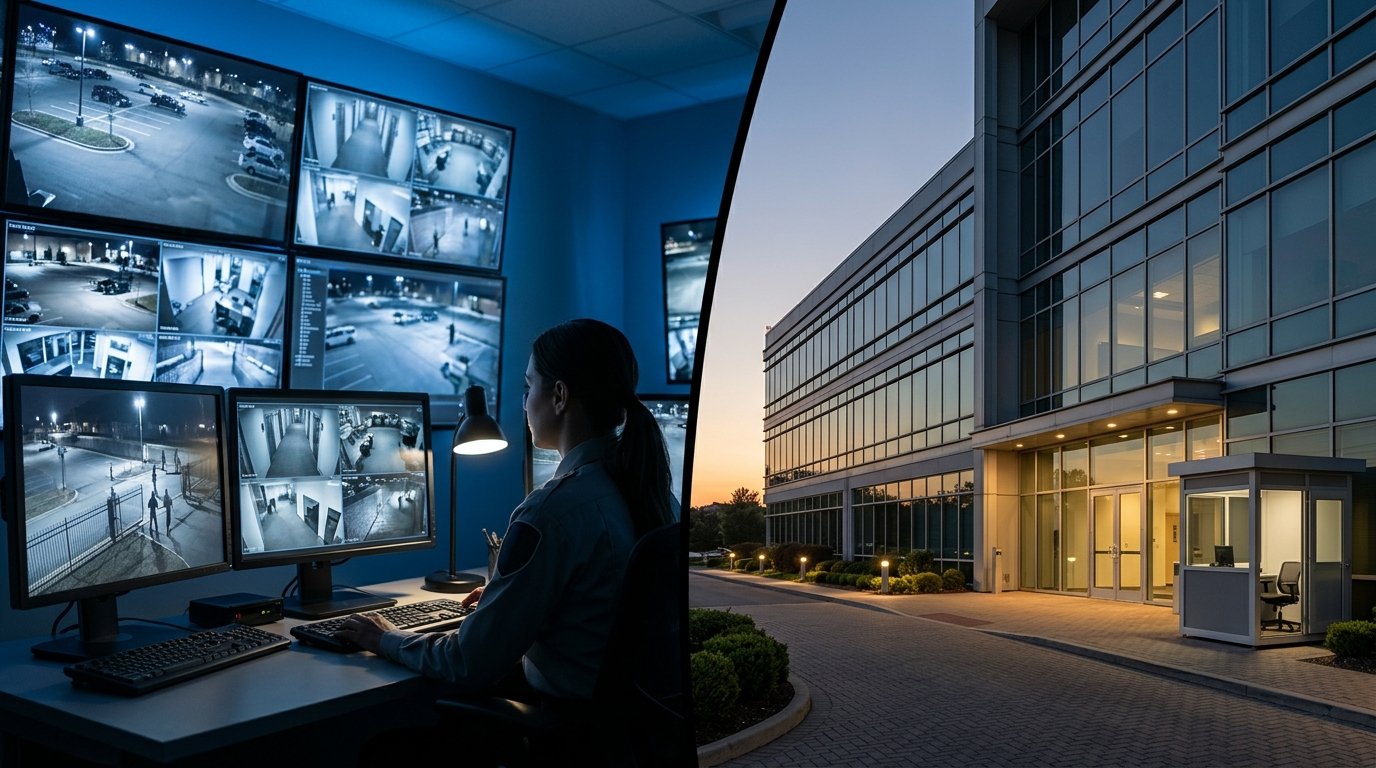
Virtual guard services use remotely stationed, trained security professionals monitoring your property through live camera feeds, while traditional guards are physically present on-site. Both deter crime and protect property, but they differ substantially in cost structure, coverage capability, response approach, and the scenarios where each performs best. Understanding those differences helps property managers and security decision-makers choose the right solution — or the right combination of both.
- Virtual guards monitor multiple camera feeds simultaneously from a remote operations center, providing broader coverage than a single on-site guard walking a patrol route.
- Traditional on-site guards provide a physical, visible presence that can directly intervene, check credentials, and respond hands-on to incidents.
- Remote video monitoring typically costs significantly less than deploying full-time, round-the-clock physical guards — without sacrificing professional oversight.
- Many commercial properties benefit from a hybrid security approach that combines remote monitoring for wide-area coverage with selective on-site personnel for access control.
- Proactive deterrence — not passive recording — is the defining advantage of live virtual guard services over standard camera systems.
How Each Security Model Works
Traditional On-Site Security Guards
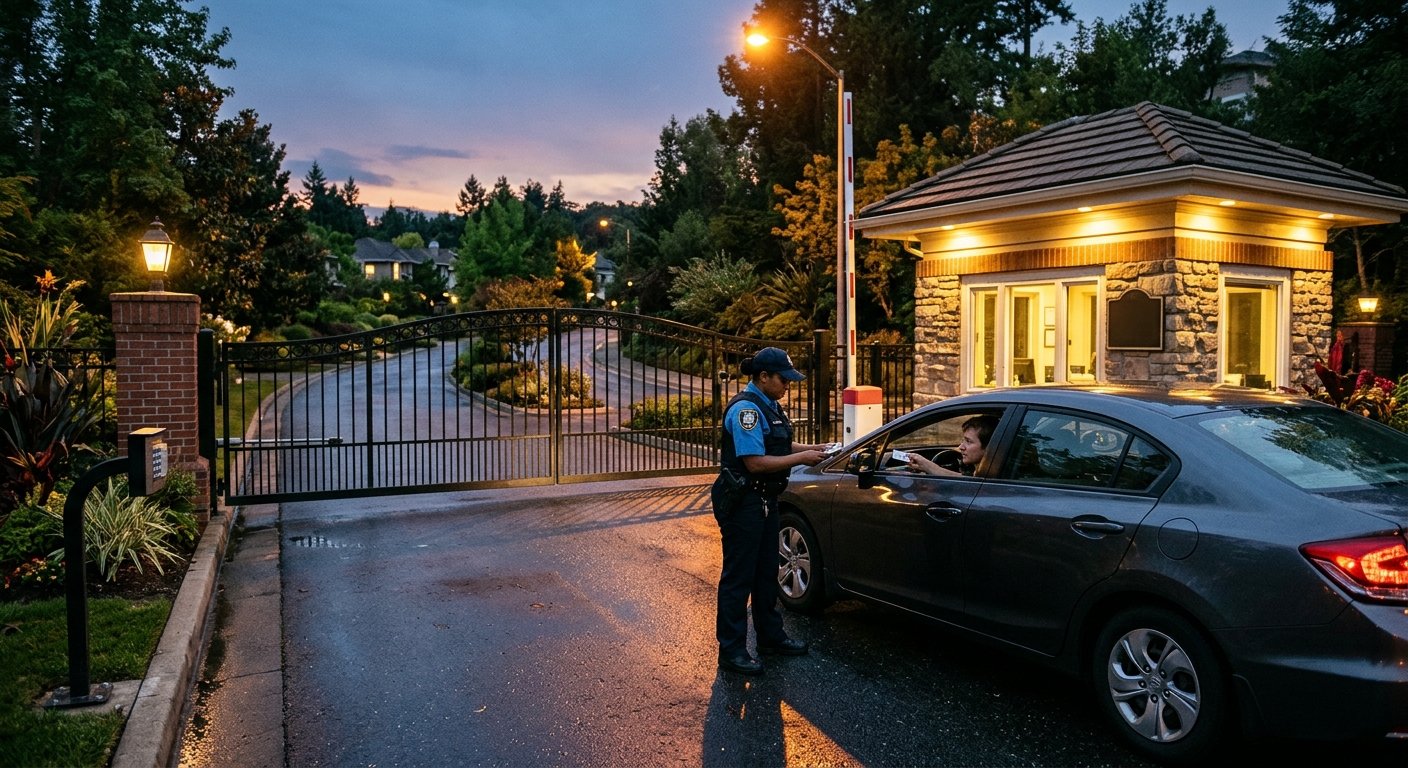
A traditional security guard is physically deployed to your property. They conduct patrols, monitor entry and exit points, check identification, and respond directly to disturbances. Their presence is visible and immediate. For access-controlled environments like gated communities or executive office lobbies, a physical guard at the gate or front desk can be an operational necessity, not just a security preference.
However, a single guard can only be in one place at a time. On large properties — think a multi-acre construction site or a sprawling auto dealership — one officer walking a patrol route leaves significant blind spots between check-ins. Coverage gaps during breaks, shift changes, and overnight hours can create windows of vulnerability that experienced criminals recognize and exploit.
Virtual Guard Services
Virtual guard services place trained security professionals at a remote monitoring station where they watch live camera feeds from your property around the clock. Unlike a passive recording system that simply stores footage for after-the-fact review, live monitoring means a real person is actively watching, evaluating, and responding in real time.
When suspicious activity is detected, the monitoring professional can issue a live audio warning through on-site speakers — announcing that the property is monitored and that authorities are being contacted. This proactive intervention is the critical distinction between remote video monitoring and a camera system that simply records events after they’ve already occurred.
The deterrence value of live audio intervention is substantial. Potential intruders who hear a real voice addressing them directly — rather than seeing a camera light — are far less likely to proceed. Prevention, not documentation, is the primary objective of professional virtual guard services.
Coverage, Scalability, and Blind Spots

One remote monitoring professional can simultaneously oversee dozens of camera angles across a single property or across multiple properties entirely. This scalability is something no on-site staffing model can match without a proportional increase in labor cost. For multi-location retail operators, property management companies overseeing several apartment complexes, or construction firms running concurrent job sites, this is a meaningful operational advantage.
According to the U.S. Bureau of Labor Statistics, security guard services represent one of the larger employment categories in the protective services sector — and wages, benefits, training, and supervision costs make on-site staffing an expensive proposition for continuous 24/7 coverage. Remote monitoring redistributes those costs without eliminating the human professional element that passive systems lack.
| Criterion | Virtual Guard Services | Traditional On-Site Guard |
|---|---|---|
| Coverage area | Multiple cameras, wide-area simultaneous coverage | Limited to patrol route and line of sight |
| Cost structure | Lower operational cost for 24/7 coverage | Higher labor costs, benefits, and supervision |
| Response type | Live audio intervention + law enforcement dispatch | Direct physical response on-site |
| Scalability | Easily added cameras, multi-site monitoring | Requires additional personnel and cost per site |
| Physical presence | Remote; no boots on the ground | Visible, in-person deterrence |
| Access control | Can monitor; cannot physically verify credentials | Can check IDs, control entry directly |
| Documentation | Recorded footage plus incident logs | Written incident reports; may lack video |
Where Each Solution Performs Best
Scenarios That Favor Virtual Guard Services
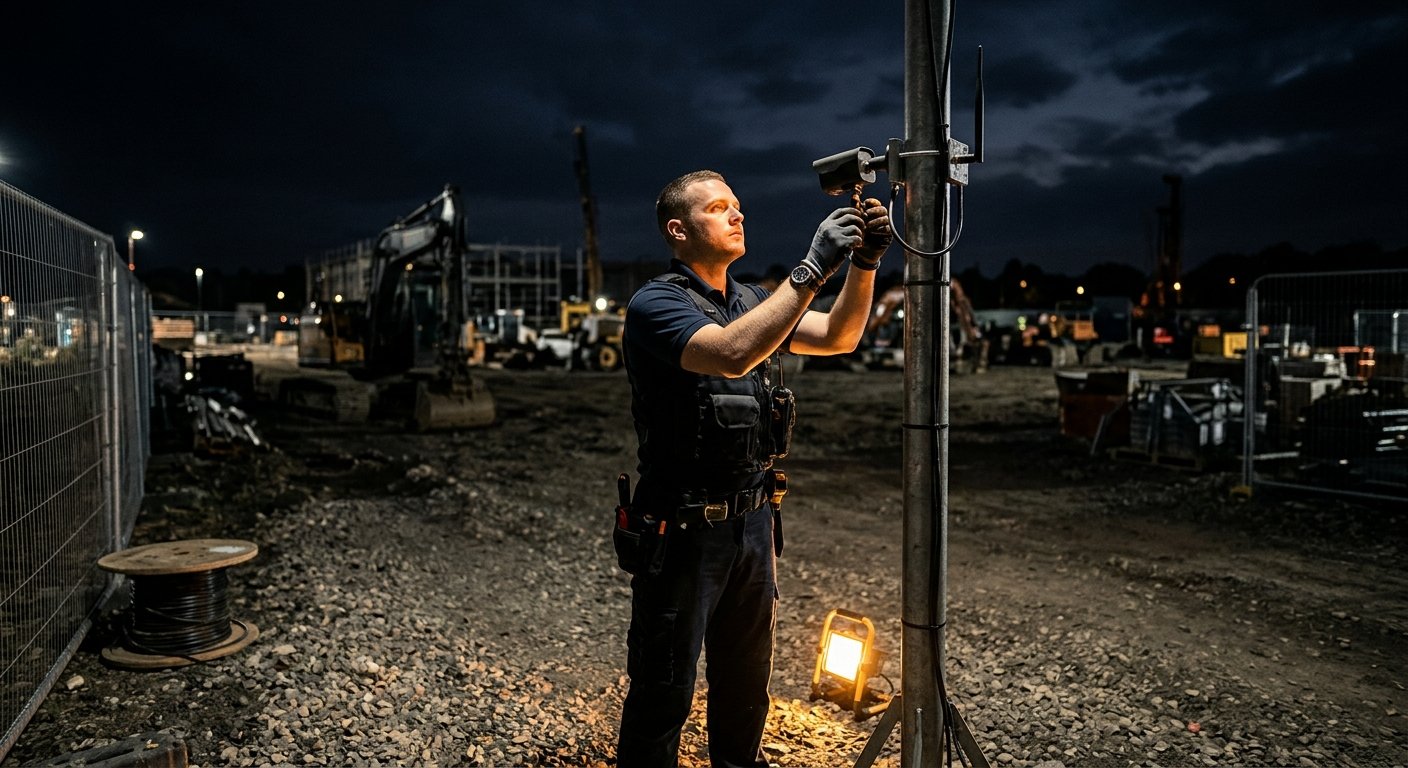
Remote monitoring excels in environments where perimeter coverage, overnight protection, and cost efficiency are the primary concerns. Construction sites are a prime example — valuable equipment and materials sit exposed after hours, but deploying an on-site guard overnight every night is expensive and logistically challenging. Commercial remote video monitoring provides a cost-effective alternative that actively watches the entire site and deters theft before it happens.
Auto dealerships face similar challenges. Rows of vehicles spread across open lots are difficult for one guard to monitor continuously. A monitored camera network covering the full lot — with trained professionals watching live — addresses that coverage gap directly. For an example of how this applies specifically to dealerships, see common video monitoring mistakes at auto dealerships that can leave your inventory exposed.
Retail stores, warehouses, apartment communities, and office parks all benefit from the combination of broad coverage and 24/7 availability that virtual guard services provide without requiring proportional headcount increases.
Scenarios That Favor Traditional Guards
On-site guards remain the stronger choice for environments requiring direct physical interaction — credential verification at a secured entrance, escorting individuals off premises, or managing crowd situations. A gated residential community where a guard checks visitor lists and controls vehicle access at a manned booth is a scenario where physical presence is not optional.
High-profile corporate campuses, government facilities, and venues hosting live events also commonly require physical personnel for reasons that go beyond camera coverage. In these settings, the visible authority of a uniformed professional on-site carries distinct value.
The Hybrid Security Approach
For many commercial properties, the most effective security solution isn’t a choice between virtual and traditional — it’s a strategic combination of both. A hybrid security approach positions remote monitoring as the primary coverage layer handling the full perimeter, parking areas, and after-hours surveillance, while on-site personnel focus specifically on access control points or high-sensitivity areas during operating hours.
The most cost-effective security strategy isn’t always choosing between virtual and physical — it’s knowing exactly where each one works hardest for your property.
This structure allows property managers to control labor costs without reducing coverage quality. Instead of stationing guards across an entire property, they focus on-site staffing where physical presence adds irreplaceable value, while relying on trained remote professionals to maintain visibility everywhere else. Digital Security Guard’s remote video services are designed to integrate naturally into this kind of layered security architecture.
When evaluating a hybrid security approach, map your property’s highest-risk zones by time of day. Many facilities find that physical guard presence during business hours combined with 24/7 remote monitoring provides comprehensive coverage at a fraction of the cost of round-the-clock on-site staffing.
Liability, Documentation, and Incident Response
One often-overlooked advantage of professional remote monitoring is documentation quality. When a trained security professional is actively watching live footage, they can initiate incident logging the moment suspicious behavior begins — not after the fact when reviewing stored video. Timestamped records of live interventions, law enforcement dispatch calls, and documented incidents create a clear chain of evidence that supports both criminal prosecution and liability defense.
The ASIS International security management standards recognize that documented, proactive security protocols strengthen an organization’s overall risk posture. For property managers concerned about slip-and-fall claims, unauthorized access liability, or insurance documentation requirements, the structured incident reporting that comes with professional monitoring services has tangible value beyond crime prevention.
Frequently Asked Questions
Can virtual guard services actually stop a crime, or do they just record it?
Live virtual guard services are designed to intervene before or during a crime, not just document it afterward. When a trained monitoring professional detects suspicious activity, they can broadcast a live audio warning through on-site speakers and contact law enforcement immediately. This proactive response is what distinguishes professional remote monitoring from a standard recording system.
What types of properties benefit most from remote video monitoring?
Properties with large perimeters, high after-hours risk, or multiple locations tend to see the greatest benefit. Construction sites, auto dealerships, retail stores, warehouses, apartment complexes, and gated communities are all well-suited for remote monitoring. Any property where overnight coverage, wide-area visibility, or cost-effective 24/7 oversight is a priority is a strong candidate.
Is remote monitoring a complete replacement for on-site security guards?
Not in every scenario. Remote monitoring provides exceptional coverage for perimeter surveillance, after-hours protection, and multi-site visibility. However, for access control points requiring physical credential checks or environments that need hands-on intervention capability, on-site personnel remain valuable. Many properties benefit most from a hybrid approach that uses both strategically.
How does a virtual security guard communicate with someone on my property?
Remote monitoring stations are connected to on-site audio speaker systems. When a monitoring professional identifies a concern, they can speak directly to anyone on the property in real time — identifying themselves, issuing a warning, or directing individuals to leave. This live interaction is a core component of the deterrence model and distinguishes virtual guard services from passive camera systems.
What happens if something occurs in a camera blind spot?
Camera placement strategy is critical to an effective remote monitoring program. A properly designed system should minimize blind spots through strategic camera positioning covering entry points, perimeter boundaries, high-value storage areas, and common pathways. A security assessment before installation identifies those vulnerabilities so coverage can be optimized for your specific property layout.
Find the Right Security Solution for Your Property
Digital Security Guard’s team of trained security professionals provides 24/7 nationwide remote video monitoring tailored to your property’s specific needs — whether you’re evaluating virtual guard services, a hybrid approach, or replacing a traditional guard program.

About Digital Security Guard
Digital Security Guard provides remote video monitoring solutions for commercial and residential property owners seeking proactive crime prevention rather than reactive recording. Combining advanced security technology with trained human monitoring professionals, they deliver 24/7 surveillance services that prevent theft, vandalism, and liability issues at a fraction of the cost of on-site security guards. Their solutions serve diverse property types including construction sites, retail stores, auto dealerships, apartment complexes, and gated communities across the nation. Visit digitalsecurityguard.com →