False alarms account for nearly 94% of all security alerts at commercial properties, according to 2025 security industry data. Each false alarm costs businesses an average of $150 in wasted response time, regulatory fines, and operational disruption. For properties using traditional alarm systems, this means thousands of dollars annually spent chasing phantom threats while real security incidents go unnoticed. Remote surveillance services with intelligent verification protocols are changing this equation dramatically.
The difference between a traditional alarm system and live video surveillance monitoring lies in verification. When motion sensors trigger at 3 AM, conventional systems alert law enforcement or a property manager—often for a swaying tree branch or a stray cat. Remote video monitoring puts trained security professionals between the alert and the response, verifying genuine threats in real-time before dispatching emergency services or taking action.
The Real Cost of False Alarms
False alarms represent more than mere inconvenience for property managers and business owners. Many municipalities have implemented escalating fine structures for repeated false alarms, with penalties reaching $500 or more per incident after the third occurrence. Los Angeles, Chicago, and Houston now require alarm permits with annual fees, and excessive false alarms can result in permit revocation.
Beyond financial penalties, false alarms erode relationships with local law enforcement. When police departments respond to the same location repeatedly for non-events, they begin to deprioritize those calls. This “cry wolf” effect means that when a genuine emergency occurs, response times may be slower precisely when you need help most.
For businesses operating multiple locations, the operational burden compounds quickly. Security managers spend countless hours fielding middle-of-the-night calls, coordinating responses, and managing the aftermath of false activations. This reactive approach drains resources that could be invested in proactive security measures.
How Remote Video Services Reduce False Alarms
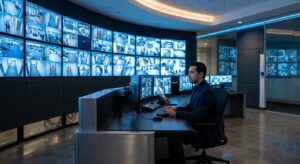
Remote surveillance services integrate intelligent verification into every alert. When sensors detect activity, 24/7 remote video services operators immediately access live camera feeds to assess the situation visually. This human verification layer filters out false triggers while identifying genuine threats requiring immediate action.
Multi-Stage Verification Protocols
Professional remote video monitoring employs structured verification procedures before escalating any alert. First, operators review live footage to confirm human presence or criminal activity. Second, they assess the nature and severity of the threat. Third, they determine the appropriate response—whether that’s activating on-site audio warnings, contacting property management, or dispatching law enforcement with verified information.
This multi-stage approach means police receive only verified alarm calls with accurate descriptions of suspects, vehicles, and ongoing criminal activity. Law enforcement responds faster and more effectively when they know a trained security professional has confirmed the threat.
Intelligent Analytics Integration
Modern real-time remote monitoring platforms incorporate artificial intelligence to distinguish between routine activity and suspicious behavior. Advanced analytics can differentiate between humans, vehicles, and animals; recognize loitering or perimeter breaches; and identify patterns that suggest criminal surveillance.
These systems learn what constitutes normal activity for each property. A delivery truck arriving at a warehouse at 6 AM triggers a different response than an unmarked vehicle entering a construction site at midnight. The technology flags anomalies, but human operators provide the judgment that prevents false alarms.
Industry-Specific False Alarm Challenges
Different property types face unique false alarm triggers that remote surveillance services address through customized monitoring protocols.
Construction Sites
Construction sites generate frequent false alarms from moving equipment, tarps flapping in wind, and legitimate after-hours work by contractors. Remote video monitoring operators familiarize themselves with your site’s normal operations and scheduled activities. When cameras detect movement, operators verify whether activity aligns with authorized work schedules before responding.
For construction managers dealing with equipment theft rates that cost the industry over $400 million annually, the ability to distinguish between authorized personnel and thieves proves invaluable. Live video surveillance monitoring enables operators to challenge intruders via two-way audio, often preventing theft before it occurs while avoiding false dispatches for legitimate workers.
Retail Properties
Retail locations deal with false alarms from employees working late, cleaning crews, and HVAC systems triggering motion sensors. After-hours activity represents legitimate business operations, not security threats. Remote surveillance services maintain schedules of authorized personnel and verify identities through visual confirmation rather than relying solely on access codes that may be shared or compromised.
This approach has proven especially valuable for retail chains where individual store managers may not be immediately reachable during overnight alarms. Central monitoring eliminates the need to wake managers for false alarms while ensuring genuine incidents receive immediate attention.
Apartment Communities
Residential properties generate false alarms from residents, visitors, and deliveries at all hours. Traditional systems struggle to distinguish between legitimate resident activity and potential intruders. Remote video services monitoring common areas, parking structures, and entry points provide context that motion sensors alone cannot deliver.
Property managers at apartment complexes report 85-90% reductions in false alarm incidents after implementing 24/7 remote video services. Residents appreciate the visible security presence without the intimidation factor of roving guards, while management avoids costly fines and maintains positive relationships with local police.
Auto Dealerships
Car dealerships face unique challenges with valuable inventory exposed in open lots. Wind activating vehicle alarms, animals moving through lots, and passing traffic all trigger conventional security systems. Remote monitoring operators distinguish between environmental factors and actual threats to high-value inventory worth millions of dollars.
When operators detect individuals tampering with vehicles or cutting fences, they can activate spotlights, issue verbal warnings through speakers, and alert police with specific suspect descriptions and locations—all while the crime is in progress. This proactive intervention prevents theft rather than simply recording it for insurance claims.
Technology Stack for False Alarm Reduction
Effective false alarm reduction requires integration of multiple technologies working in concert with human oversight.
High-Definition Cameras with Night Vision
Image quality directly impacts verification accuracy. Modern surveillance cameras deliver 4K resolution with infrared capabilities that provide clear footage regardless of lighting conditions. Operators can zoom in to identify faces, read license plates, and assess situations with confidence rather than making judgment calls based on grainy, unclear footage that leads to false dispatches.
Smart Motion Detection
Advanced motion detection distinguishes between significant movement requiring human review and minor environmental changes. Adjustable sensitivity settings and zone-based detection focus monitoring on critical areas while ignoring irrelevant activity in less sensitive zones.
Two-Way Audio Systems
Interactive audio capabilities allow remote operators to assess situations through sound and provide verbal warnings to intruders. Many potential security incidents are resolved through simple verbal intervention, eliminating the need for law enforcement dispatch entirely.
Integration with Access Control
When remote video monitoring integrates with access control systems, operators receive contextual information about who should be on property at any given time. This integration dramatically reduces false alarms from legitimate users while flagging unauthorized access attempts immediately.
Measurable Impact on Security Operations
Properties implementing professional remote surveillance services report quantifiable improvements in alarm accuracy and security effectiveness. A regional retail chain reduced false alarm incidents by 92% within six months of deploying live video surveillance monitoring across 45 locations. Their annual false alarm fines dropped from $31,000 to under $2,500.
A construction company managing 12 active job sites eliminated false alarm fines entirely while documenting three prevented thefts in the first quarter after implementation. The cost savings from prevented equipment theft alone exceeded their annual monitoring investment by a factor of seven.
These results reflect the fundamental advantage of real-time remote monitoring: human intelligence applied to technological data. Algorithms can detect and flag anomalies, but experienced security professionals provide the judgment that separates genuine threats from false positives.
Cost Comparison: Traditional vs. Remote Monitoring
On-site security guards cost between $35-$80 per hour depending on location and required certifications. For 24/7 coverage, that translates to $306,000-$700,000 annually per location. False alarm fines add thousands more to security budgets using conventional systems.
Remote video services typically cost $400-$1,500 monthly per location for comprehensive 24/7 coverage—a 90% reduction in security costs while delivering superior false alarm prevention and faster threat response. The financial case becomes compelling quickly, especially for multi-site operations.
Implementation Best Practices
Successful false alarm reduction through remote monitoring requires strategic implementation rather than simply installing cameras and hoping for improvement.
Begin with a thorough site assessment identifying high-risk areas, common false alarm triggers, and operational patterns. Share detailed information about normal business activities, authorized personnel, and scheduled events with monitoring operators. The more context operators have, the better they can distinguish routine activity from genuine threats.
Establish clear escalation protocols defining how different types of incidents should be handled. Determine when operators should attempt verbal intervention, when to notify on-site management, and when to dispatch emergency services immediately.
Schedule regular reviews of monitoring data and alarm statistics to identify patterns and refine detection parameters. Continuous improvement ensures your system becomes progressively more accurate over time.
Beyond False Alarm Reduction
While false alarm reduction delivers immediate cost savings and operational benefits, comprehensive remote surveillance services provide value extending far beyond fewer false dispatches. Continuous monitoring identifies safety hazards, documents incidents for liability protection, and creates detailed records of property activity valuable for investigations and legal proceedings.
Property owners gain unprecedented visibility into operations across all locations from a single dashboard. This intelligence supports better decision-making about staffing, access control, and security resource allocation.
Taking Action on False Alarms
If your property experiences frequent false alarms, mounting fines, or strained relationships with law enforcement, remote video monitoring offers a proven solution. The technology has matured significantly, and professional monitoring services now deliver reliability that standalone alarm systems simply cannot match.
Digital Security Guard specializes in remote surveillance services designed specifically to eliminate false alarms while providing proactive threat prevention. Our trained security professionals monitor your property 24/7, verifying every alert and responding to genuine threats in real-time. We work with properties nationwide, delivering the false alarm reduction and security effectiveness that property owners and facility managers demand.
Contact Digital Security Guard today to discuss how our remote video monitoring solutions can eliminate false alarms at your property while providing superior security at a fraction of the cost of traditional approaches. Call us now to schedule your free security assessment and discover why leading property managers trust our expertise.