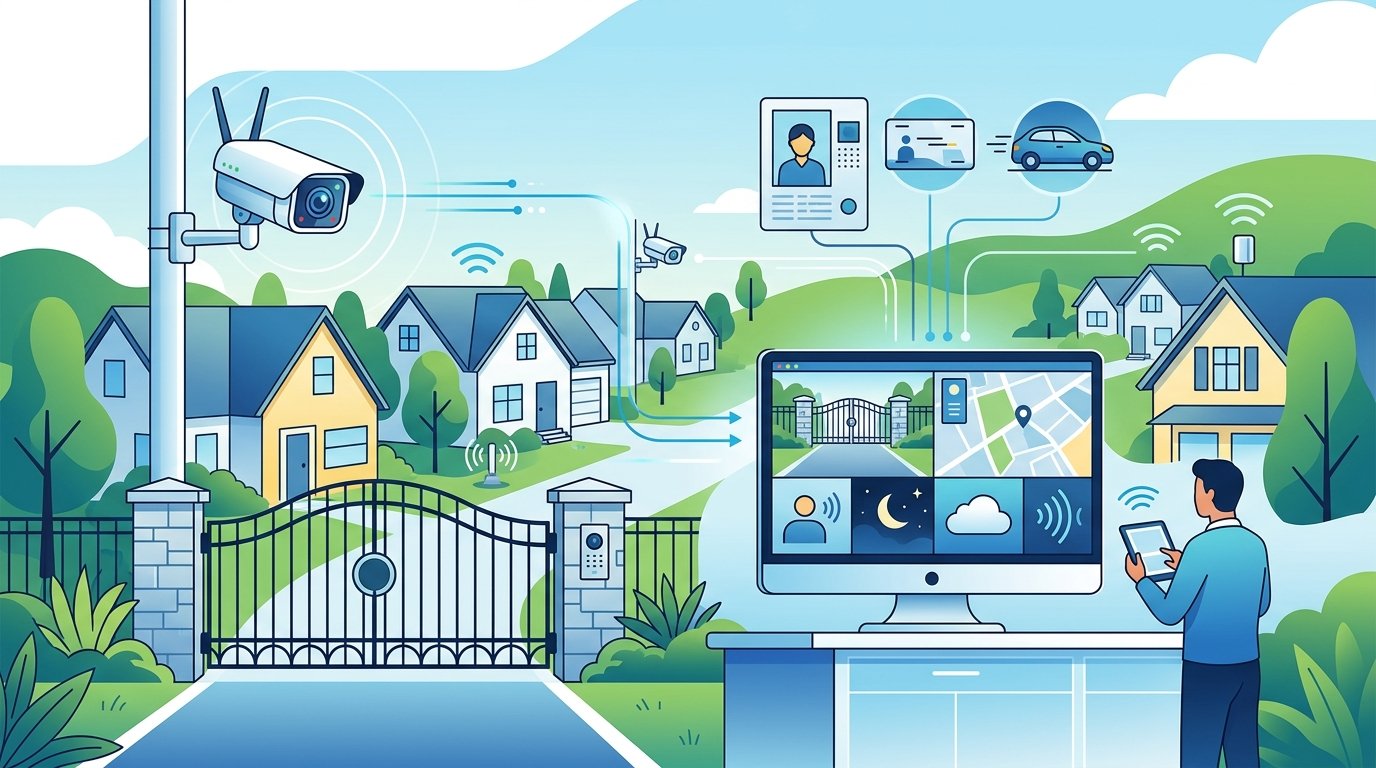
Roughly 74 million Americans now live in community associations, according to the Community Associations Institute—and the pressure on HOA boards to deliver meaningful security has never been greater. Residents expect more than a gate with a keypad. They want to know that someone is actually watching, that unauthorized visitors are intercepted before they enter, and that incidents are addressed before damage is done.
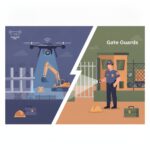
The challenge is doing all of this within a reasonable budget. On-site security guards are expensive—often running $50,000 to $80,000 per post annually when you factor in wages, benefits, training, and turnover. For most HOAs and residential community managers, that math simply doesn’t work.
That’s where gated community video monitoring powered by trained remote security professionals fills the gap. But not all surveillance systems are created equal. Here are the seven features HOA decision-makers should demand before investing in any residential security monitoring service.
1. Live Human Monitoring—Not Just Recording
This is the single most important distinction in modern residential security, and it’s worth stating plainly: cameras that only record are not security systems. They’re evidence-collection tools. If your current setup captures everything but alerts no one, crime can happen unimpeded and you’re left reviewing footage after the fact.
Effective HOA security monitoring requires trained human professionals watching live feeds around the clock. At Digital Security Guard, our 24/7 live monitoring teams are trained to identify suspicious behavior, verify threats, and initiate appropriate responses in real time. When a non-resident attempts to tailgate through a gate, or someone begins tampering with parked vehicles, a live monitor can intervene immediately—issuing audio warnings through on-site speakers or escalating to emergency services.
When evaluating providers, ask specifically: “Who is watching the cameras right now?” The answer tells you everything.
2. Intelligent Camera Placement at All Access Points
Gated community security cameras are only effective when they’re positioned to capture actionable intelligence. Strategic placement matters far more than sheer camera count.
Key coverage zones for residential communities include:
- Entry and exit gates with license plate recognition capability
- Pedestrian access points, including gaps in fencing or walls
- Common areas: pools, clubhouses, fitness centers, and mail rooms
- Parking lots, garages, and vehicle storage areas
- Package delivery zones and parcel lockers
- Perimeter boundaries that run adjacent to public property
A camera covering only the front gate misses the delivery driver who props open a side entrance or the individual who cuts through landscaping after dark. Comprehensive coverage requires a site assessment that maps every realistic entry point and vulnerability before a single camera is installed.
3. License Plate Recognition (LPR) Integration
Package theft, vehicle break-ins, and trespassing by repeat offenders are among the most common security complaints in residential communities. License plate recognition technology is one of the most practical tools available to address all three.
Modern LPR-integrated systems can automatically log every vehicle entering and exiting the community, flag plates associated with known incidents, and alert monitoring personnel when an unauthorized or flagged vehicle attempts access. This creates a searchable database that proves invaluable during incident investigations and can be shared with law enforcement when necessary.
For HOAs managing visitor access, LPR also streamlines the approval process—registered resident vehicles pass through seamlessly while unrecognized plates trigger a verification step rather than automatic entry.
4. Two-Way Audio and Active Deterrence
Passive surveillance watches incidents unfold. Active deterrence stops them before they escalate. Two-way audio capability transforms your camera network from a passive observer into an interactive security presence.
When a monitoring professional observes someone attempting to break into a vehicle or vandalizing community property, they can speak directly through on-site speakers: identifying themselves as live security, informing the individual they are being monitored, and instructing them to leave the premises. This real-time intervention is remarkably effective—most opportunistic offenders abandon their activity immediately when they realize someone is watching and communicating with them.
This feature also benefits legitimate residents. A monitoring professional can assist a resident who appears to be in distress at the gate or alert maintenance to a safety hazard in a common area.
5. Scalable Coverage for Large or Multi-Zone Communities
Many gated communities span hundreds of acres with multiple neighborhoods, amenity centers, and entry points. A security solution that works for a 50-unit condominium complex needs to scale appropriately for a 500-home master-planned community.
Scalable remote video monitoring infrastructure allows HOAs to start with priority coverage zones and expand over time as budget allows or as security needs evolve. Look for providers who offer flexible configurations rather than one-size-fits-all packages. The ability to add cameras, coverage zones, or monitoring hours without replacing your entire system infrastructure protects your initial investment.
Multi-zone communities also benefit from centralized monitoring. Rather than managing separate security vendors for different sections of the property, a single remote monitoring provider with a unified camera network delivers consistent coverage and simplified incident reporting for HOA management.
6. Comprehensive Incident Documentation and Reporting
HOA boards are accountable to their residents—and increasingly, to their insurance carriers. When security incidents occur, documentation quality directly affects both liability exposure and insurance claim outcomes.
A professional residential community surveillance service should provide:
- Time-stamped video records with cloud storage and easy retrieval
- Written incident reports generated by monitoring staff
- Audit logs of all monitoring activity and interventions
- Exportable documentation in formats accepted by law enforcement and insurance carriers
According to the FBI’s Uniform Crime Reporting Program, property crimes remain among the most underreported and hardest to prosecute precisely because of insufficient evidence. Detailed, professional documentation changes that equation significantly and supports the HOA’s position in any dispute or legal proceeding.
7. Cost Efficiency Compared to On-Site Personnel
Security budget is a reality every HOA board faces. Monthly assessments have limits, and residents push back on increases. This makes cost-per-protective-outcome a critical metric when evaluating security options.
Remote video monitoring consistently delivers significant cost advantages over staffing a security booth around the clock. A single monitored camera system covering multiple entry points can replace multiple security guard shifts—without sick days, training gaps, or the liability that comes with employing on-site personnel.
For HOAs with existing camera infrastructure, transitioning to professional live monitoring often requires minimal additional hardware investment. For communities starting fresh, the combined cost of camera installation plus ongoing monitoring typically runs well below the annual cost of even part-time on-site staffing.
The financial case becomes even clearer when you factor in liability reduction. Communities with documented, professional security programs are better positioned when residents or visitors file claims related to security incidents on the property.
Frequently Asked Questions
What is gated community video monitoring?
Gated community video monitoring is a professional security service that uses strategically placed cameras and trained remote monitoring personnel to watch over residential communities in real time—24 hours a day, seven days a week. Unlike basic recording systems, live-monitored solutions allow security professionals to intervene during incidents, verify threats, and alert authorities as situations develop rather than after the fact.
How is remote monitoring different from a traditional security guard?
A traditional on-site guard covers one location at a time and has limited visibility across a large property. Remote monitoring professionals watch multiple camera feeds simultaneously, covering every access point and common area at once. This broader coverage is available continuously, without the scheduling gaps and costs associated with staffing physical guard posts around the clock.
Can HOA security monitoring help reduce package theft and vehicle break-ins?
Yes. These are among the most frequent security issues in residential communities, and remote monitoring with active deterrence capabilities addresses both. License plate recognition helps identify repeat offenders, live monitoring coverage of parking areas and delivery zones catches incidents as they begin, and real-time audio intervention can stop a break-in before it’s completed.
What happens when a monitoring professional sees suspicious activity?
Trained monitoring professionals follow established protocols based on the nature of the incident. They may issue an audio warning through on-site speakers, notify the HOA management team or property manager, or contact emergency services depending on the severity of the situation. Every intervention is documented in an incident report for the HOA’s records.
How much does gated community security monitoring cost compared to on-site guards?
Costs vary based on property size, number of cameras, and coverage requirements—but remote monitoring solutions generally cost significantly less than maintaining staffed security posts. Most HOAs find that professional monitoring can be implemented for a fraction of what annual on-site guard staffing would cost for comparable or better coverage, making it an attractive alternative for budget-conscious boards.
Making the Right Security Investment for Your Community
HOA boards carry a real responsibility to the residents who trust them with their safety and their dues. Investing in gated community security cameras without professional monitoring is like installing a smoke detector with no battery—the hardware is there, but the protection isn’t.
The seven features outlined here represent the baseline for any residential community serious about proactive crime prevention. Live human monitoring, strategic camera placement, LPR integration, active deterrence, scalability, solid documentation, and cost efficiency aren’t luxury add-ons. They’re the standard that protects residents, reduces HOA liability, and delivers measurable value from your security investment.
Digital Security Guard provides nationwide remote video monitoring services designed specifically for communities like yours—combining advanced technology with trained security professionals available around the clock. If you’re evaluating your community’s current security posture, explore our gated community video monitoring solutions or reach out directly to discuss a customized approach for your property.
Ready to move from reactive recording to proactive protection? Contact Digital Security Guard today to schedule a security assessment for your community.