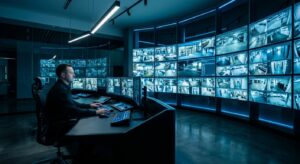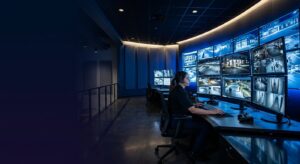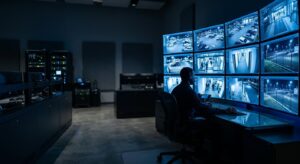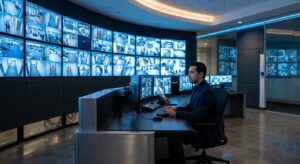
Traditional security cameras record what happens. Cloud-based video monitoring prevents it. That distinction matters enormously when you’re protecting a construction site, auto dealership, or apartment complex where reactive footage does little to stop a theft that already occurred.
Yet for many property owners and facility managers, cloud-based monitoring still feels like a black box — impressive-sounding technology that’s hard to evaluate or trust with a serious security budget. This guide breaks down exactly how cloud-based video monitoring works, what separates it from conventional CCTV systems, and why it’s become the preferred approach for commercial and residential properties that prioritize prevention over documentation.
What Is Cloud-Based Video Monitoring?
Cloud-based video monitoring is a security approach that streams live camera footage over the internet to secure, off-site servers and, critically, to trained human monitoring professionals who watch feeds in real time. Unlike traditional DVR or NVR systems where footage sits locally on a hard drive, cloud-based systems store video data remotely, making it accessible, redundant, and actionable.
The “cloud” component handles storage and transmission. The human component — trained security professionals watching live feeds — is what transforms passive recording into proactive crime prevention. When an intrusion, suspicious behavior, or safety violation occurs, a monitoring specialist can intervene immediately through on-site speakers, coordinate with local authorities, or alert property management before an incident escalates.
This is the core architecture behind what Digital Security Guard delivers through its remote video monitoring services nationwide.
The Technical Foundation: How the System Operates
Camera Hardware and Edge Processing
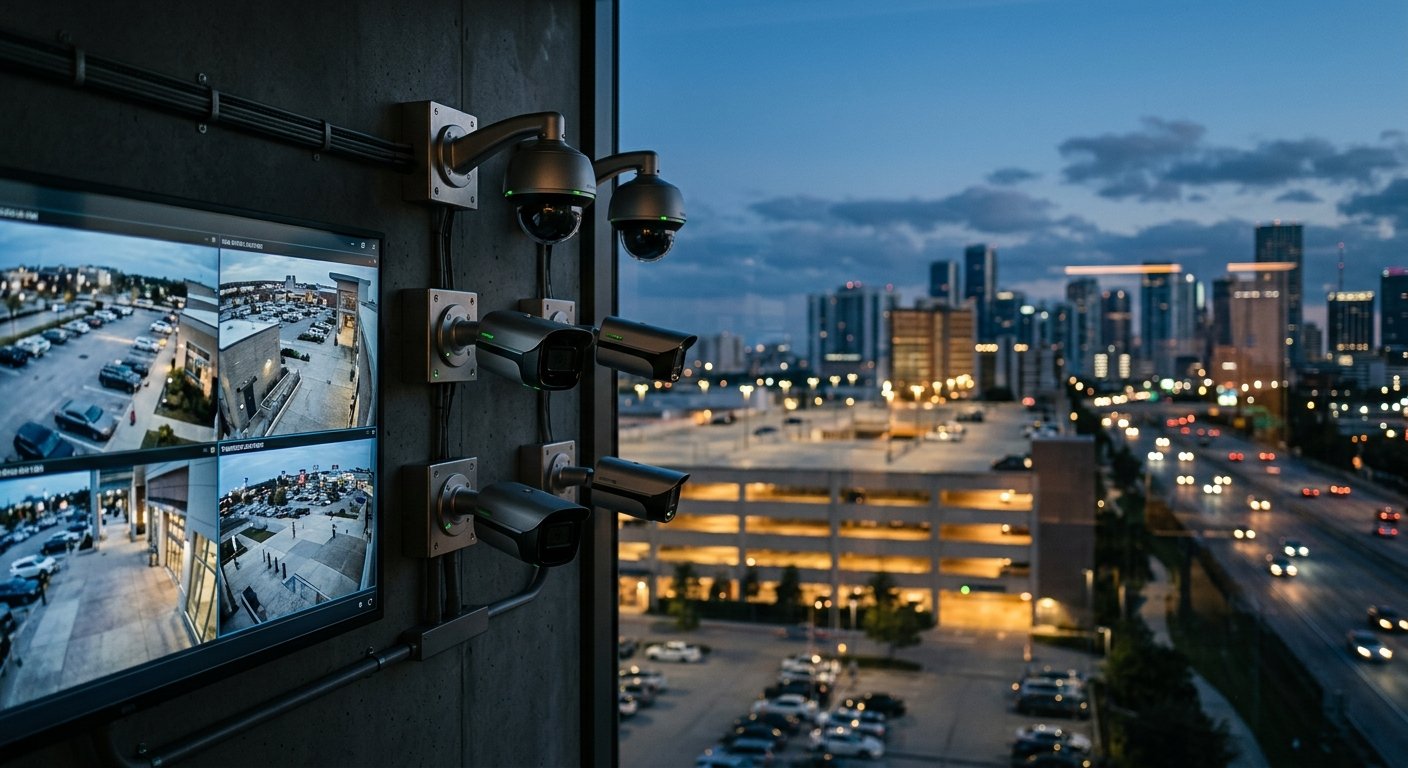
Modern cloud-based surveillance begins with IP (Internet Protocol) cameras, which differ fundamentally from analog CCTV cameras. IP cameras convert video into digital data at the source and transmit it across a network. Many incorporate edge processing — built-in analytics that detect motion, classify objects (person versus vehicle versus animal), and filter out irrelevant triggers before sending alerts upstream.
This edge intelligence is critical. It significantly reduces the number of false alert events that reach human monitors, allowing security professionals to focus their attention on genuine threats rather than swaying tree branches or passing headlights.
Secure Data Transmission
Video data travels from cameras to cloud servers via encrypted internet connections — typically using AES-256 encryption, the same standard used by financial institutions. This ensures footage cannot be intercepted or tampered with in transit. Redundant transmission protocols mean that if one pathway fails, the system automatically routes through a backup, maintaining continuous coverage.
Cloud Storage and Redundancy
Once video reaches cloud infrastructure, it’s stored across multiple geographically distributed servers. This redundancy is a major advantage over local storage systems. A traditional DVR can be stolen, damaged by fire, or wiped by a sophisticated intruder. Cloud-stored footage cannot be physically destroyed at the property — it exists in secure data centers regardless of what happens on-site.
According to the FBI’s Uniform Crime Reporting data, business property crimes remain a persistent challenge across every sector, and evidence preservation directly impacts prosecution outcomes. Cloud storage ensures footage is always available when law enforcement needs it.
The Monitoring Center: Where Technology Meets Human Judgment
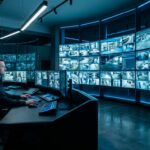
This is the element that separates professional remote surveillance systems from DIY cloud cameras. At Digital Security Guard, trained security professionals monitor live video feeds 24/7 from a centralized operations center. When analytics flag an event, a specialist reviews the footage in real time, assesses the situation, and takes appropriate action — whether that’s issuing a live audio warning through on-site speakers, contacting property management, or escalating to emergency services.
This human-in-the-loop model is what makes off-site video monitoring genuinely preventive. Automated systems alone miss context. A trained professional can distinguish between an authorized late-night delivery, a maintenance crew, and an unauthorized intruder — and respond appropriately to each scenario.
Why Cloud-Based Systems Outperform Traditional CCTV
No Local Vulnerability
Traditional systems store footage on-site in DVRs or NVRs. Experienced criminals know to locate and destroy recording equipment. Cloud-based monitoring eliminates this vulnerability entirely — footage is off-site before a potential thief could ever locate it.
Scalable Coverage Without Infrastructure Costs
Adding cameras to a local system often requires physical storage upgrades and rewiring. Cloud-based systems scale by simply adding cameras to the network, with storage expanding automatically in the cloud. For large properties like warehouses, auto dealerships, or apartment complexes with extensive perimeters, this scalability translates directly to cost savings.
Remote Access and Transparency
Property owners and facility managers can access live and recorded footage from any internet-connected device. This transparency is particularly valuable for multi-site operators managing retail chains, construction portfolios, or apartment communities. Rather than dispatching someone to review footage on-site, a manager can pull up any camera from a smartphone in seconds.
Cost Efficiency vs. On-Site Security
The cost comparison between live video surveillance monitoring and on-site security guards is significant. A single full-time security guard typically costs between $40,000 and $80,000 annually when you account for salary, benefits, supervision, and turnover. Cloud-based remote monitoring covers the same property — often with better detection capabilities — at a fraction of that cost, making 24/7 coverage economically viable for businesses that previously couldn’t afford round-the-clock protection.
Real-World Applications Across Property Types
Construction Sites
Construction sites are among the highest-risk environments for equipment theft and vandalism. The National Equipment Register and industry groups estimate equipment theft costs the construction industry hundreds of millions annually. With no permanent structures and frequent shifts in site layout, virtual security monitoring is particularly effective — cameras can be repositioned as the project evolves without rewiring infrastructure.
Auto Dealerships
Dealer lots present a challenging security scenario: large open areas, high-value inventory, and round-the-clock exposure. Cloud-based remote CCTV monitoring covers the entire lot perimeter while live monitors can intervene the moment suspicious activity begins — before a vehicle is compromised rather than after.
Retail Stores
Retail environments deal with both external theft and internal shrinkage. Professional video monitoring applies structured oversight during business hours and full perimeter protection after closing, covering the scenarios where most significant losses occur.
Apartment Complexes and Gated Communities
Residential communities have unique needs — resident privacy, access control, parking lot safety, and package theft prevention. Cloud-based monitoring addresses all of these while maintaining appropriate boundaries. Digital Security Guard’s approach to gated community video monitoring combines technology with human oversight to balance security and resident comfort.
Liability Reduction: A Benefit Worth Measuring
Beyond theft prevention, cloud-based video monitoring creates a documented record that protects property owners from fraudulent liability claims. Slip-and-fall incidents, alleged incidents involving staff, and insurance disputes are all easier to resolve — or defend against — when timestamped, cloud-stored footage is available. For commercial properties, this documentation value alone often justifies the investment.
Explore how this applies specifically to commercial environments through Digital Security Guard’s commercial remote video monitoring solutions.
Frequently Asked Questions
How is cloud-based video monitoring different from regular security cameras?
Standard security cameras record locally to on-site storage devices. Cloud-based video monitoring transmits footage to secure off-site servers and, in professional systems, to trained human monitors who watch live feeds and intervene when incidents occur. The result is proactive prevention rather than passive recording.
What happens when my internet connection goes down?
Professional remote monitoring systems include failover protocols — many use cellular backup connections to maintain transmission if primary internet fails. Additionally, most cameras have local buffering that stores footage temporarily until the connection is restored, ensuring no gaps in coverage.
Can cloud-based monitoring replace on-site security guards entirely?
Remote video monitoring handles surveillance, detection, and deterrence functions extremely effectively for most commercial and residential applications. Whether it fully replaces physical personnel depends on the specific property’s needs, layout, and access control requirements. Many properties use remote monitoring as their primary layer of security with excellent results.
How secure is my footage stored in the cloud?
Enterprise-grade cloud security systems use AES-256 encryption for both transmission and storage, with access controls limiting who can view footage. Data is stored across redundant server locations, meaning no single point of failure can compromise your footage.
What response happens when monitoring professionals spot suspicious activity?
Trained monitoring specialists have several response tools available: live audio warnings through on-site speakers (often enough to deter intruders immediately), notification to property managers or designated contacts, and coordination with emergency services when the situation warrants it. The response is calibrated to the specific situation by a trained professional, not automated by an algorithm alone.
Taking the Next Step Toward Proactive Protection
Cloud-based video monitoring represents a fundamental shift in how properties are protected — from documenting crime after the fact to preventing it in real time. The combination of intelligent cameras, encrypted cloud infrastructure, and 24/7 live monitoring by trained security professionals creates a security layer that is both technically sophisticated and remarkably cost-effective compared to traditional alternatives.
Whether you’re managing a construction site, a multi-location retail chain, an auto dealership, or a residential community, the underlying principle is the same: security that intervenes before damage occurs delivers better outcomes than footage reviewed after the fact.
Digital Security Guard’s nationwide remote video monitoring services are designed exactly for this purpose — providing trained professionals and proven technology to protect what matters most to you around the clock.
Ready to learn how cloud-based remote monitoring can work for your specific property? Contact Digital Security Guard today to discuss a customized security solution.