Across the United States, businesses lose an estimated $50 billion annually to employee theft alone—and that figure doesn’t account for external theft, vandalism, or liability incidents that quietly drain facility budgets year after year. For facility managers responsible for large commercial properties, warehouses, manufacturing plants, and industrial complexes, the security challenge is real and growing.
The question most facility managers wrestle with isn’t whether they need security—it’s how to get effective, scalable protection without exhausting the budget on physical guard services that can cost $80,000 to $150,000 per post annually. Industrial video monitoring offers a compelling answer, but only when implemented and managed correctly. Here’s what every facility manager needs to understand before making a decision.
What Industrial Video Monitoring Actually Means
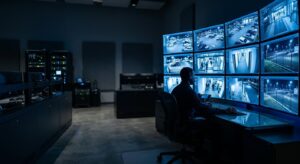
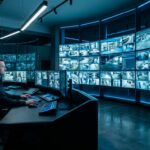
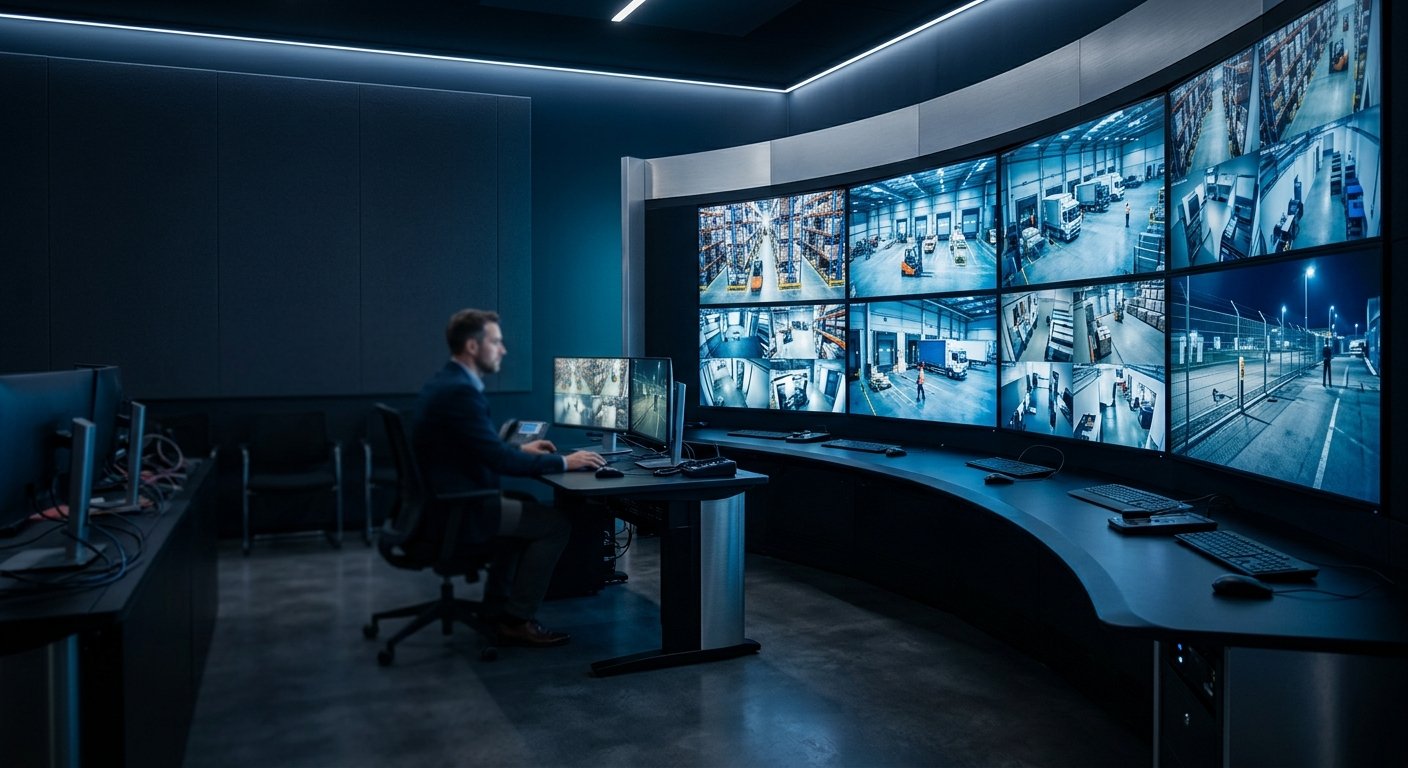
Industrial video monitoring is not simply installing cameras and hoping for the best. The term refers to a comprehensive remote surveillance system in which trained security professionals actively watch live camera feeds from your facility around the clock—identifying threats, verifying incidents, and taking action before damage occurs.
This distinction matters enormously. Passive recording systems capture incidents on video, but do nothing to stop them. By the time footage is reviewed, a theft has occurred, equipment has been vandalized, or a liability event has already taken place. Remote video monitoring flips that equation by turning cameras into a proactive intervention tool rather than a post-incident paper trail.
For industrial facilities specifically, this means trained monitoring professionals watching for unauthorized entry, equipment tampering, employee safety violations, suspicious loitering, and after-hours intrusions—and responding in real time when they see something wrong.
The Facility Manager’s Core Security Challenges
Understanding why industrial video monitoring matters requires a clear look at the unique pain points facility managers face every day.
Large Perimeters with Limited Visibility
Industrial properties—whether warehouses, distribution centers, or manufacturing facilities—often cover acres of ground. Monitoring every loading dock, parking lot, fence line, and interior corridor with on-site guards requires enormous staffing levels. Remote surveillance systems can cover expansive properties simultaneously, with no blind spots left unattended during shift changes or breaks.
After-Hours Vulnerability
The majority of commercial theft and vandalism occurs outside of business hours, when facilities are minimally staffed or completely empty. A 24/7 video monitoring service maintains the same level of vigilance at 3 a.m. on a Sunday as it does during peak business hours on a Tuesday afternoon.
Cargo and Equipment Theft
According to the FBI’s cargo theft data, commercial facilities are frequent targets for organized theft operations that strike quickly and are difficult to prosecute without clear, real-time documentation and rapid response. Industrial video monitoring creates a deterrent effect and enables immediate action when intrusions are detected.
Liability and Workplace Safety
Facility managers also carry liability exposure for on-site accidents, unauthorized visitors, and safety protocol violations. Video monitoring provides documentation and active oversight that supports compliance and protects against fraudulent claims.
How Remote Video Monitoring Works in Industrial Settings
A properly deployed commercial remote video monitoring solution involves several integrated components working together.
Strategic Camera Placement
High-definition cameras are positioned at perimeter entry points, loading docks, equipment storage areas, interior corridors, and any location identified as high-risk. Camera placement is designed to eliminate blind spots and ensure comprehensive coverage across the entire facility.
Live Monitoring by Trained Professionals
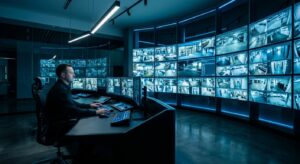
This is the human element that separates professional remote monitoring from basic camera systems. At Digital Security Guard, trained security professionals monitor live feeds 24/7, applying real judgment to distinguish routine activity from genuine threats. When a situation requires intervention, they can issue audio warnings through on-site speakers, alert local authorities with verified incident information, or contact designated facility personnel.
Verified Alerts and Rapid Response
Unlike automated systems that generate high volumes of false alerts, live human monitoring verifies what’s actually happening before escalating. This means law enforcement receives confirmed threat information rather than ambiguous motion-triggered notifications—leading to faster, more effective responses.
Incident Documentation
Every monitored event is recorded and documented, providing facility managers with reliable records for insurance purposes, internal investigations, and legal proceedings.
Industry Applications That Matter Most
Commercial remote video monitoring isn’t a one-size-fits-all solution—but it adapts effectively across a wide range of industrial and commercial facility types.
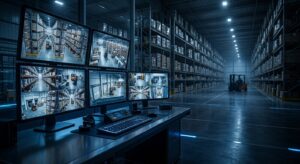
- Warehouses and Distribution Centers: Protect high-value inventory from internal and external theft, monitor loading dock activity, and ensure after-hours security without staffing every shift with physical guards.
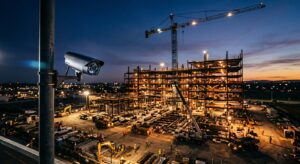
- Construction Sites: Construction materials, tools, and equipment represent easy targets for organized theft. Remote monitoring provides perimeter security across open, sprawling sites where physical guards cannot effectively patrol.
- Auto Dealerships: Vehicle lots and service areas require consistent overnight surveillance. Live monitoring deters vandalism and theft while providing verified alerts when perimeter breaches occur.
- Manufacturing Facilities: Beyond theft prevention, monitoring supports workplace safety compliance by providing visibility into operational areas and flagging unsafe behaviors in real time.
- Retail and Commercial Properties: Parking lots, after-hours entrances, and loading areas benefit from continuous oversight without the cost of dedicated security personnel at every location.
For apartment complexes, gated communities, and residential commercial properties, remote video monitoring for gated communities follows similar principles, protecting residents and common areas around the clock.
The ROI Case: Monitoring vs. Physical Guards
Budget scrutiny is a reality every facility manager navigates. When evaluating business security solutions, the cost comparison between remote video monitoring and traditional on-site guard services is significant.
A single on-site security guard working full-time costs $40,000 to $75,000 annually in wages alone—before factoring in training, benefits, supervision, and coverage for absences. A facility requiring round-the-clock coverage needs multiple guards per shift, multiplying that cost several times over.
Remote video monitoring covers the same facility, often with greater consistency and broader coverage, at a substantially lower annual investment. The monitoring professionals at Digital Security Guard provide nationwide remote video monitoring services, allowing businesses across the country to access professional-grade security without the overhead of full-time guard staffing.
Beyond direct cost savings, proactive crime prevention reduces losses from theft, equipment damage, and liability claims—all of which contribute meaningfully to a facility’s bottom line over time.
What to Look for in an Industrial Monitoring Provider
Not all video monitoring services are created equal. Facility managers evaluating industrial video monitoring providers should ask the right questions before committing.
- Is monitoring truly live and continuous? Some services rely heavily on automated alerts with minimal human review. Confirm that trained professionals actively watch feeds around the clock.
- How are alerts handled? Understand the escalation protocol—what happens when a threat is detected, who gets notified, and how quickly action is taken.
- What is the camera coverage capability? Ensure the provider can support the scale of your facility with appropriate camera types and placement strategies.
- Is the system scalable? As your facility grows or security needs evolve, your monitoring solution should adapt without requiring a complete overhaul.
- What documentation and reporting is provided? Reliable incident reports and video documentation are essential for insurance, compliance, and internal accountability.
The ASIS International body of security management standards provides a useful framework for evaluating security providers against professional industry benchmarks.
Frequently Asked Questions
How is industrial video monitoring different from a standard security camera system?
Standard camera systems record footage passively without active oversight. Industrial video monitoring involves trained security professionals watching live feeds continuously, enabling real-time intervention when threats are detected rather than simply documenting incidents after they occur.
Can remote monitoring cover very large industrial facilities effectively?
Yes. Strategic camera placement combined with trained monitoring professionals allows remote surveillance systems to cover expansive industrial properties—including perimeters, multiple entry points, and interior zones—with greater consistency than rotating physical guard patrols.
What happens when a monitoring professional identifies a threat?
Trained monitoring professionals can issue on-site audio warnings through integrated speakers, contact local law enforcement with verified incident details, and simultaneously alert designated facility personnel. The response protocol is customized to each facility’s needs and escalation preferences.
Is remote video monitoring suitable for facilities with complex compliance requirements?
Remote monitoring supports compliance documentation and workplace safety oversight effectively. For facilities with specialized regulatory requirements, it’s important to discuss your specific compliance needs with your monitoring provider during the evaluation process.
How does remote video monitoring compare in cost to hiring on-site security guards?
Remote video monitoring typically delivers comparable or superior security coverage at significantly lower cost than full-time on-site guard staffing, which can run $80,000 to $150,000 or more per security post annually when factoring in wages, benefits, and administrative overhead.
Protecting Your Facility Starts with the Right Partner
Facility managers carry substantial responsibility for the safety, security, and financial integrity of their properties. Industrial video monitoring—when delivered by trained professionals providing genuine 24/7 oversight—gives you the proactive security presence your facility needs without the budget burden of traditional guard services.
Digital Security Guard specializes in commercial remote video monitoring designed specifically for the complex security demands of industrial and commercial properties. Our trained monitoring professionals provide continuous live surveillance, real-time intervention, and comprehensive incident documentation tailored to your facility’s unique layout and risk profile.
Ready to evaluate remote video monitoring for your facility? Contact Digital Security Guard today to discuss your property’s specific security needs and learn how proactive remote surveillance can protect your assets, reduce costs, and give you genuine peace of mind.