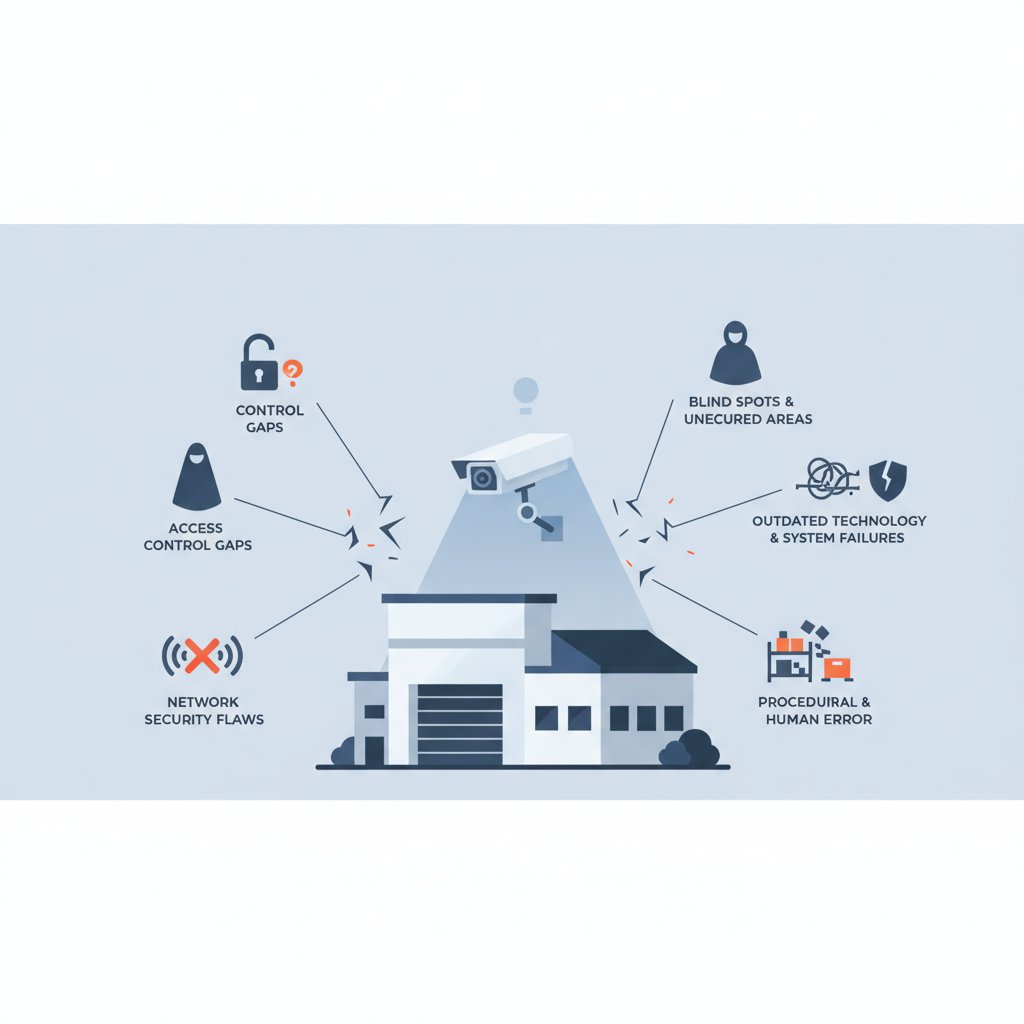
Warehouses lose an estimated $35 billion annually to theft, vandalism, and security breaches. Yet many facility managers continue operating with video surveillance systems that create a false sense of security while leaving critical blind spots exposed. The difference between reactive recording and proactive protection comes down to identifying and addressing fundamental vulnerabilities in your security approach.
Traditional warehouse video monitoring setups often fail during the moments that matter most. Understanding these common weaknesses represents the first step toward implementing commercial remote video monitoring that actually prevents losses rather than simply documenting them after the fact.
The Critical Gap in Traditional Warehouse Surveillance
Most warehouses have cameras installed throughout their facilities. The problem isn’t the absence of video surveillance but rather how that surveillance operates. Passive recording systems capture footage that gets reviewed only after discovering a theft, break-in, or safety incident. By then, the damage is done, inventory is missing, and the perpetrators are long gone.
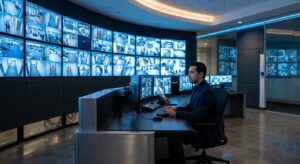
Professional video monitoring transforms this reactive model into proactive crime prevention. When trained security personnel monitor your warehouse remotely in real-time, they can intervene during suspicious activity, dispatch authorities while crimes are in progress, and activate audio warnings to deter trespassers before they cause damage.
Vulnerability #1: Unmonitored After-Hours Access Points
Loading docks, rear entrances, and side doors become prime targets once your day shift leaves. These access points often receive less attention in standard security setups, yet they account for a significant percentage of warehouse break-ins.
Thieves understand warehouse operations better than many facility managers realize. They know when shifts change, when buildings sit empty overnight, and which doors have compromised locks or inadequate lighting. A passive camera recording darkness provides little deterrent value.
Remote surveillance monitoring addresses this vulnerability through continuous observation of all access points. When movement is detected at an unusual hour, remote security professionals can immediately assess whether the activity is authorized. Within seconds, they can activate on-site speakers to challenge intruders, illuminate the area with additional lighting if integrated systems are present, and contact law enforcement with specific descriptions of suspects and vehicles.
Practical Solutions for Access Point Security
- Implement 24/7 video monitoring services that provide human verification of after-hours activity
- Integrate motion-activated lighting with your video monitoring system
- Install two-way audio speakers that allow remote security personnel to issue verbal warnings
- Establish clear protocols for authorized after-hours access with remote monitoring teams
- Position cameras to capture facial recognition quality footage and vehicle license plates
Vulnerability #2: Blind Spots in High-Value Storage Areas
Not all warehouse square footage carries equal value. Areas storing electronics, pharmaceuticals, copper wiring, or other high-demand items require enhanced attention. Many facilities make the mistake of implementing uniform surveillance density throughout their space, leaving valuable inventory without adequate coverage.
Internal theft represents a substantial portion of warehouse losses. Employees who understand camera positions can exploit blind spots during routine operations. Business video monitoring services that include professional security analysis can identify these coverage gaps and recommend optimal camera placement.
Remote video monitoring proves especially valuable in high-value storage zones because trained security professionals know what normal activity looks like versus suspicious behavior. An employee lingering in an area without clear purpose, making unusual movements, or accessing inventory outside their typical responsibilities triggers immediate attention.
Enhancing High-Value Area Protection
Conduct a thorough inventory value mapping exercise. Identify which products, materials, or equipment represent the highest theft risk based on both value and portability. Then ensure these areas receive premium camera coverage with analytics-capable systems monitored by remote security teams.
Professional video monitoring operators can track patterns over time, noticing when the same individual repeatedly accesses high-value areas or when inventory movement occurs during unusual timeframes. This human intelligence layer provides protection that standard recording systems cannot match.
Vulnerability #3: Inadequate Perimeter Monitoring
The exterior boundaries of your warehouse property often receive minimal security attention despite representing the first line of defense. Fence lines, parking lots, and storage yards where trailers or equipment sit overnight become targets for theft and vandalism.
Catalytic converter theft from parked vehicles, trailer break-ins, and equipment vandalism frequently occur in poorly monitored perimeter areas. These crimes happen quickly—often in under five minutes—making real-time intervention essential.
Commercial remote video monitoring extends your security presence throughout the entire property. When remote guards detect someone approaching the fence line with bolt cutters at 2 AM or attempting to access a parked trailer, they can intervene immediately rather than leaving you to discover the theft when employees arrive the next morning.
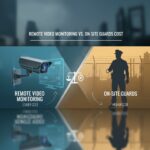
The cost savings compared to posting physical security guards at these perimeter locations is substantial. A single on-site guard costs $50,000-$80,000 annually when accounting for wages, benefits, and training. That guard can only observe one area at a time and may face personal safety risks when confronting criminals. Remote surveillance monitoring provides comprehensive coverage of multiple areas simultaneously at a fraction of the cost, with security professionals safely positioned to coordinate with law enforcement rather than confront suspects directly.
Vulnerability #4: Lack of Real-Time Response Protocols
Having cameras without actionable response protocols wastes the potential of your security investment. Many warehouses discover this gap only after experiencing a loss. Recorded footage shows exactly what happened, but no one was watching to prevent it.
Remote video monitoring solves this problem through established escalation procedures. When suspicious activity is detected, remote security professionals follow documented protocols: verify the threat, attempt audio deterrence, illuminate the area, capture detailed descriptions, and contact authorities with real-time updates as situations develop.
This coordinated response dramatically increases the likelihood of apprehending suspects and preventing losses. Police departments prioritize calls where a security professional provides real-time surveillance updates compared to standard alarm calls, which frequently turn out to be false alarms.
Building Effective Response Frameworks
Work with your remote monitoring provider to establish clear response protocols for different scenarios. Define what constitutes suspicious activity during various timeframes, identify which local law enforcement contacts should be used for different incident types, and establish communication procedures for notifying facility managers during emergencies.
Test these protocols regularly through coordinated drills. Have employees stage scenarios during off-hours (with monitoring team awareness) to ensure remote security personnel follow established procedures and communication chains function properly.
Vulnerability #5: Outdated Technology and Insufficient Bandwidth
Legacy camera systems installed years ago often lack the resolution, night vision capabilities, and network connectivity required for effective remote monitoring. Grainy footage that barely captures identifiable details provides minimal investigative value and no preventative benefit.
Modern 24/7 video monitoring services require high-definition cameras with excellent low-light performance, wide dynamic range to handle varying lighting conditions, and sufficient network bandwidth to stream multiple feeds simultaneously without lag. Remote security professionals cannot effectively monitor feeds that buffer constantly or provide unclear images.
Many warehouse operators hesitate to upgrade their systems due to perceived costs. However, the return on investment becomes clear when comparing equipment expenses against the value of prevented losses. A single prevented cargo theft can justify years of monitoring service costs and technology upgrades.
Technology Assessment Checklist
- Evaluate current camera resolution—minimum 1080p HD for effective facial recognition
- Test night vision capabilities in actual darkness conditions, not just at dusk
- Assess network bandwidth and reliability for streaming multiple feeds
- Verify remote access capabilities and mobile viewing functionality
- Confirm storage capacity for retaining footage according to insurance and compliance requirements
- Ensure compatibility with professional monitoring service platforms
The Human Element in Warehouse Security
Technology alone cannot secure your warehouse. The most sophisticated camera systems require trained security professionals who understand warehouse operations, recognize normal versus suspicious behavior patterns, and know how to respond effectively to developing situations.
This represents the fundamental advantage of professional remote surveillance monitoring over passive recording systems. Artificial intelligence and motion detection algorithms generate useful alerts, but human judgment determines which situations require intervention and how to respond appropriately.
Remote security guards bring experience from monitoring hundreds of properties. They recognize tactics used by organized theft rings, understand how trespassers typically test security measures, and can distinguish between a lost delivery driver and someone conducting surveillance for a future break-in.
Calculating the True Cost of Security Vulnerabilities
Warehouse security vulnerabilities carry costs beyond direct theft losses. Insurance premiums increase following claims. Employee morale suffers when personal vehicles are vandalized in parking lots. Liability exposure grows when inadequate lighting and surveillance contribute to safety incidents.
Compare these risks against the investment in comprehensive warehouse video monitoring. Professional monitoring services typically cost $200-$800 monthly depending on property size and coverage requirements—a fraction of employing on-site guards while providing superior coverage across your entire facility simultaneously.
Consider a mid-sized warehouse experiencing quarterly theft incidents averaging $15,000 in losses. Annual theft losses total $60,000, plus increased insurance costs, administrative time investigating incidents, and operational disruptions. Implementing remote video monitoring costing $6,000 annually that prevents even half of these incidents delivers immediate positive ROI, with additional benefits in liability reduction and improved employee safety.
Implementation: Moving from Vulnerable to Secure
Addressing warehouse video monitoring vulnerabilities requires a systematic approach. Begin with a comprehensive security assessment identifying your specific risk factors, high-value areas, access points, and current system limitations.
Partner with business video monitoring services providers who understand warehouse operations and can customize solutions to your facility’s unique requirements. Cookie-cutter approaches miss the specific vulnerabilities your property faces.
Implement improvements in phases if budget constraints exist. Prioritize your highest-risk areas first—typically after-hours access points and high-value storage zones—then expand coverage systematically. Even partial implementation of professional remote monitoring provides substantially better protection than passive recording systems.
Protect Your Assets with Professional Monitoring
Warehouse security vulnerabilities represent controllable risks. The technology and services exist to transform your surveillance system from passive recording to active protection. The question is whether you’ll address these weaknesses proactively or wait until the next theft or break-in forces your hand.
Digital Security Guard specializes in commercial remote video monitoring designed specifically for warehouses and distribution facilities. Our trained security professionals provide 24/7 surveillance of your property, immediate response to suspicious activity, and coordinated communication with law enforcement when incidents occur. We help facility managers across the country prevent losses rather than simply document them.
Contact Digital Security Guard today to schedule a comprehensive security assessment of your warehouse facility. We’ll identify your specific vulnerabilities and design a customized remote monitoring solution that provides superior protection at a fraction of the cost of on-site security guards. Call 800-829-7459 or visit our website to learn how we can eliminate the gaps in your current security approach.